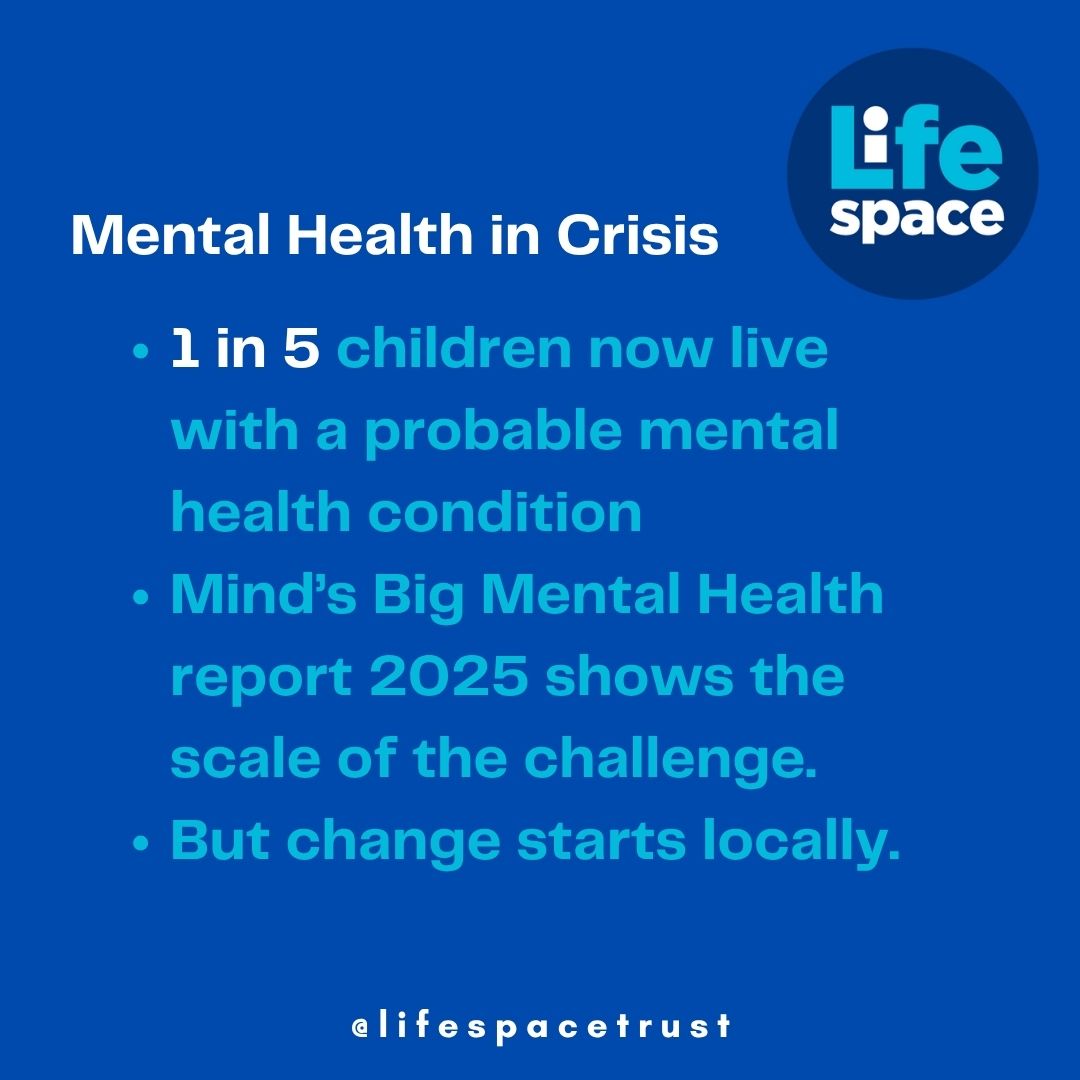
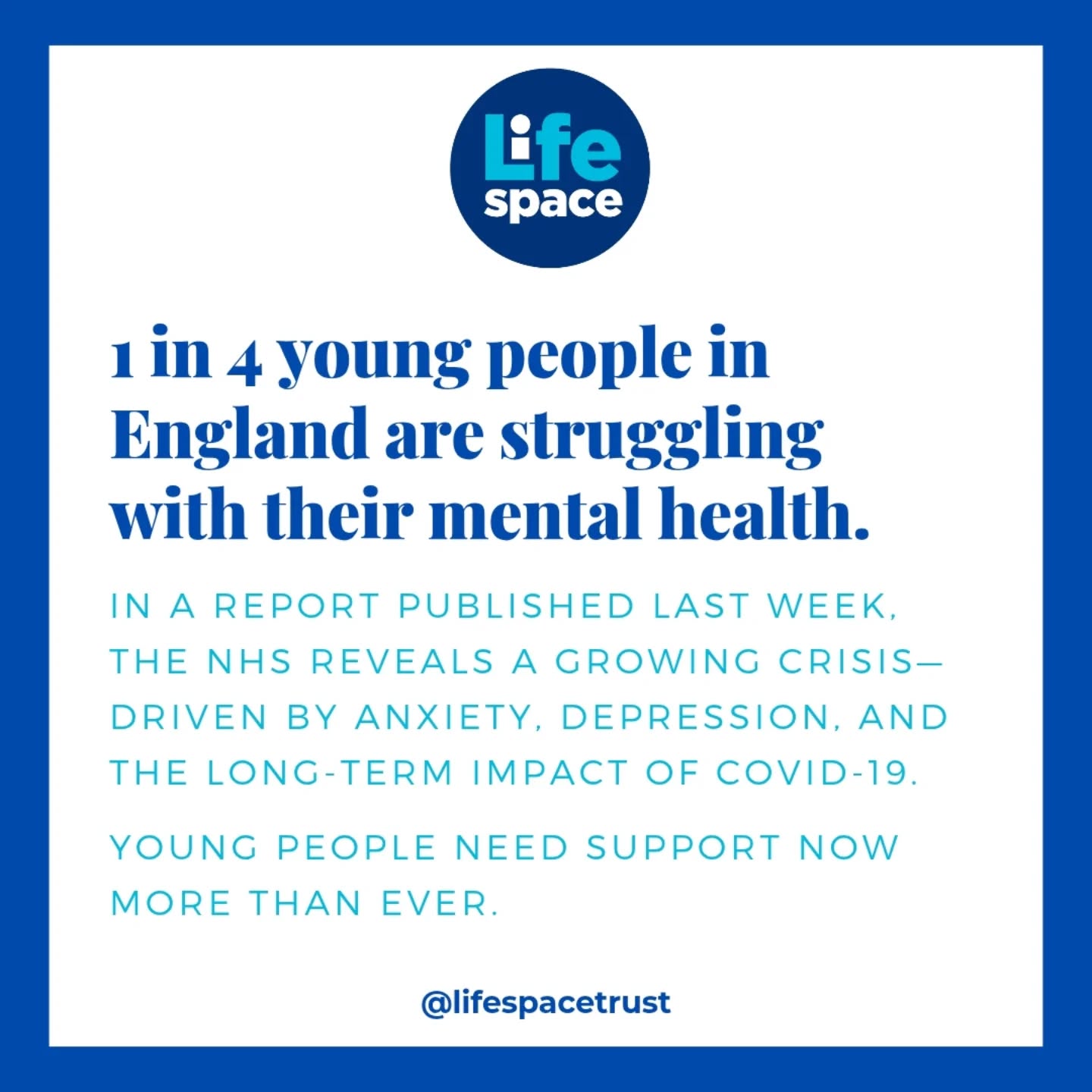
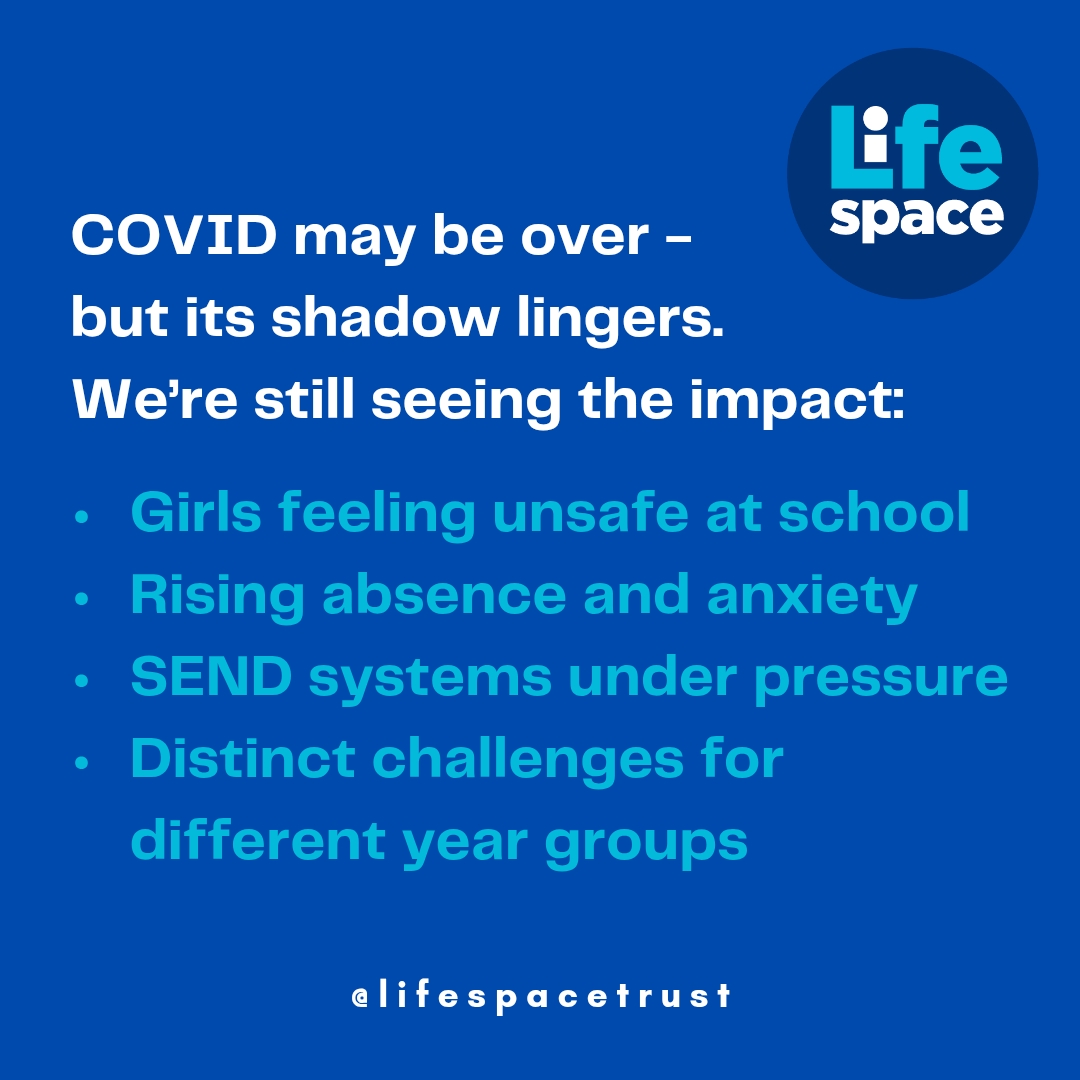
The pandemic may have officially ended, but for many young people its shadow lingers - in classrooms, in homes, and individually. At Lifespace, our mentors walk beside them, witnessing the aftershocks daily - from anxiety and absence to safety fears and social isolation.
In this blog, our CEO, Lisa Carroll, reflects on recent media coverage and how Lifespace are responding.
Rising Fears: Safety and Trust in School Spaces
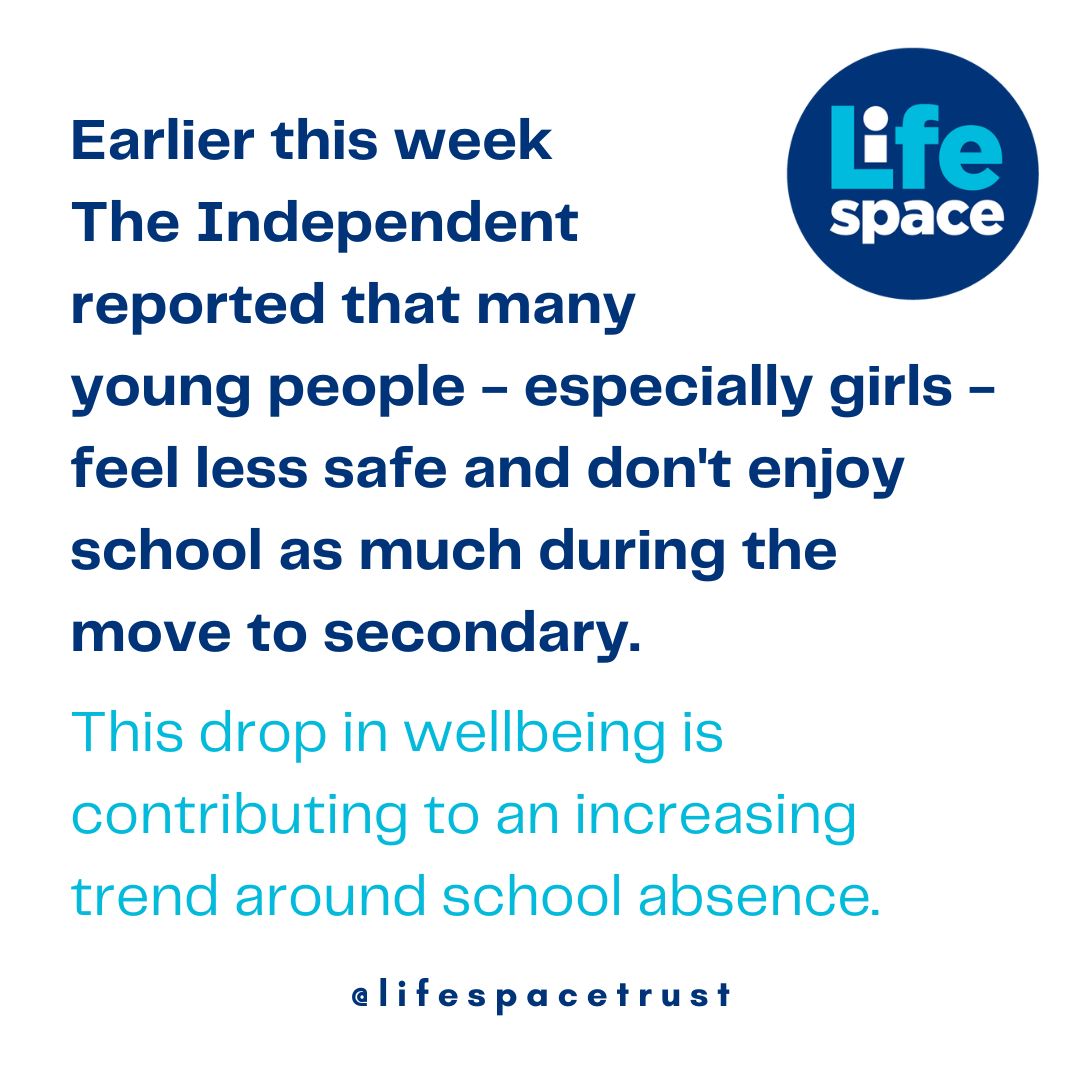
A new report published yesterday by the Telegraph reveals that one in three teenage girls no longer feels safe at school post-lockdown, a significant increase from pre-pandemic levels. In 2023, 34% of Year 9 girls in England reported feeling unsafe at school, compared to 15% in 2019. The report also highlights that one in four Year 9 boys felt unsafe in school in 2023, up from 17% in 2019. This decline in emotional resilience is something Lifespace recognise and is likely contributing to increased levels of school absence and Emotionally Based School Avoidance (EBSA). (
Telegraph, April 25)
Misogny, Youth Violence and Adult Content
The Netflix series “Adolescence” explores themes of bullying, misogyny, and youth violence, highlighting the impact of toxic masculinity influencers like Andrew Tate. Similarly extreme adult content from women, including Bonnie Blue, pose a different kind of threat. They underscore the urgent need for positive role models and systemic support to address the challenges faced by today’s young people.
Lasting Disruption: From Year 6 to GCSEs
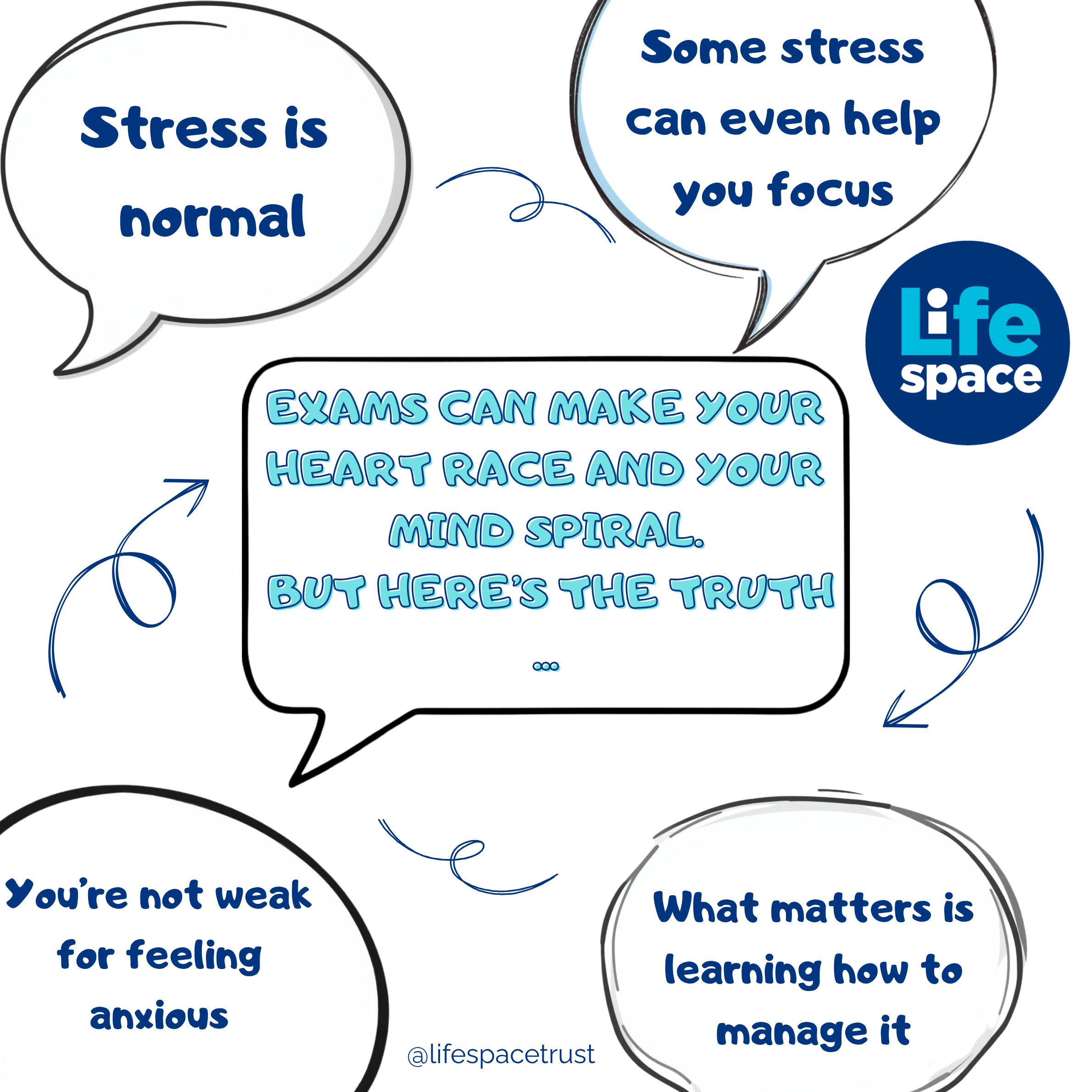
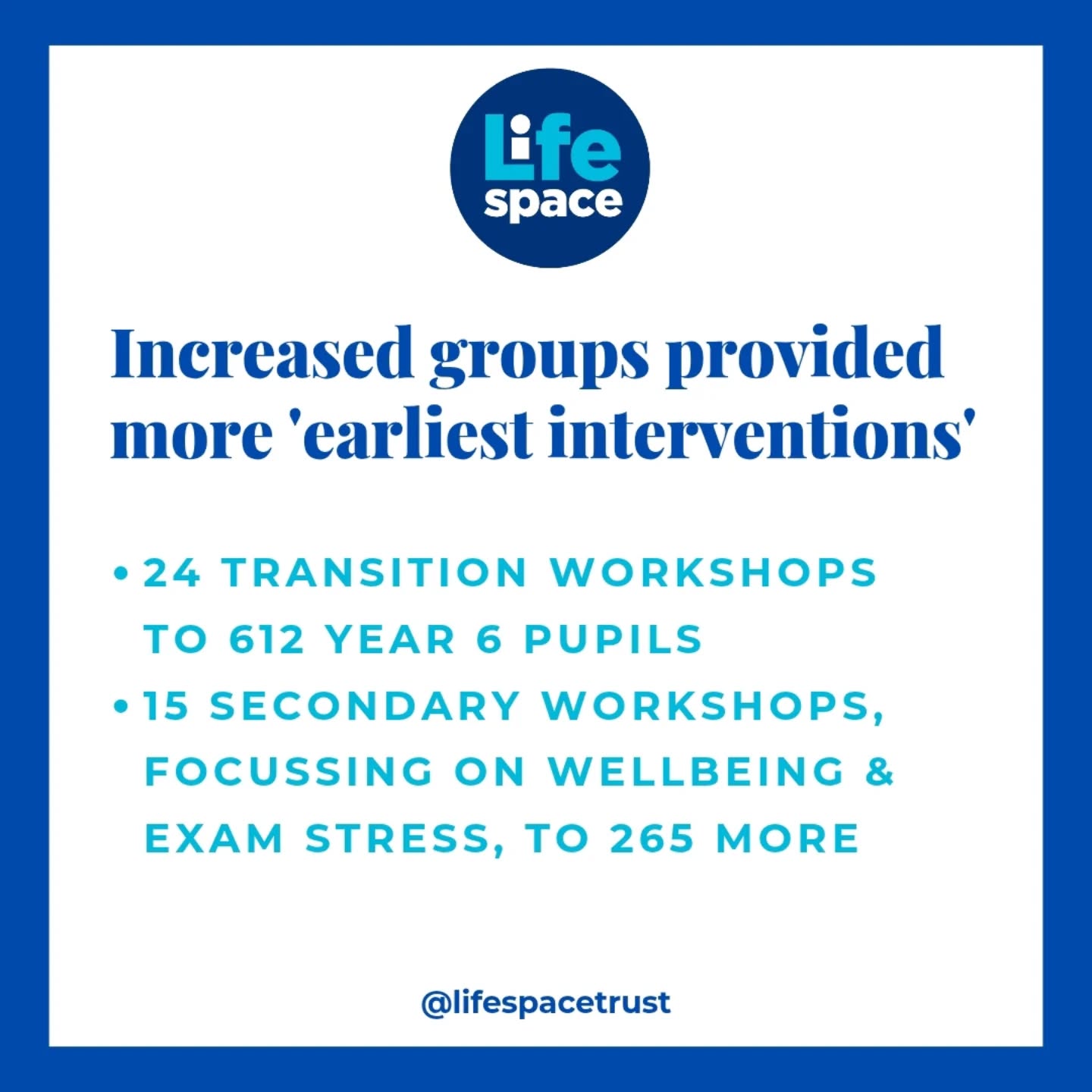
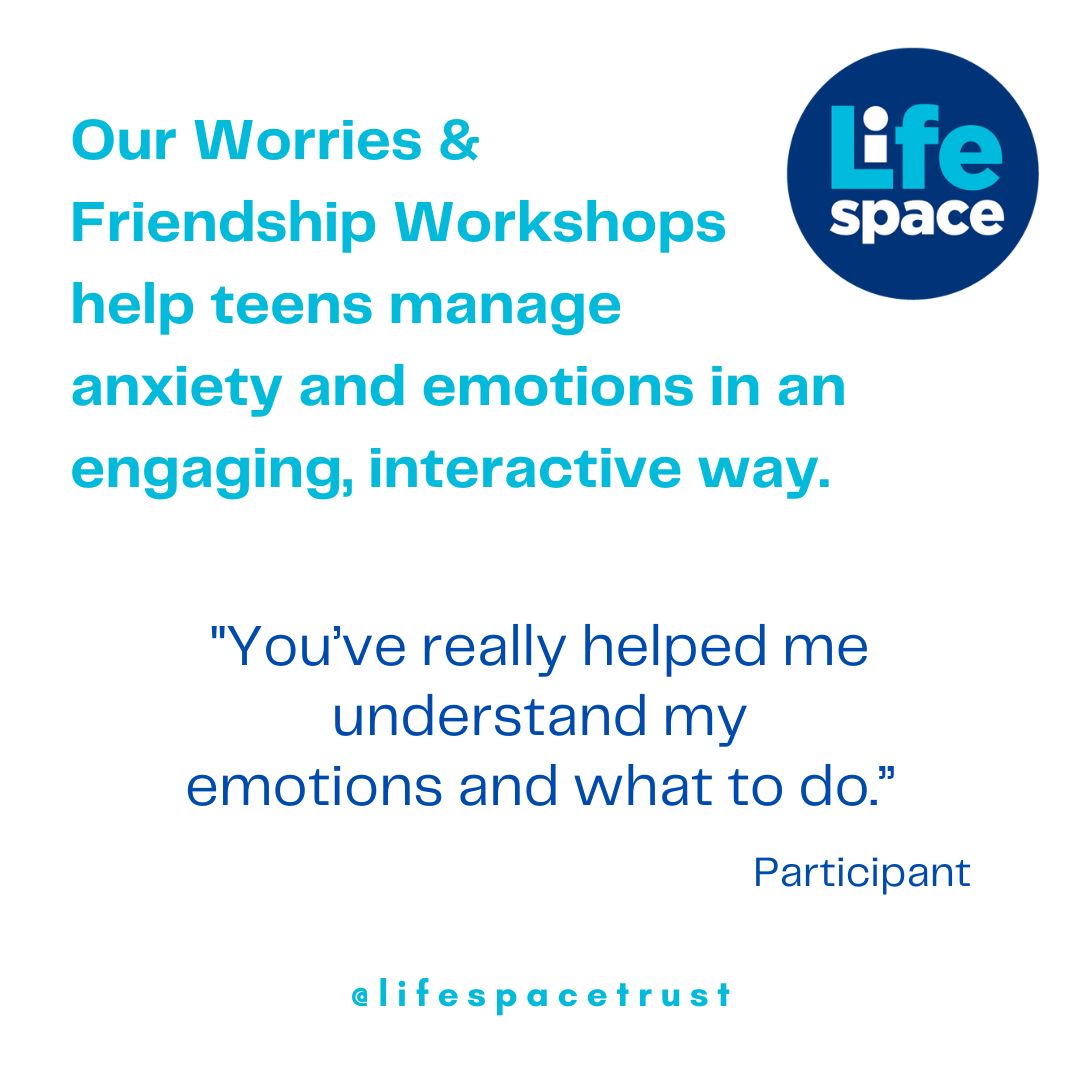
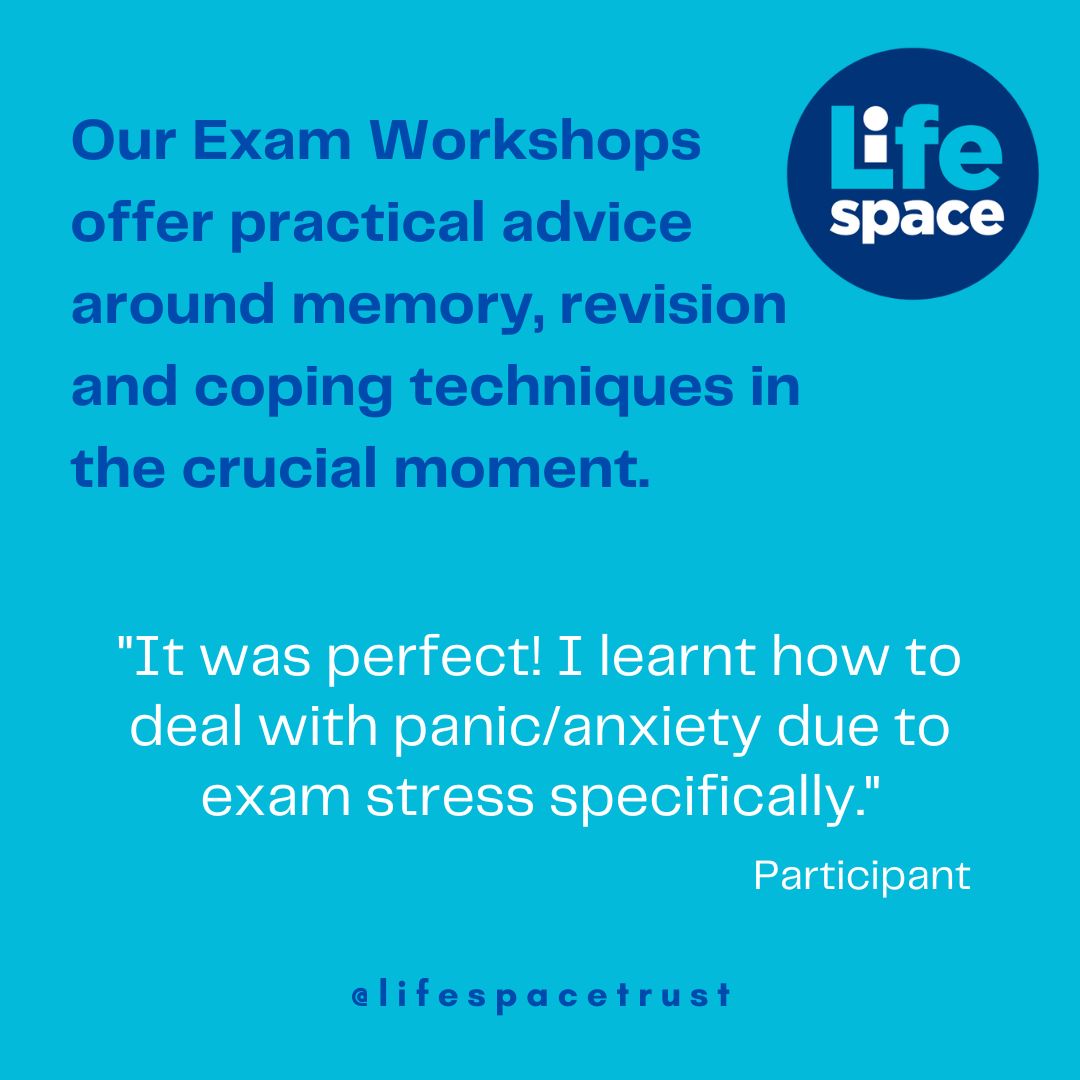
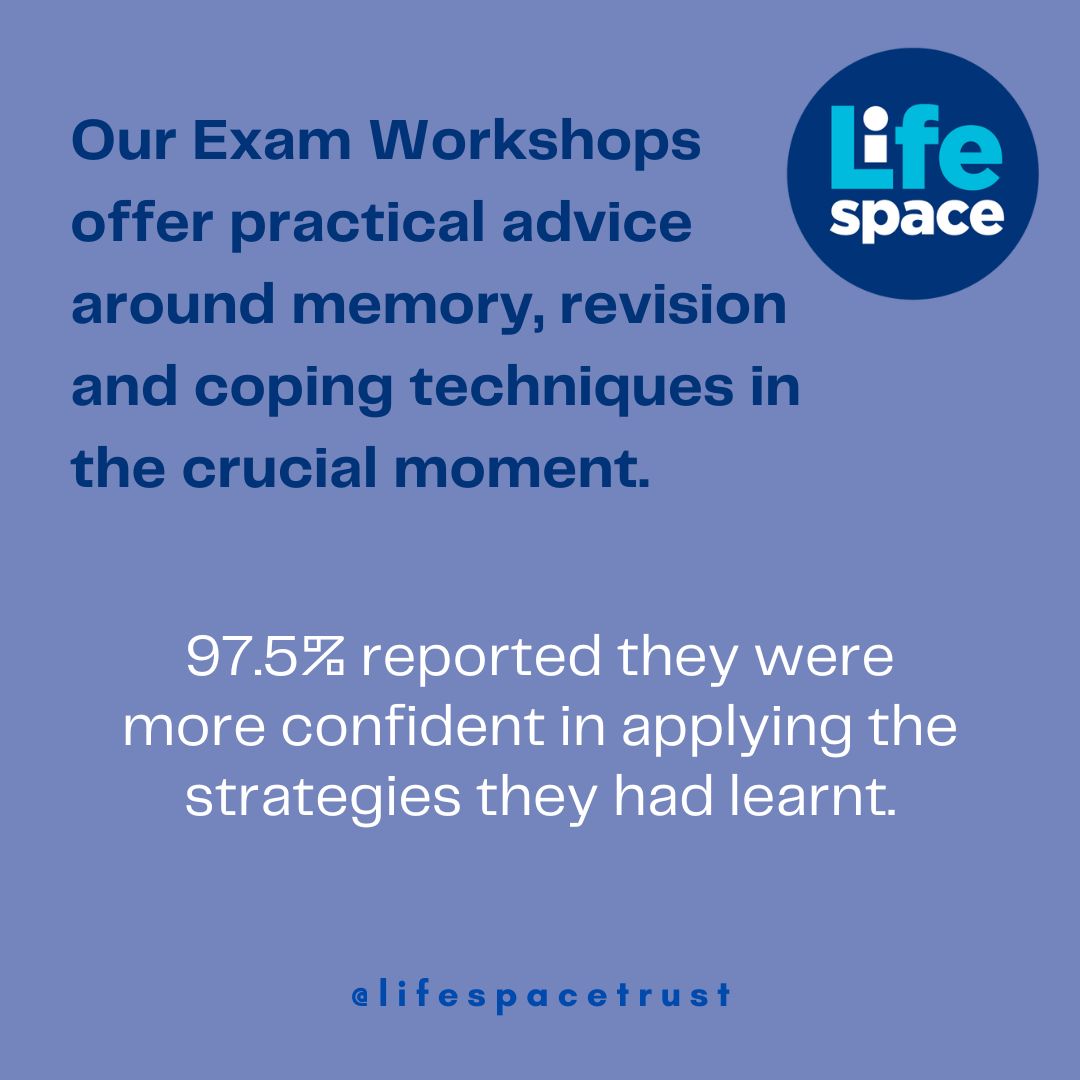
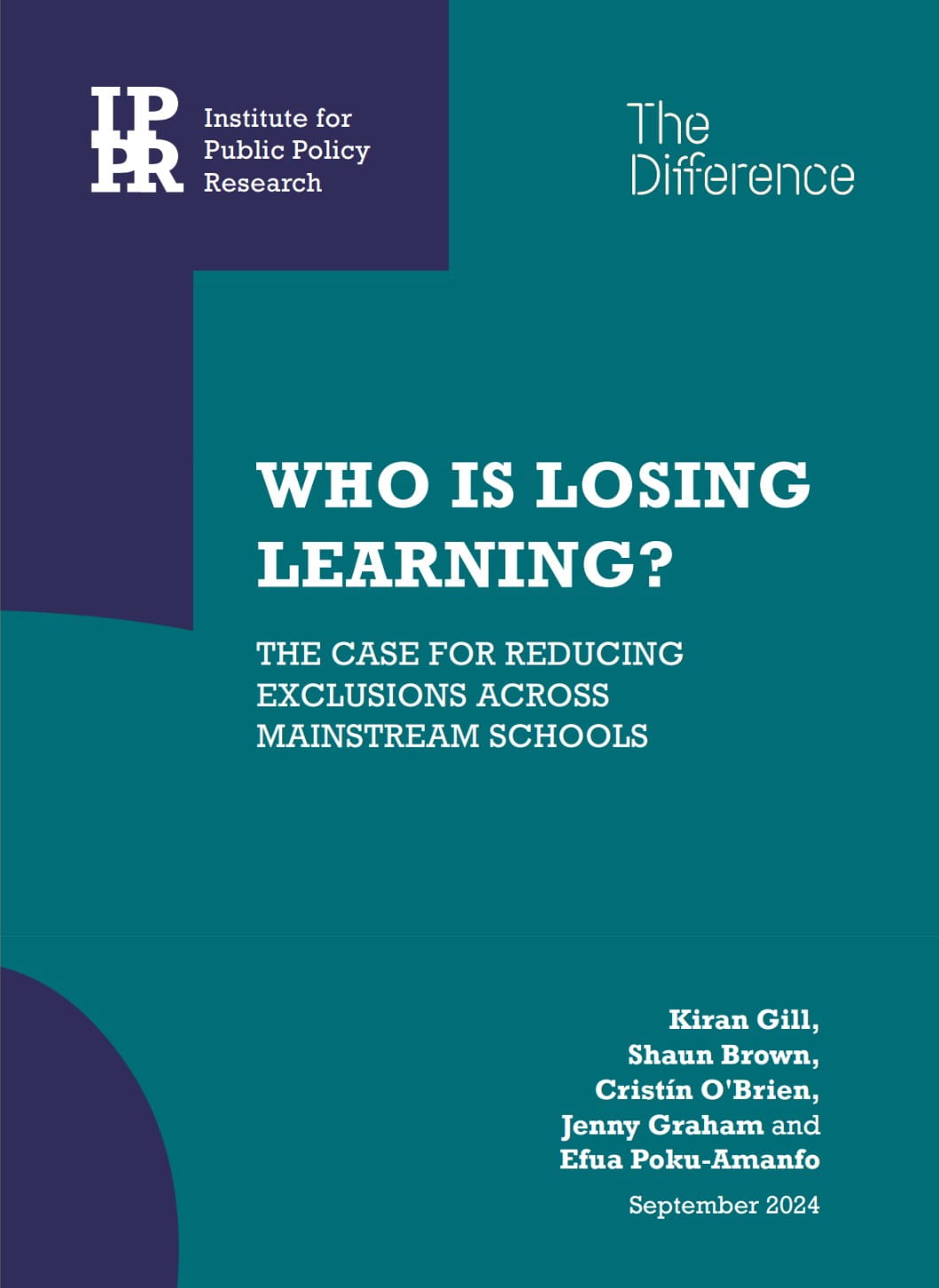
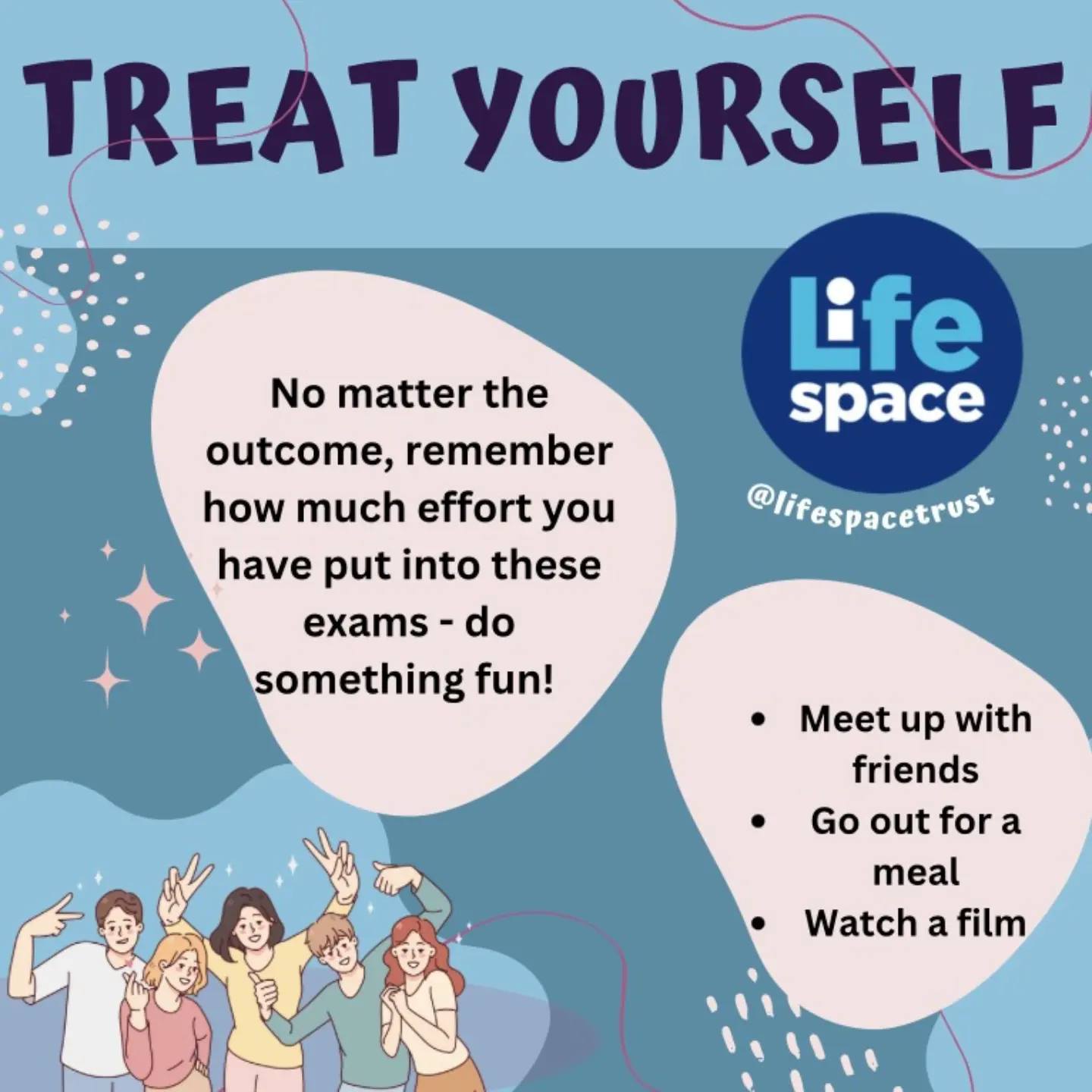
The current Year 11 students, were in Year 6 during the onset of the pandemic, and are experiencing increased levels of exam stress and anxiety. These students missed their Year 6 SATs and faced disrupted transitions to secondary school, which has compounded their academic and emotional challenges. In response, Lifespace have delivered an unprecedented number of exam stress workshops. Our observations have also been highlighted by WhichSchoolAdvisor who report, “
Year 11 students preparing for GCSEs in 2025 are facing higher levels of stress and anxiety due to the disruptions experienced during their Year 6 transition” (
Which School Advisor, March 2025)
Emotional Dysregulation in Lower Secondary Some students in Years 7 and 8, who transitioned from early years curriculum into Key Stage 1 during the pandemic, are showing higher levels of emotional dysregulation and difficulties in adhering to expected classroom behaviours. Teachers have reported to Lifespace that a small number of Year 7 students exhibit bullying behaviour towards them. The Guardian reported that “
post-pandemic bad behaviour among pupils is predicted to peak, with emotional dysregulation being a significant concern”. (
Guardian, August 2024)
Struggles of the COVID Reception Class
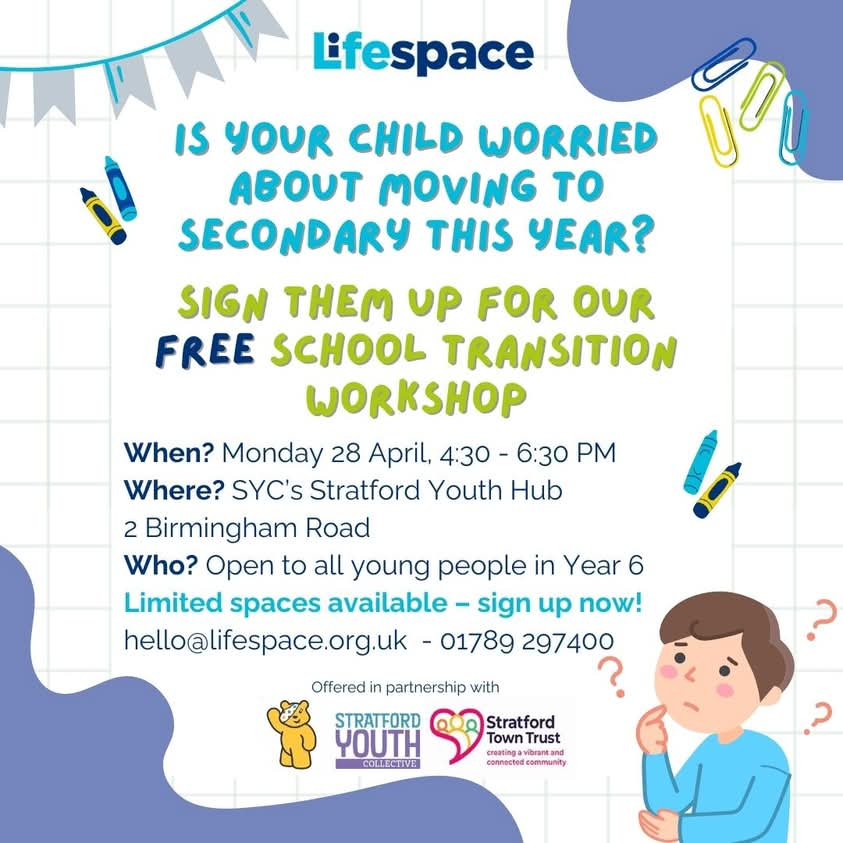
It is widely acknowledged children who started Reception during the pandemic missed significant chunks of foundational learning. Lifespace is now approached on a regular basis by schools asking for support for these children and will soon deliver our new Transitions Workshop to rising Year 7s. The National Federation for Emotional Research highlighted that “
primary-age pupils are struggling with attainment due to the disruption caused by COVID-19”. (
NFER, February 2025)
COVID Babies Entering Primary School
Children born during the pandemic, often referred to as “COVID babies,” are now entering primary school with noticeable delays in their development. Anne Longfield, founder of the Centre for Young Lives, said in a recent BBC article:
“I have heard many concerning experiences from school staff about children arriving at reception wearing nappies, still using buggies, and unable to communicate at the expected level or to socialise with other children. Some of these children have developmental problems, struggle with speech and behaviour, and can require significant extra attention and support from already overstretched schools.” (
BBC, October 2024)
Socioeconomic Influences The pandemic has exacerbated existing socioeconomic disparities, with children from less affluent families being the most affected. The cumulative impact of COVID-19, the cost of living crisis, civil unrest, and political changes has increased parental anxiety, which is often transferred, consciously or subconsciously, to their children. The Guardian reported that “
unauthorised school absence is widening the disadvantage gap in England”. (
Guardian, March 2025)
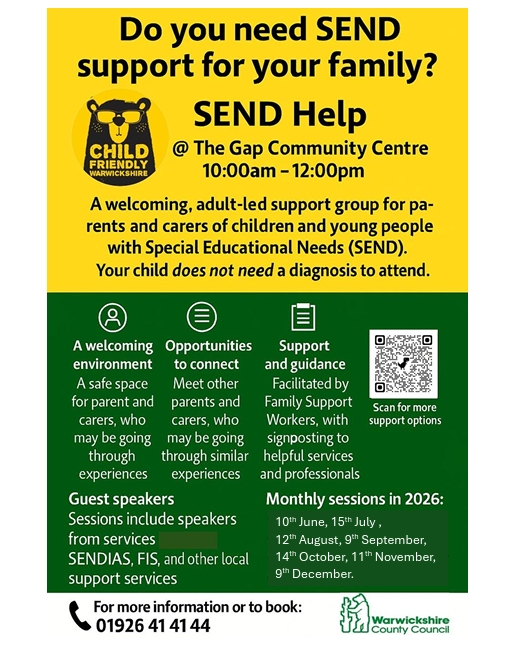
Increasing Need for SEND Provision
A recent Tes article highlights the crisis in special school places. Some Lifespace partner schools have reflected their current sixth form SEND pupils wouldn’t gain a Reception place under today’s pressures. As a result, a large number of children will enter mainstream schools that are ill-equipped to support them. An emerging - and damaging - narrative blames rising SEND numbers for local authority financial struggles. We must tackle root causes, not children. (
Tes, Jan 25)
Growing SEMH Challenges
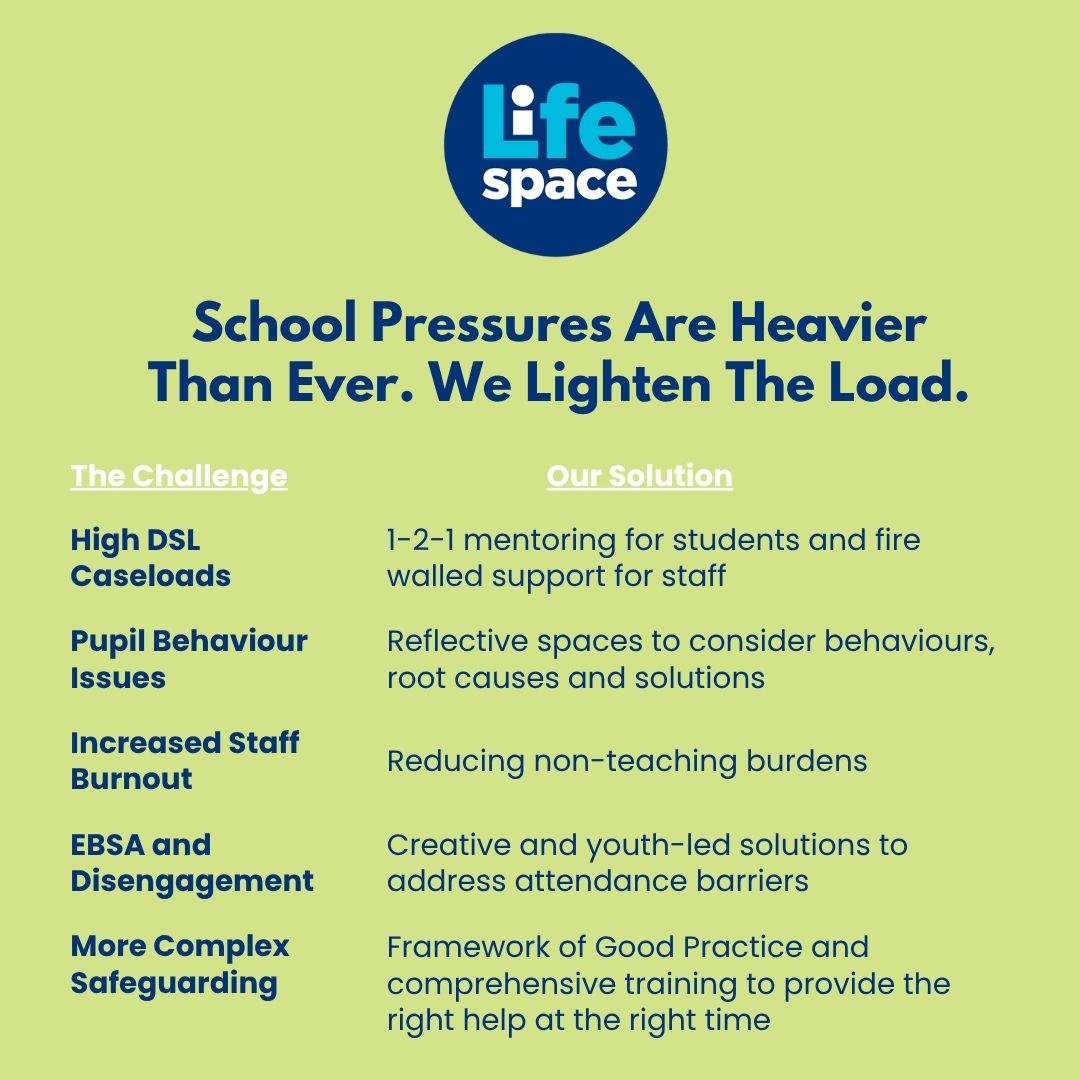
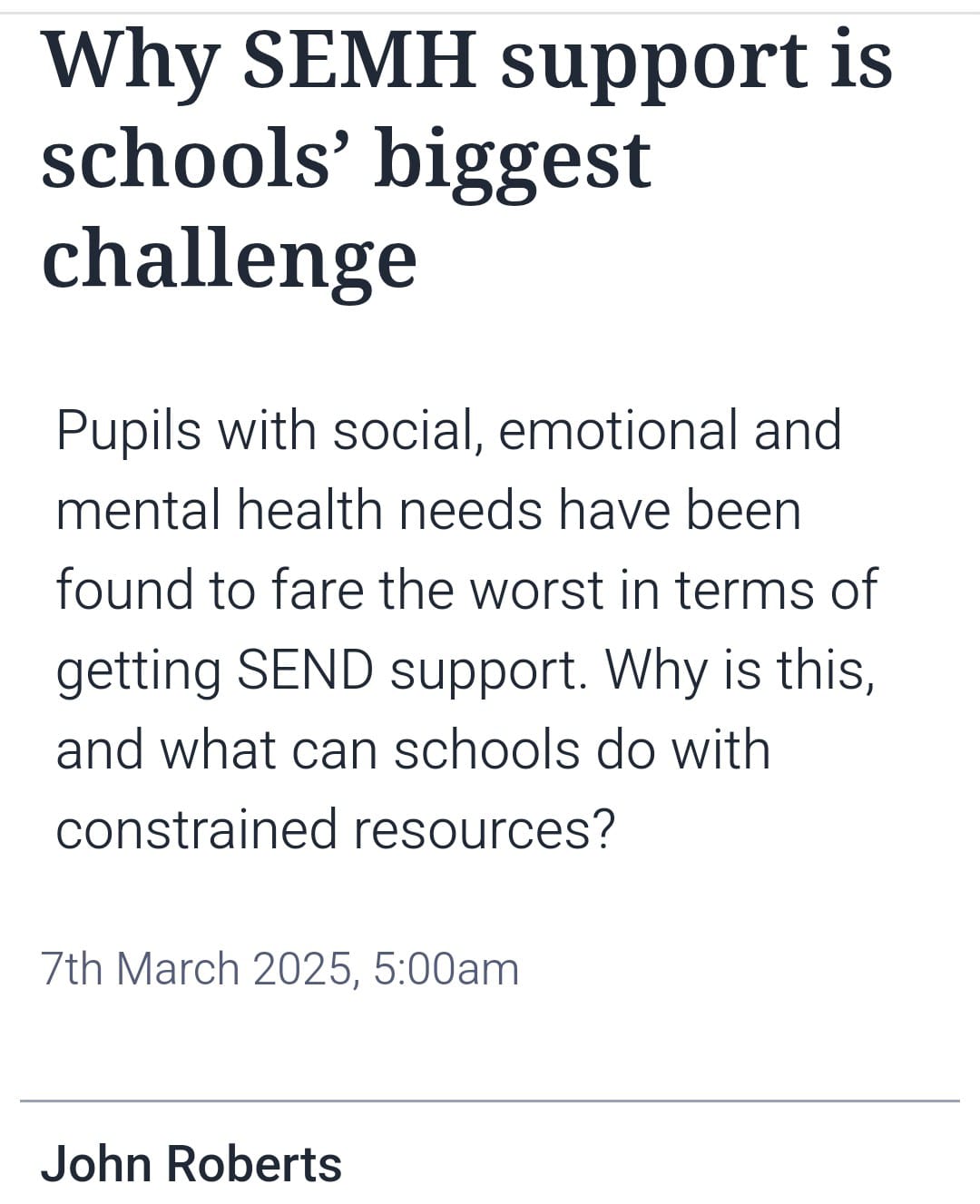
Another recent Tes article reinforced what we see daily — Social, Emotional, and Mental Health (SEMH) needs are at a crisis point in schools. Teachers and pastoral teams are stretched thin, and young people are struggling with increasing levels of distress, anxiety, and low confidence. (
Tes, March 2025)
Pressure on Schools
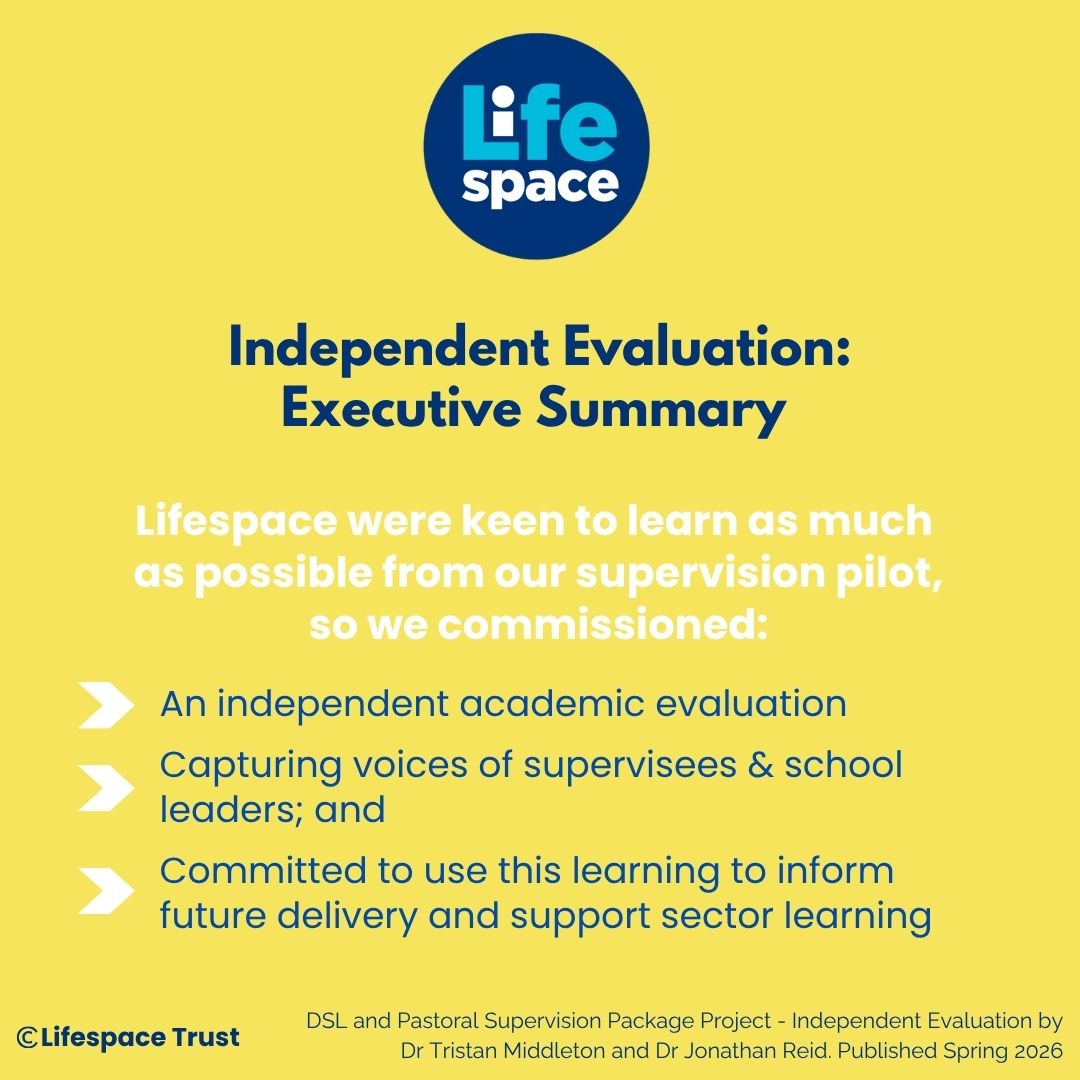
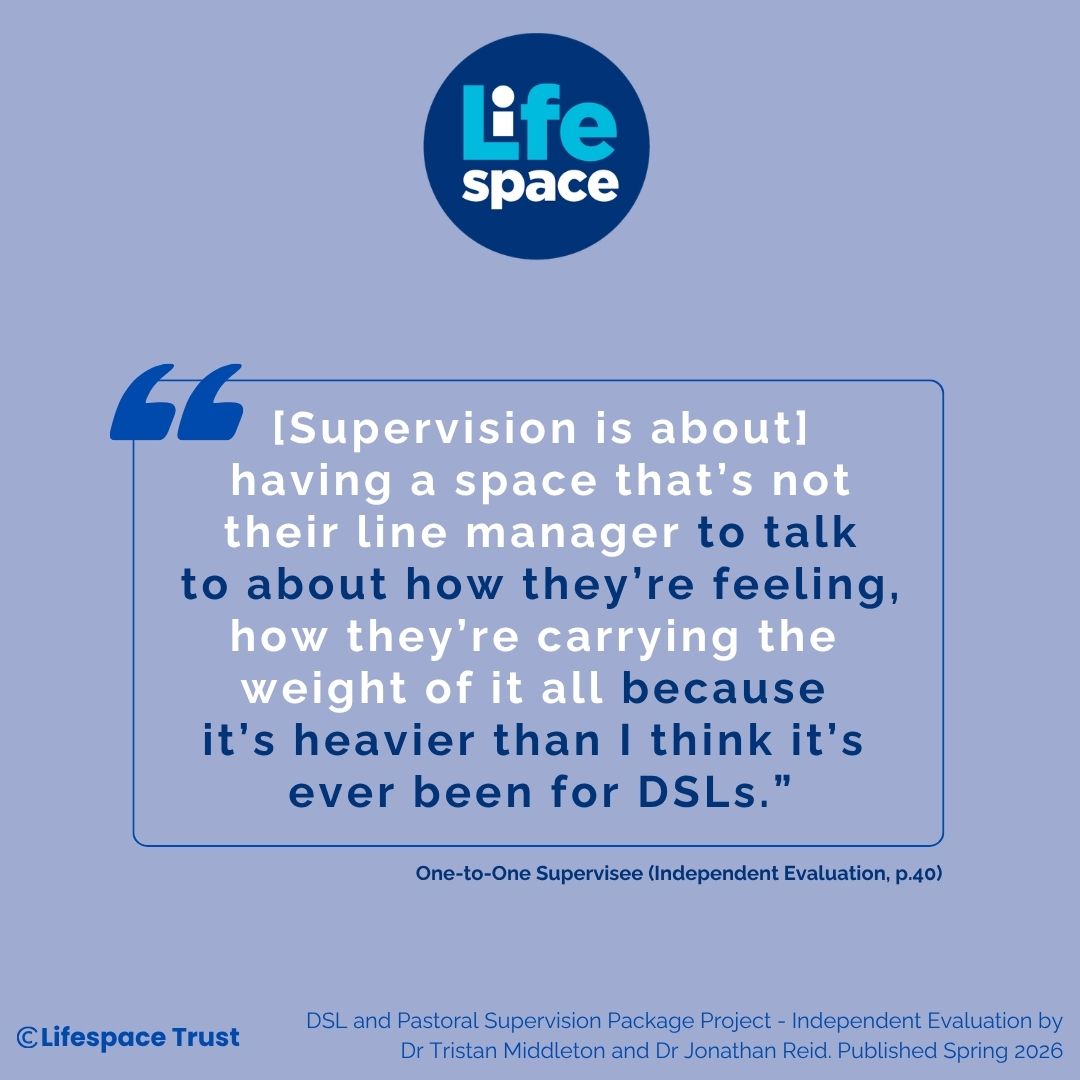
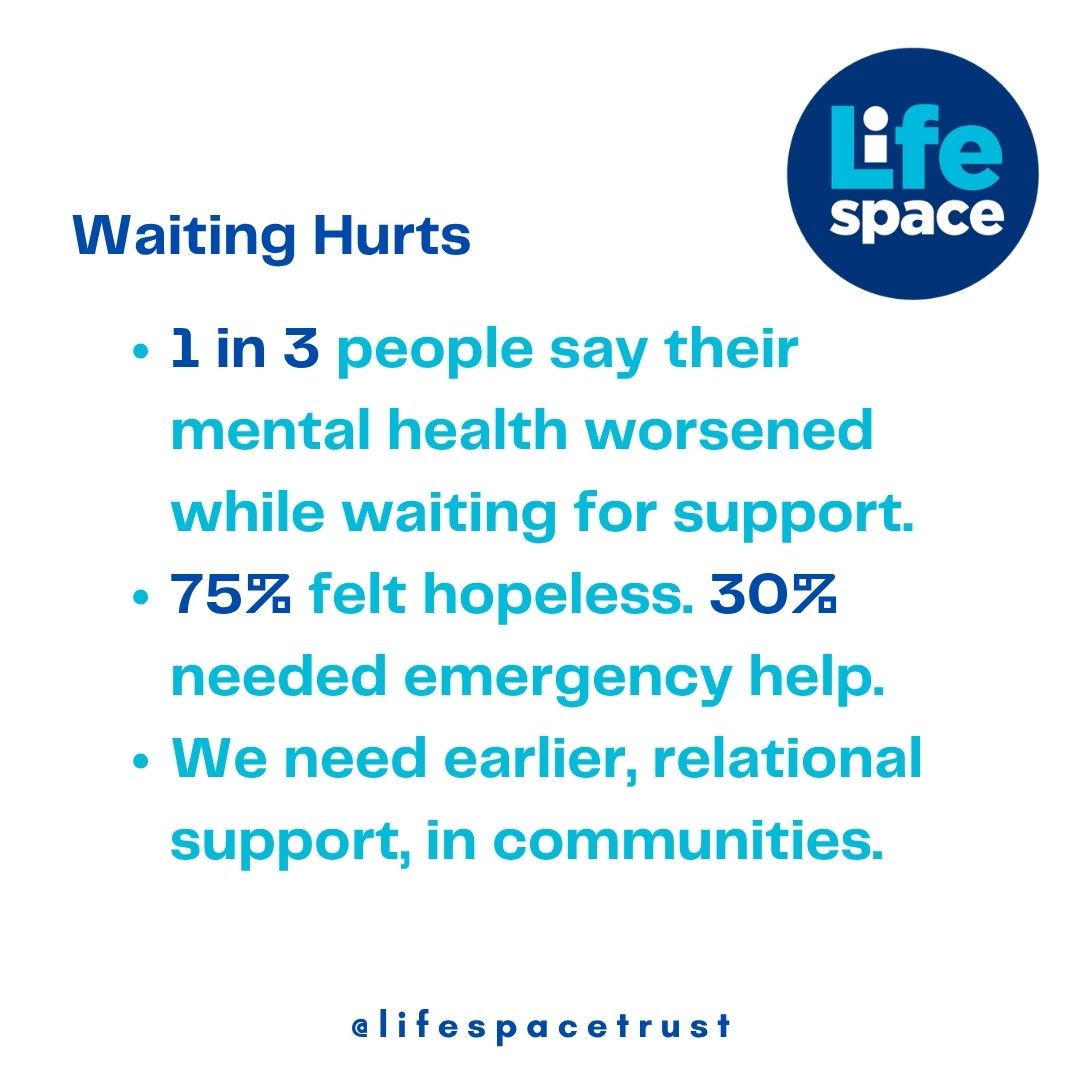
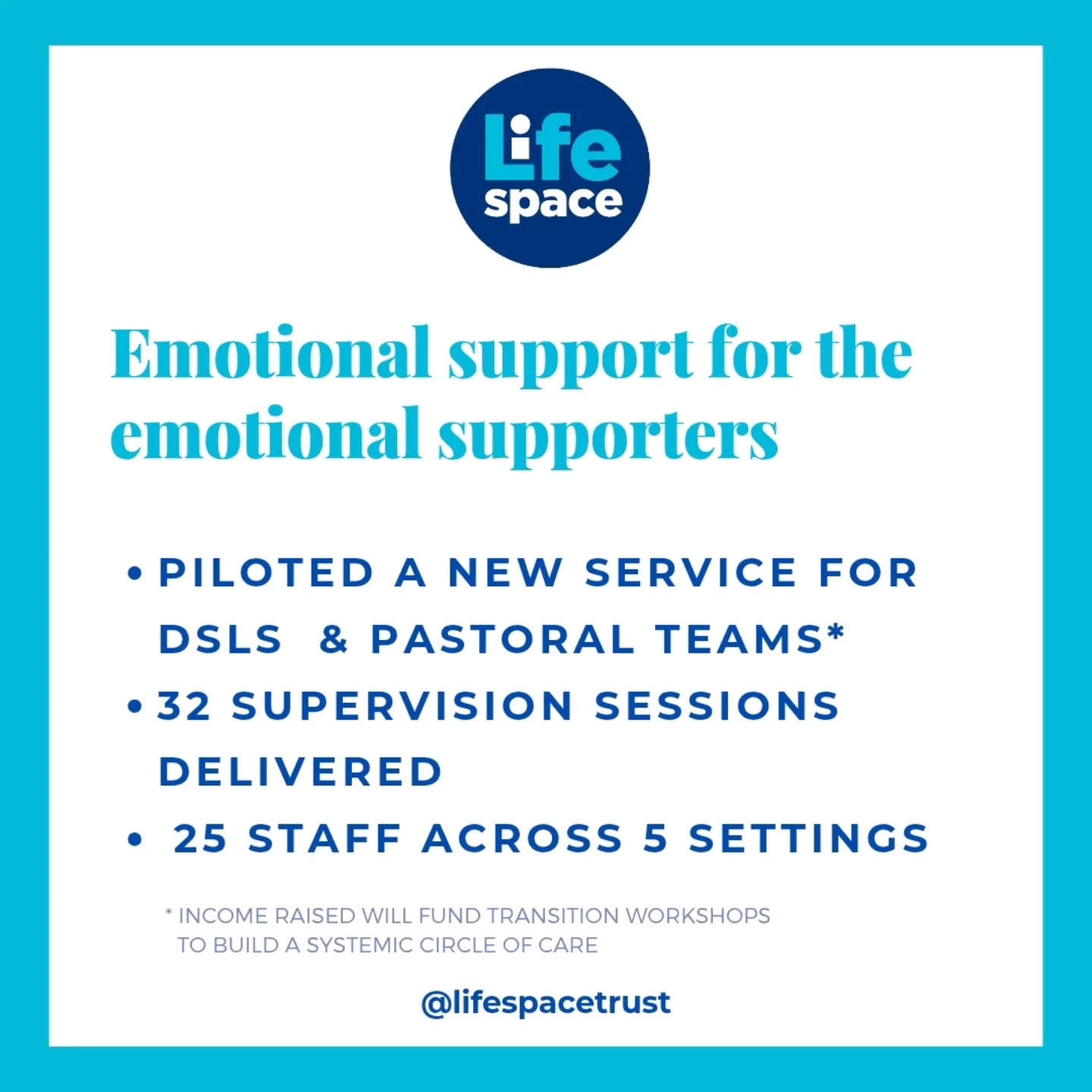
Schools do not have the luxury to hold waiting lists, or increase thresholds for support (as many other statutory services are increasingly forced to do). This is putting an unprecedented level of pressure into the education system and on school staff which, in turn, risks outcomes and the school experience for a growing number of young people. Lifespace are currently piloting a new service to alleviate some of this.
Policy Changes
Ofsted are soon to unveil an inclusion-focused framework which will mean schools are inspected not just on academic outcomes, but on how well they support student mental health and wellbeing. We welcome the sentiment but hope that this doesn’t becomes a missed opportunity for genuine cross-setting inclusion.
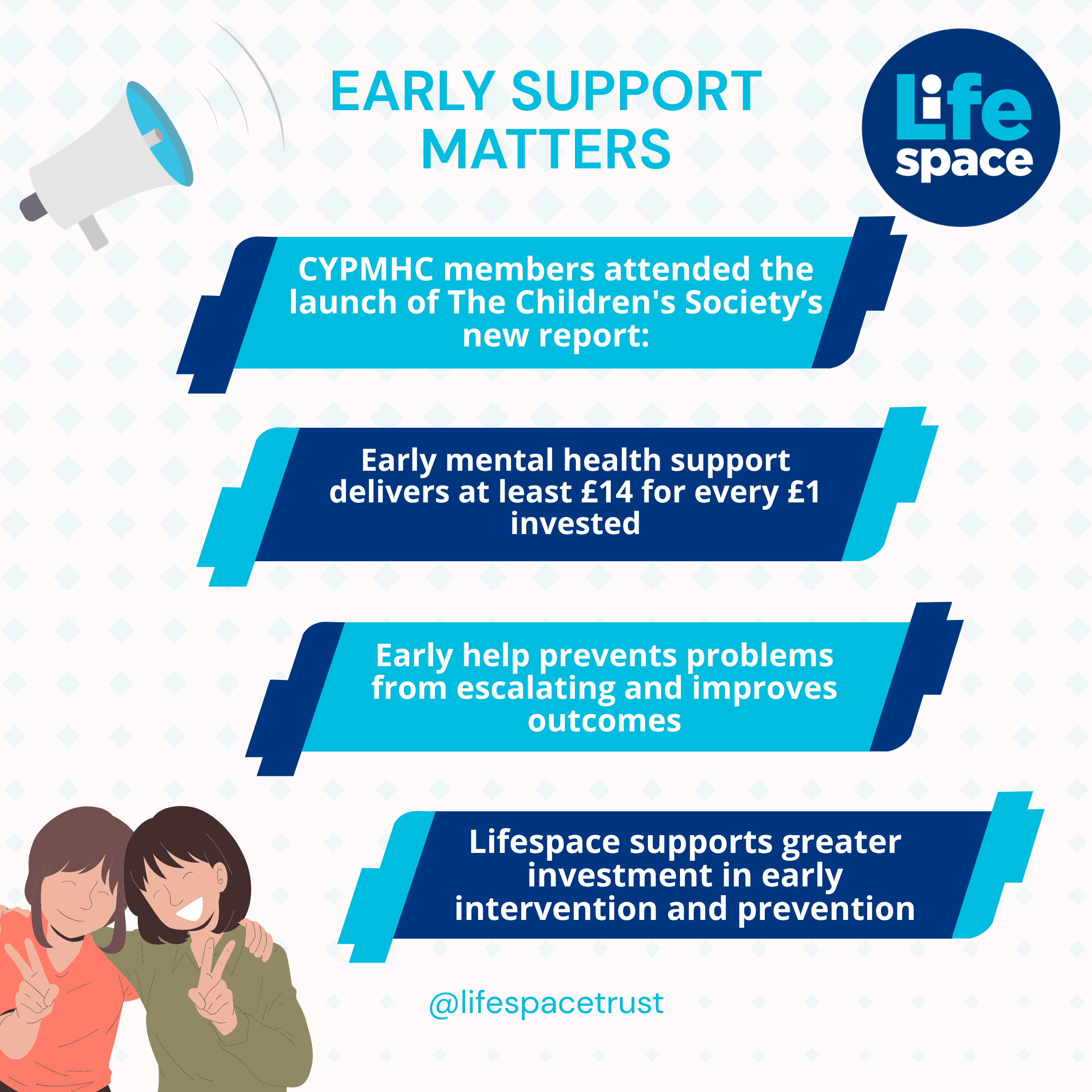
A long overdue review of the Mental Health Act is now at its third reading. There is emphasis around catching issues early and making sure young people get the support they need before things reach a breaking point. However, the cuts announced in this week’s Spring Budget will make roll out of this a challenge.
Lifespace’s Approach
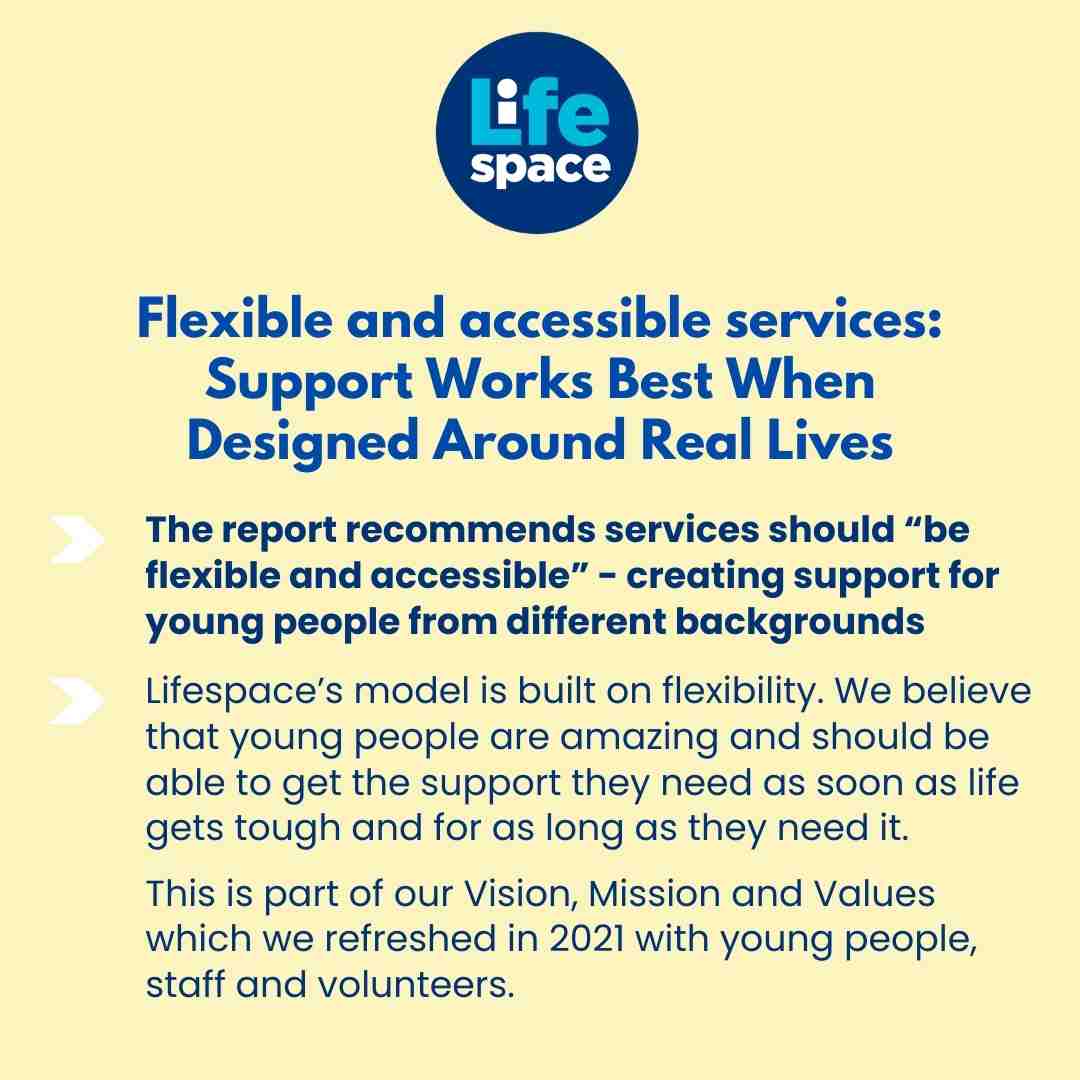
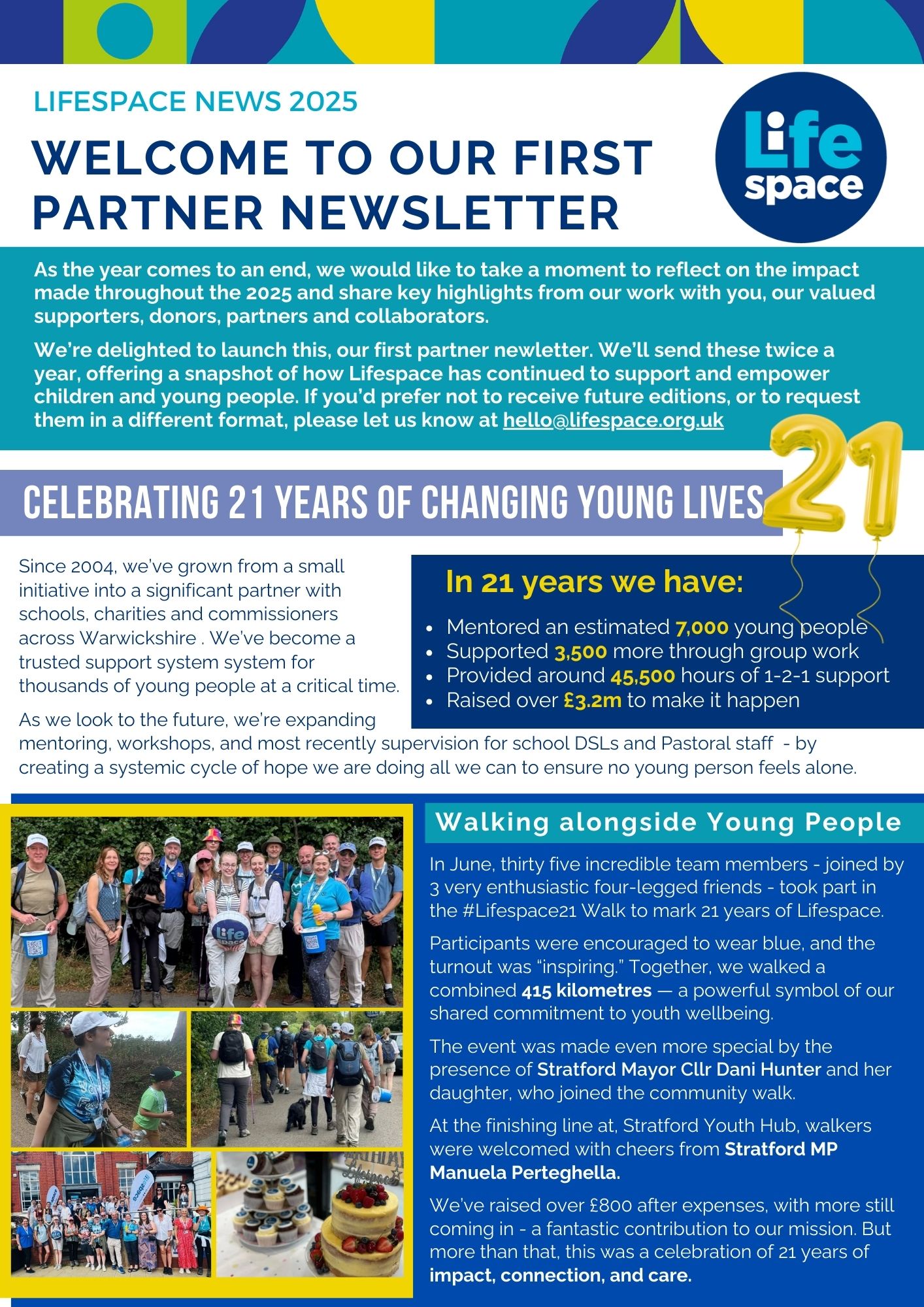
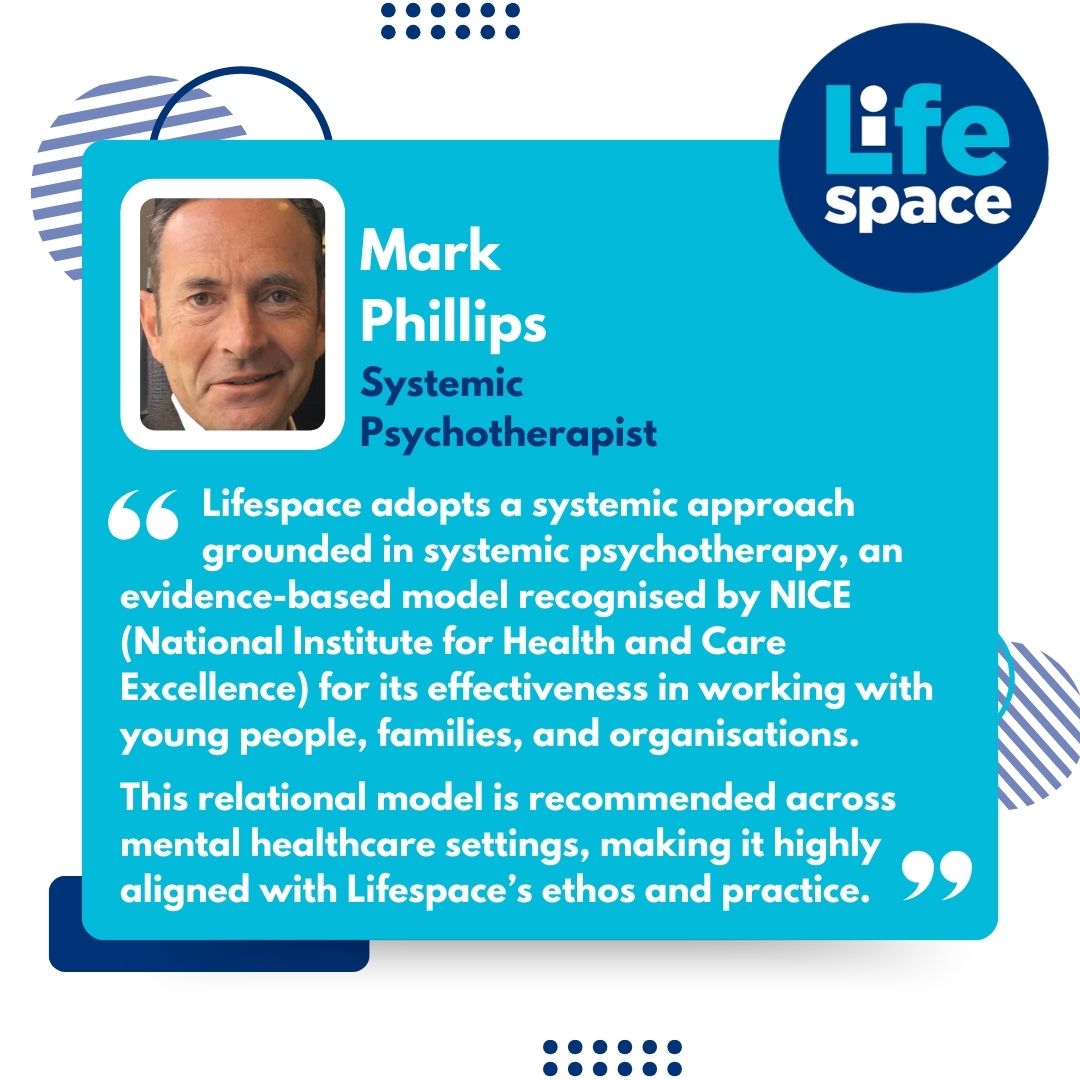
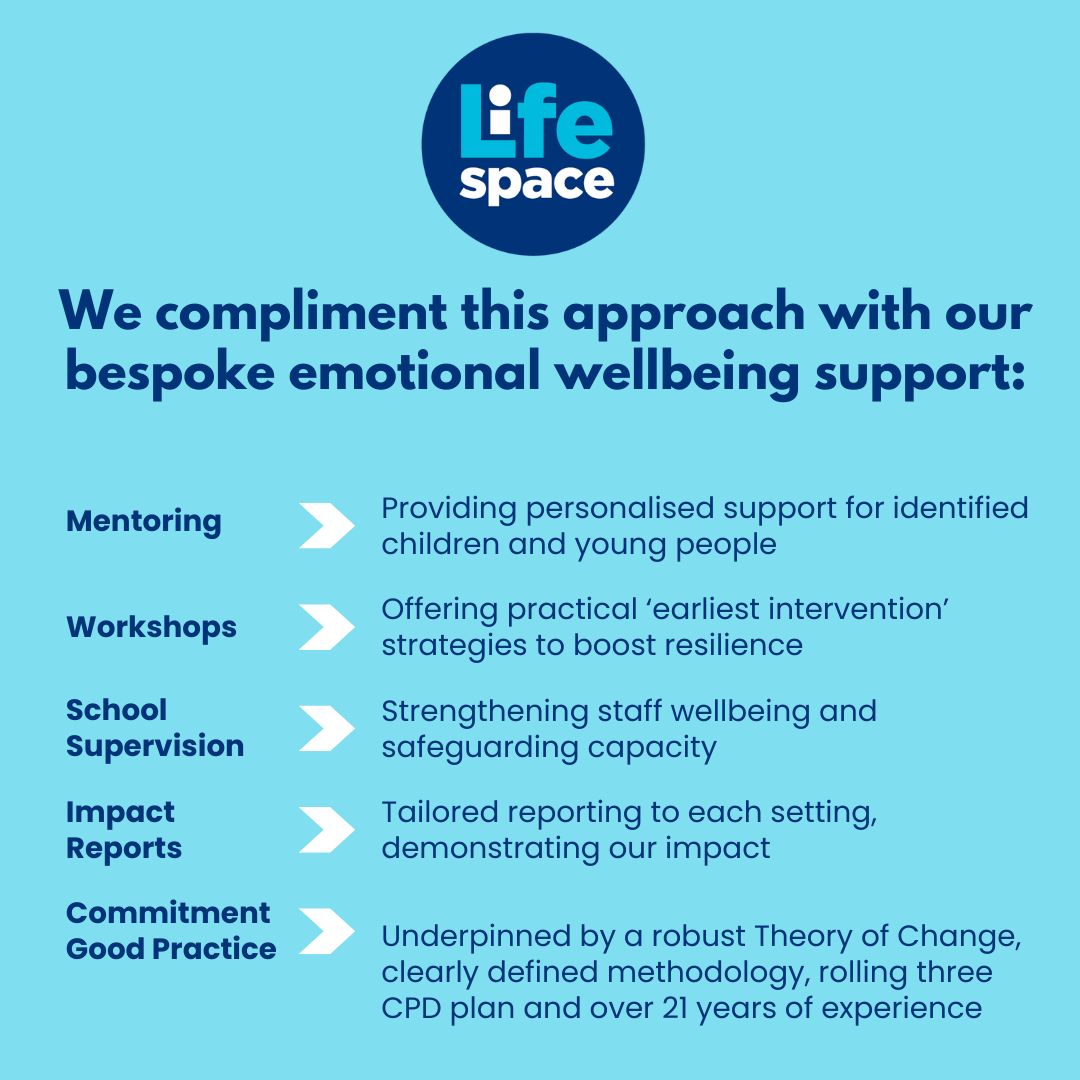
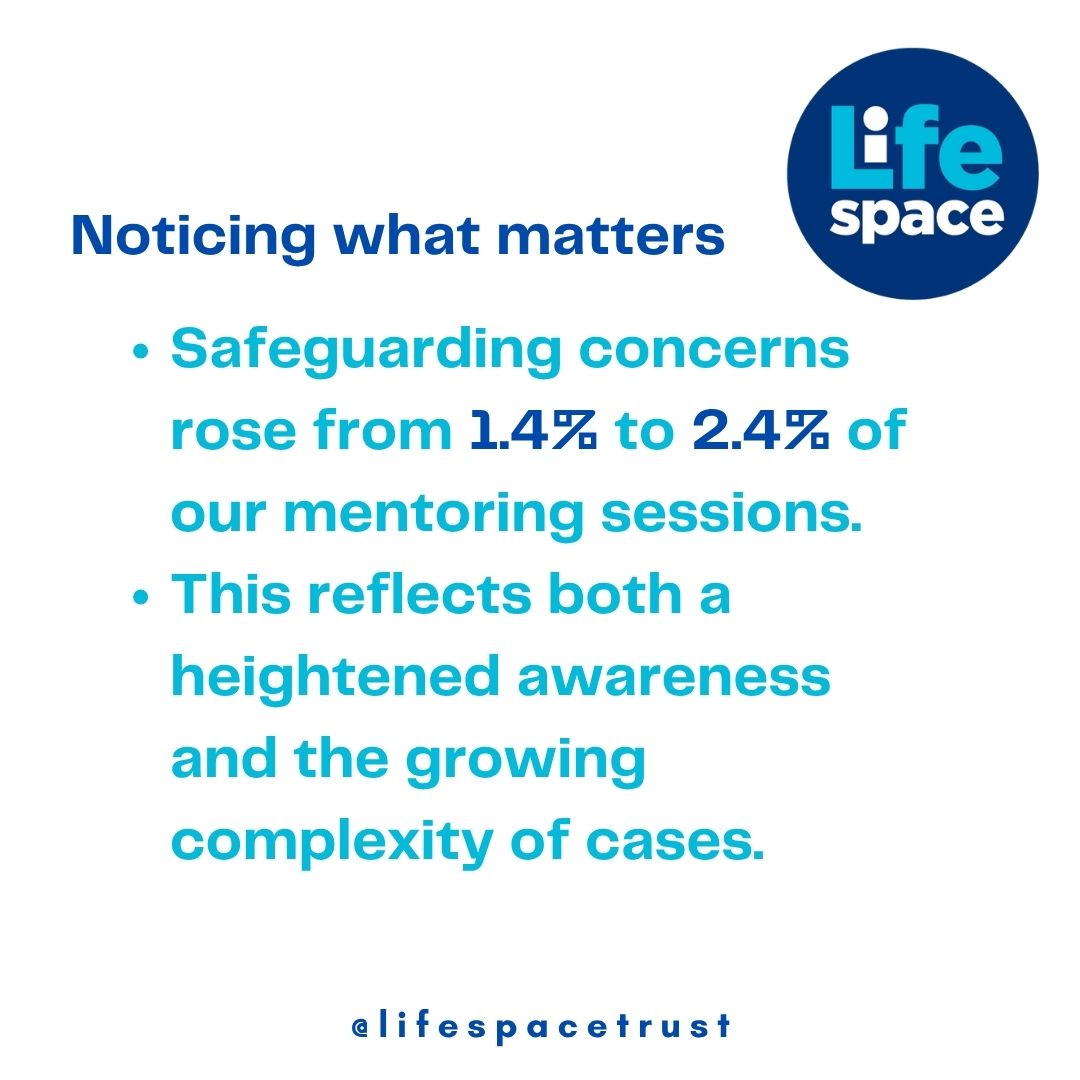
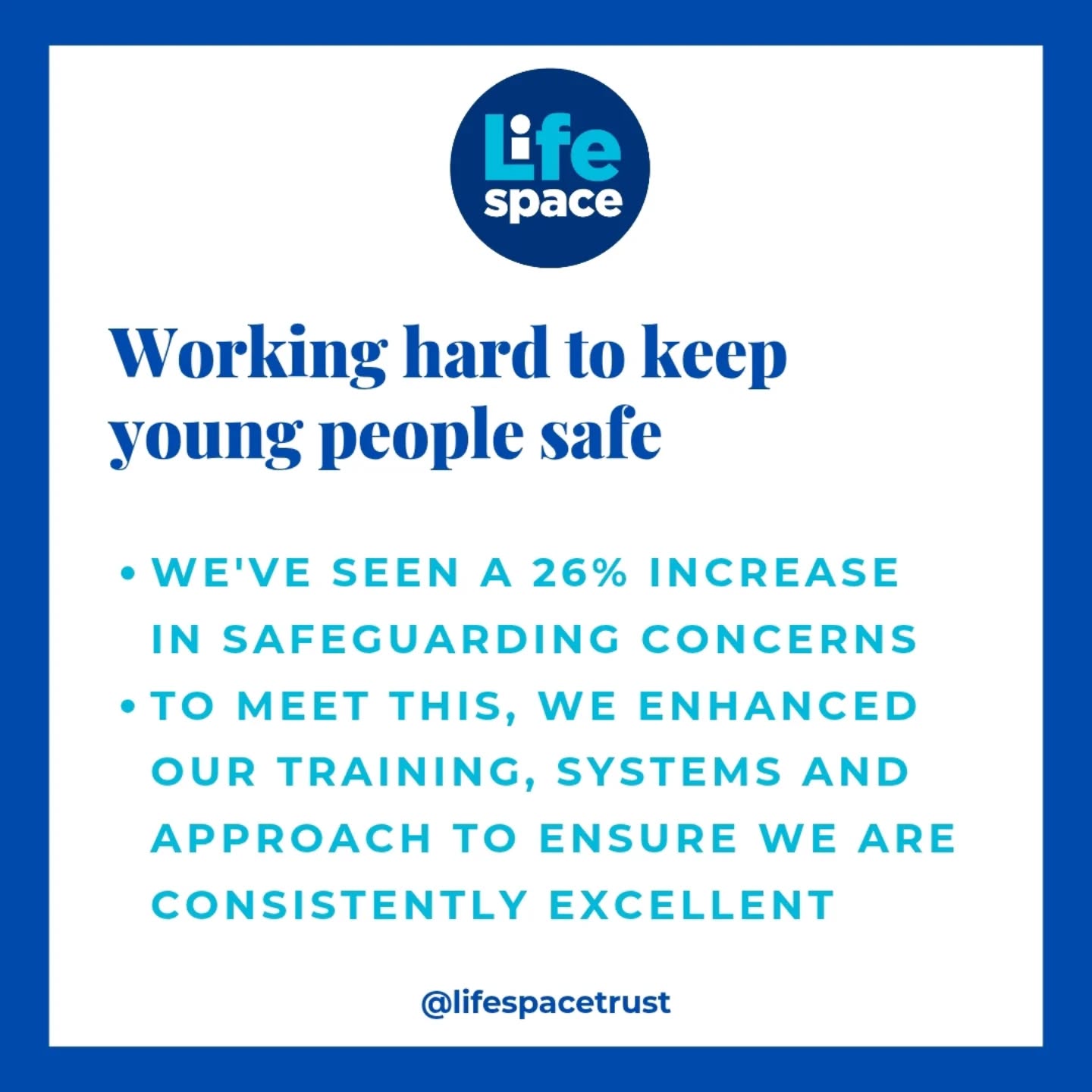
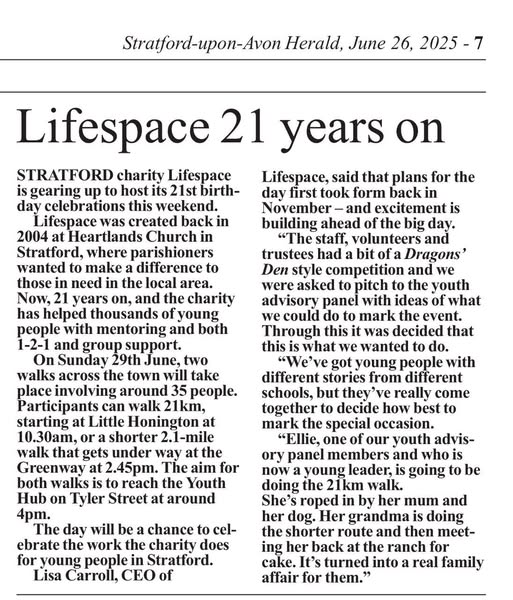
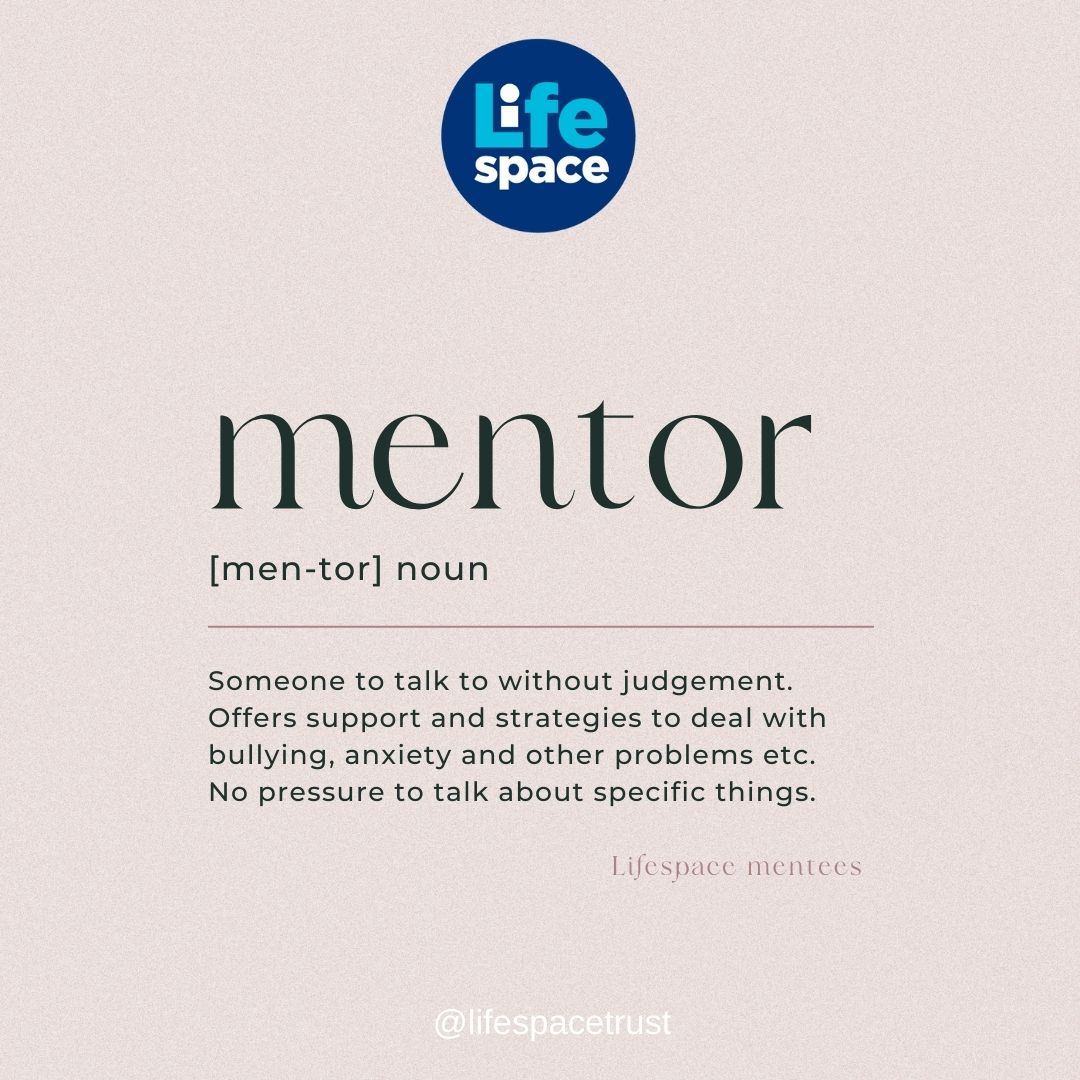
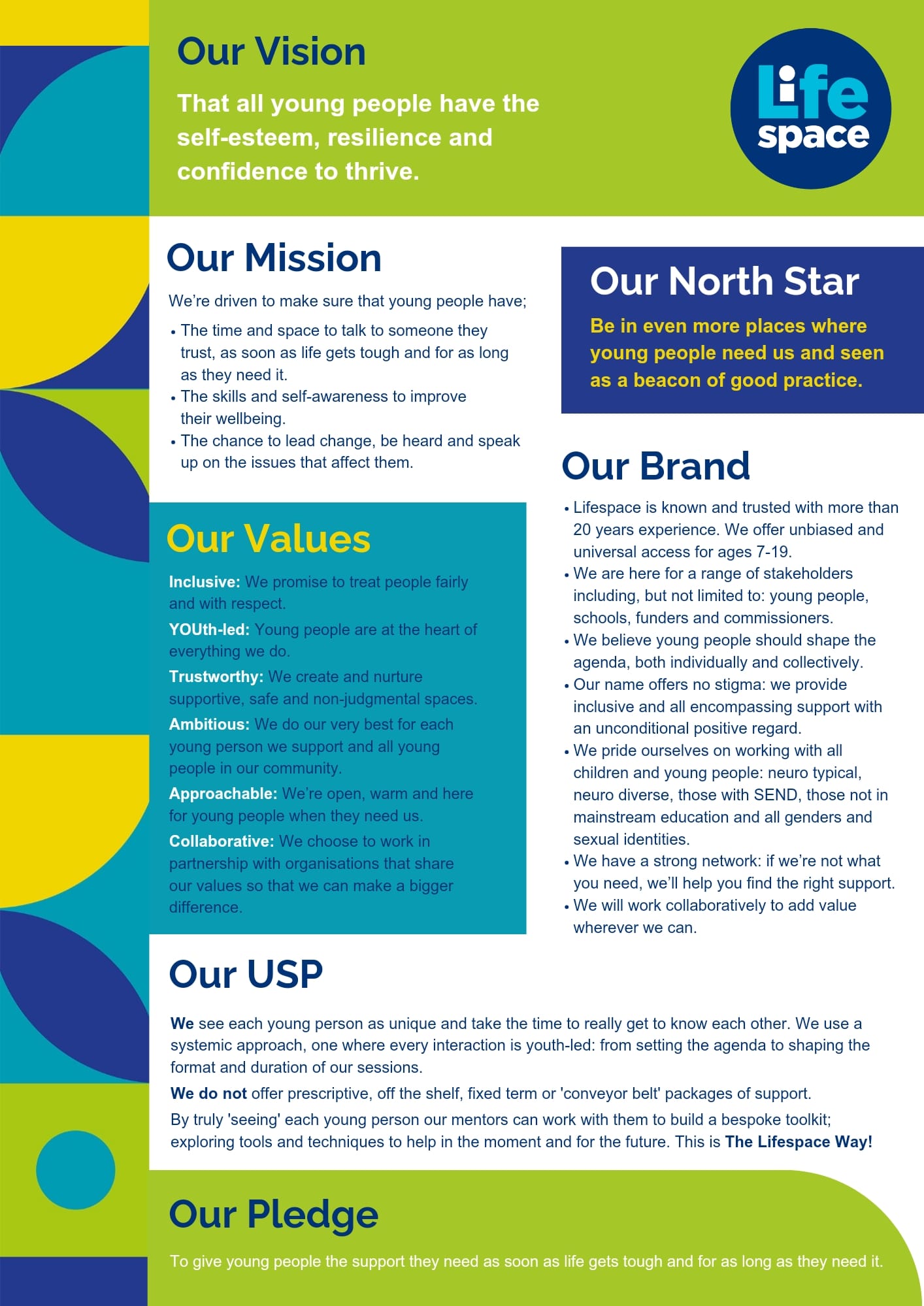
Lifespace know that young people are amazing and have made it our mission to help them realise that. We celebrate our 21st year in 2025 and have continuously grown and evolved to meet the needs of young people. Over the last 5 years we have seen a rapid increase in complex cases and now receive almost daily calls from families in crisis. To support this, we have a robust methodology, processes and training to ensure our Mentors can meet young people where they’re at. We believe every young person should have:
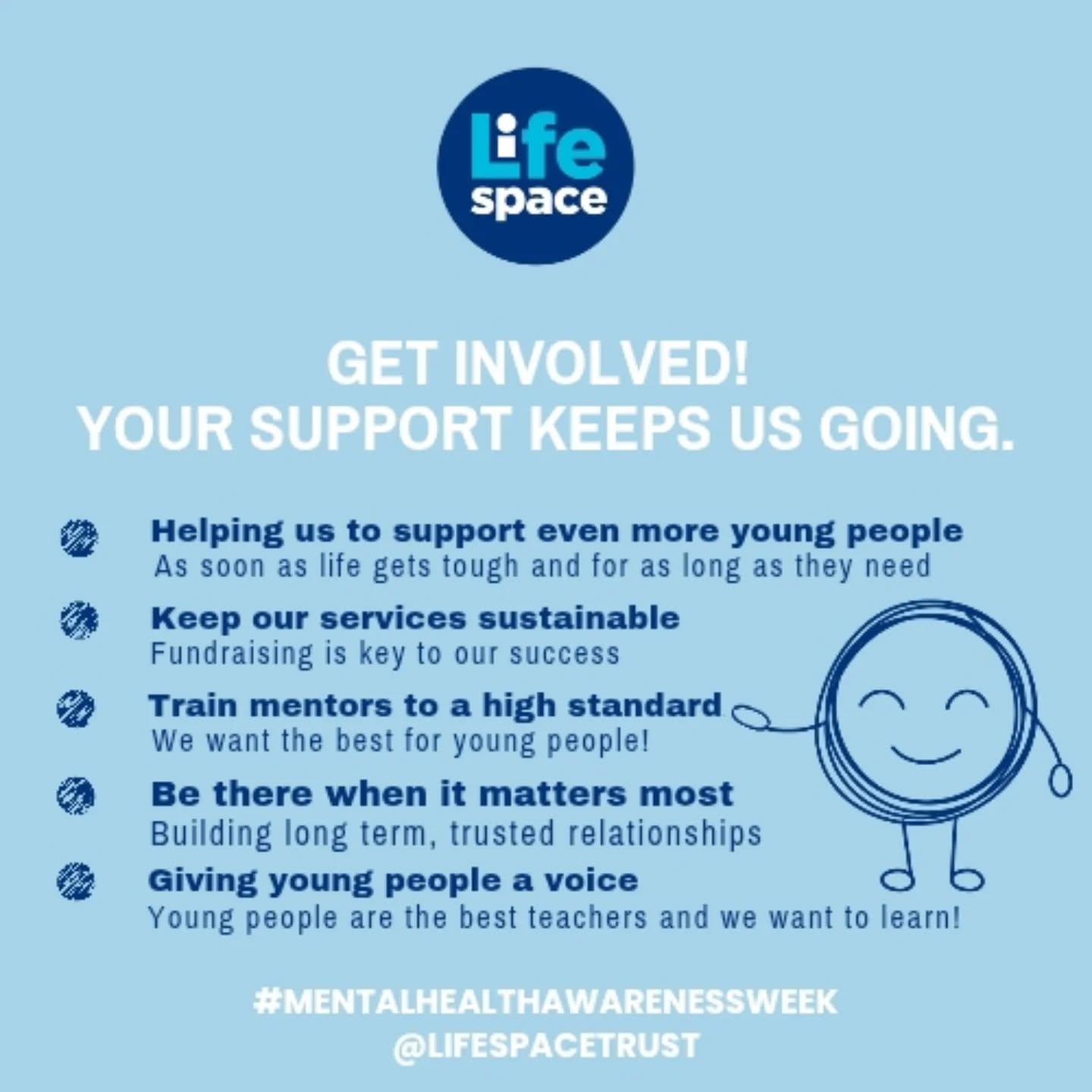
- The time and space to talk to someone they trust, as soon as life gets tough and for as long as they need.
- The skills and self-awareness to improve their wellbeing.
- Opportunities to lead change, be heard, and shape the services that support them.
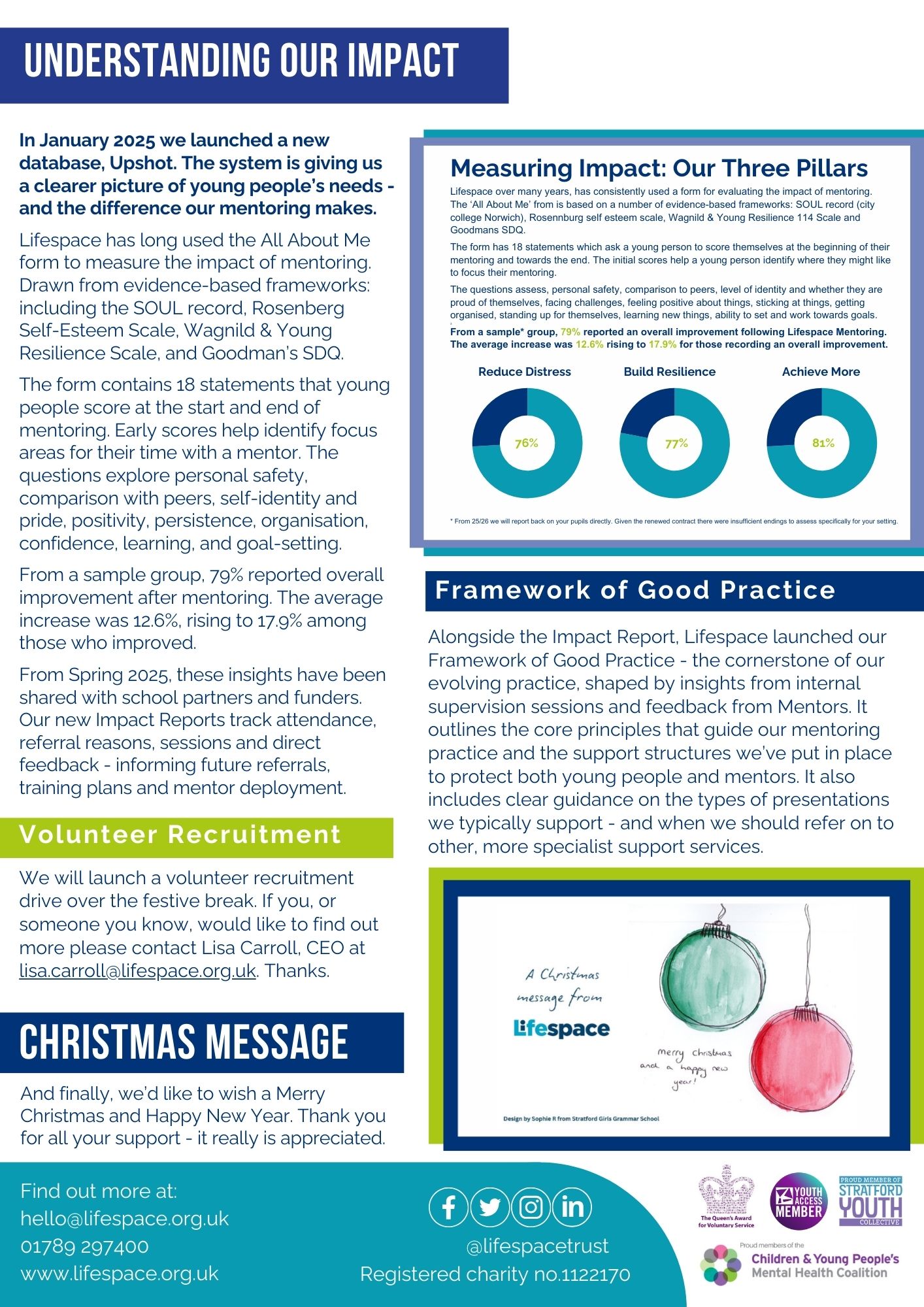
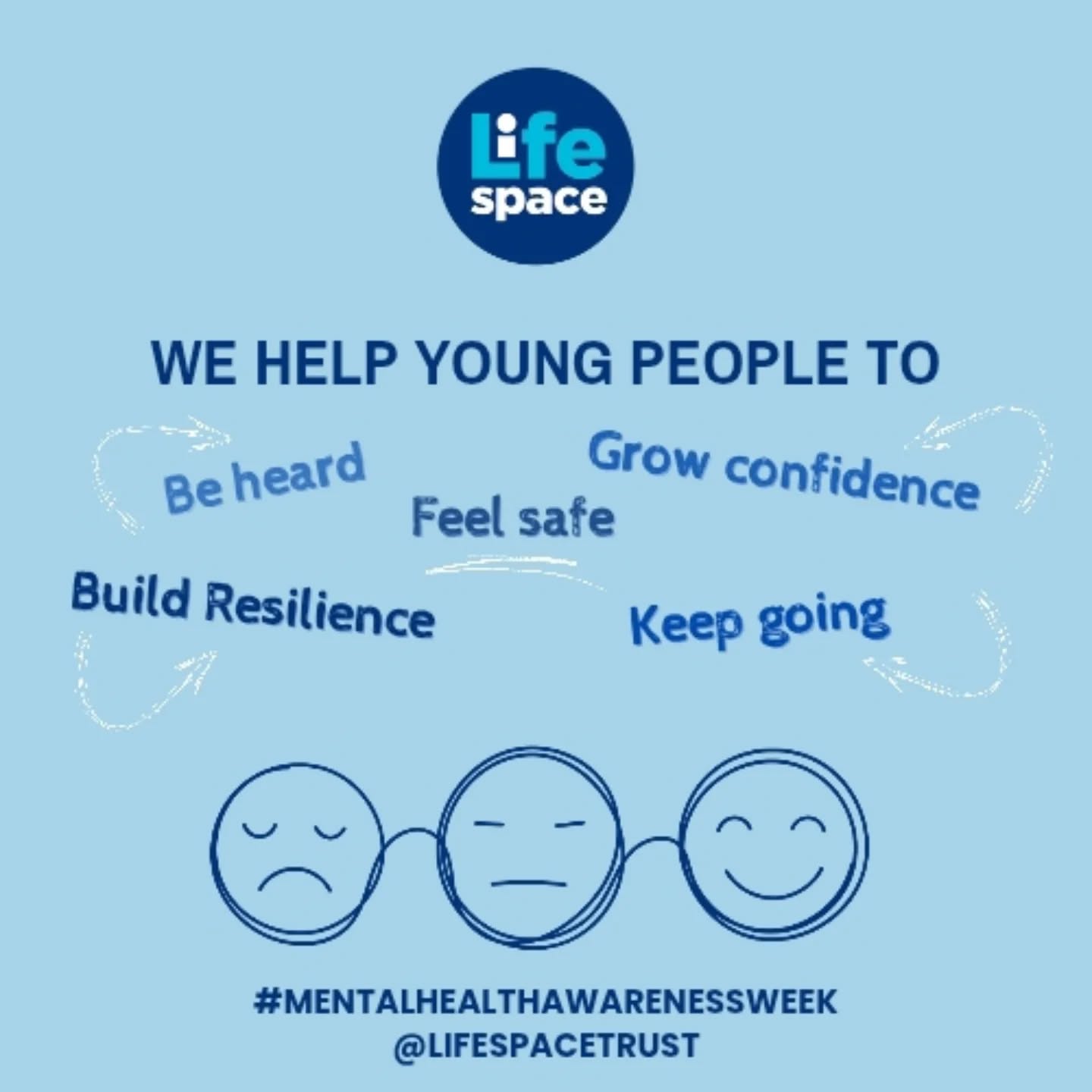
Through one-to-one mentoring, group work, and systemic, youth-led support, we help young people:
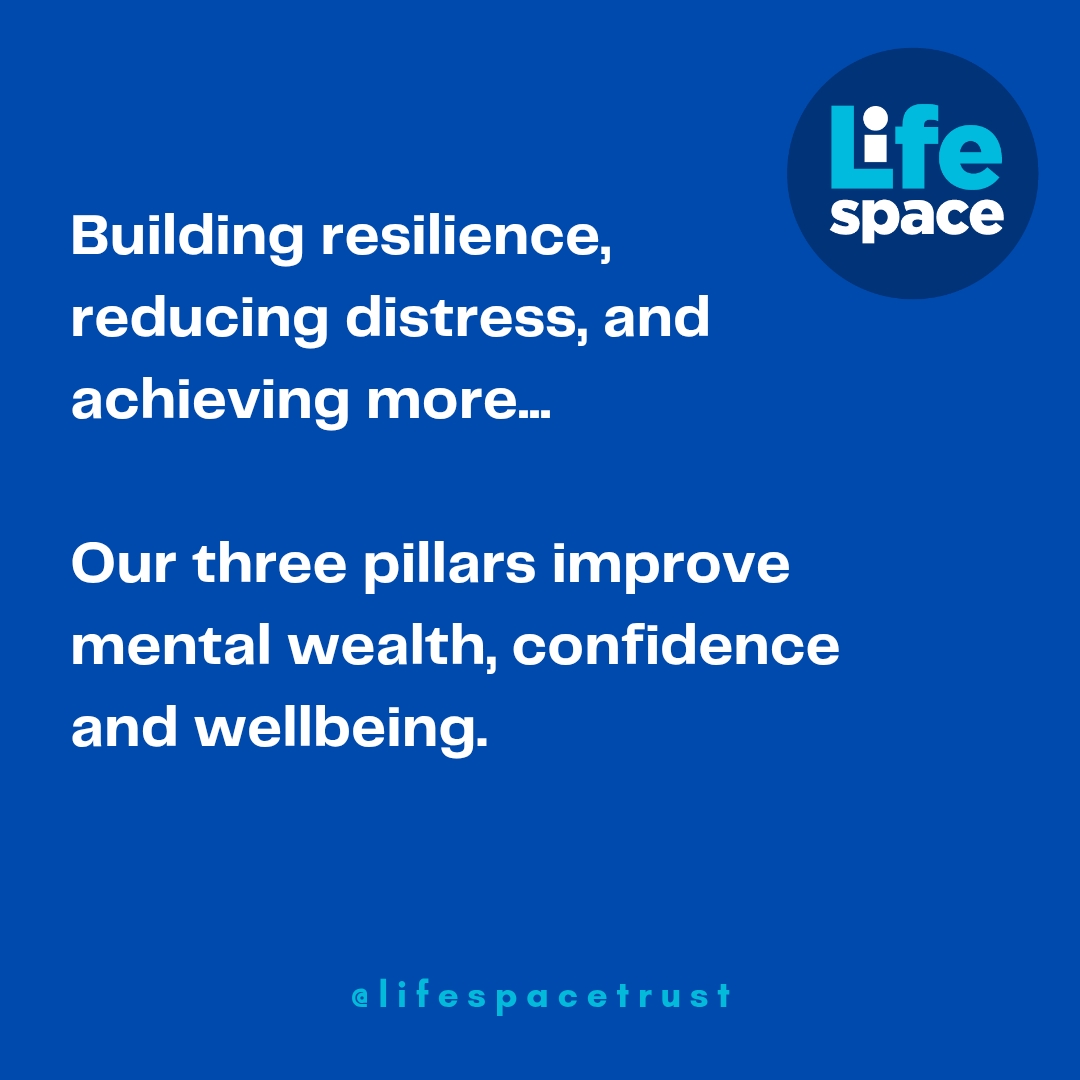
- Build Resilience - so they feel seen, valued, and capable.
- Reduce Distress - by equipping them with coping strategies that work.
- Achieve More - through better mental wellbeing and support to excel.
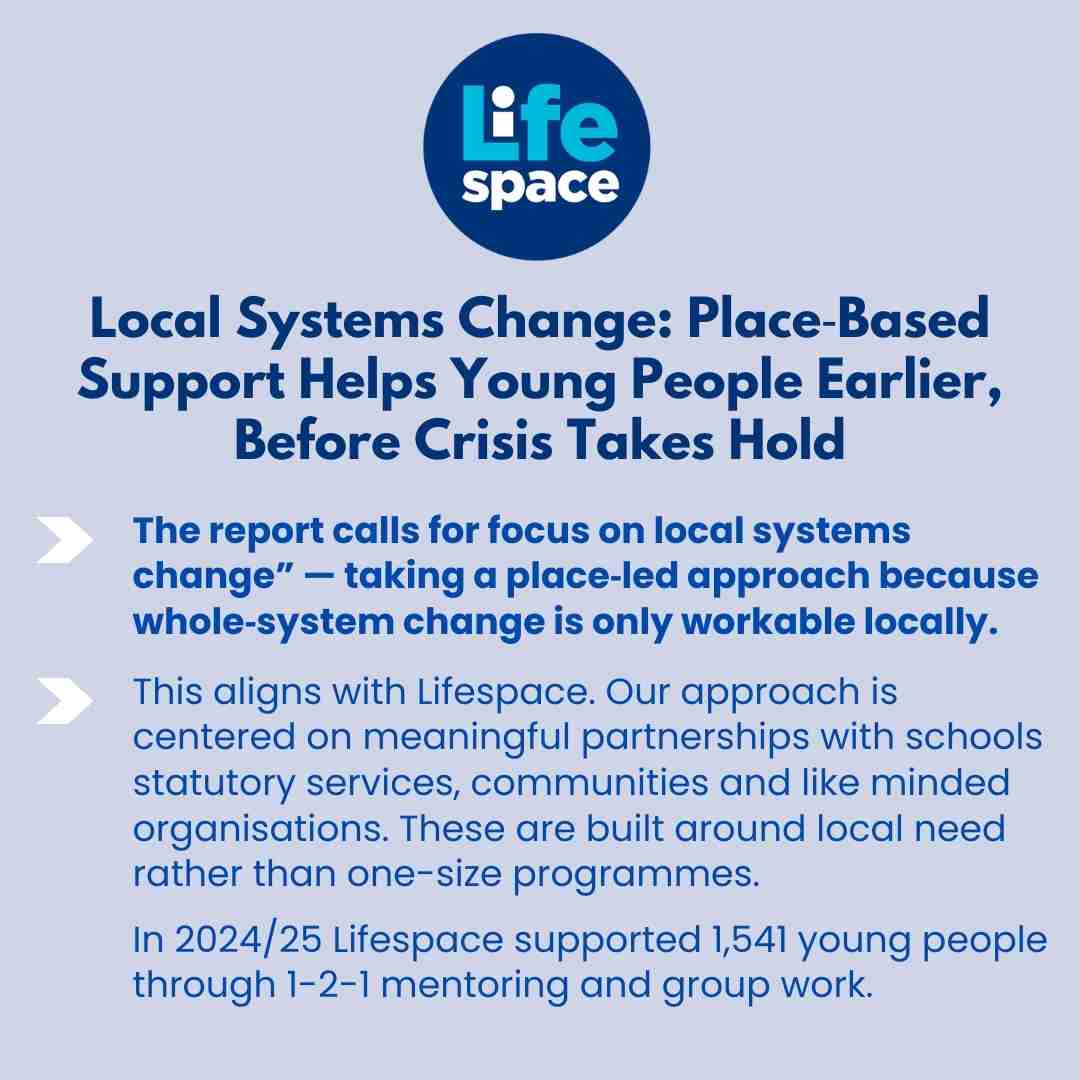
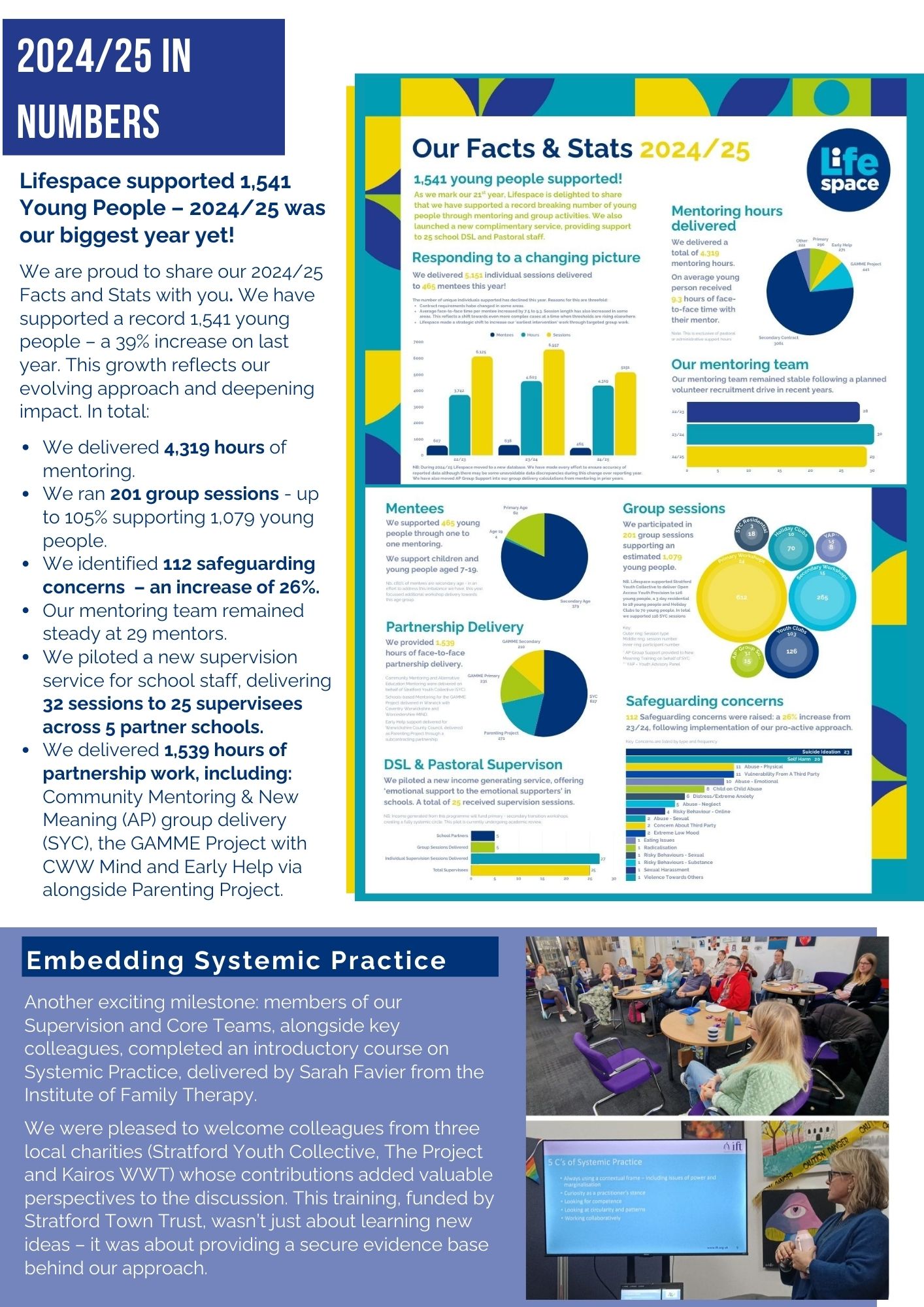
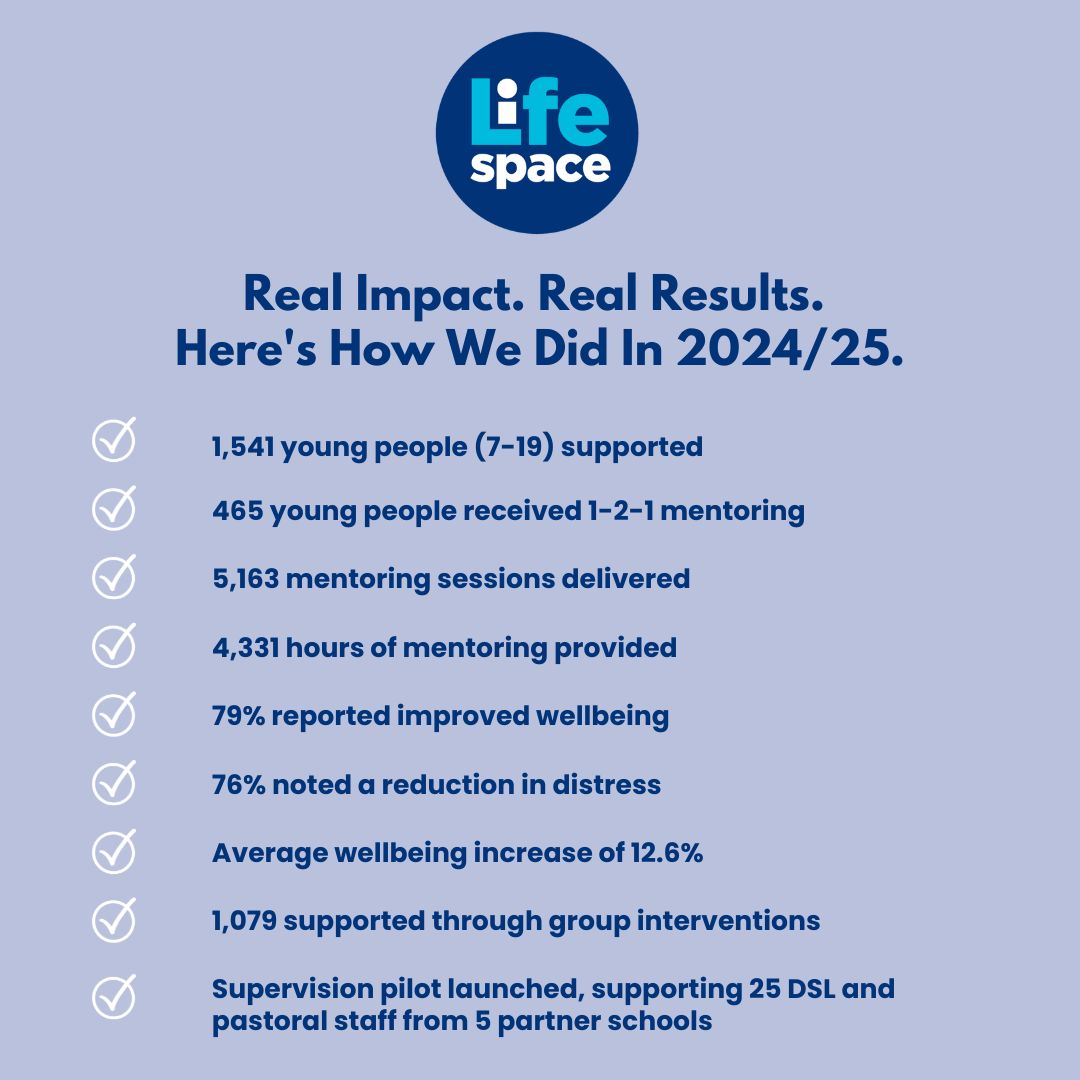
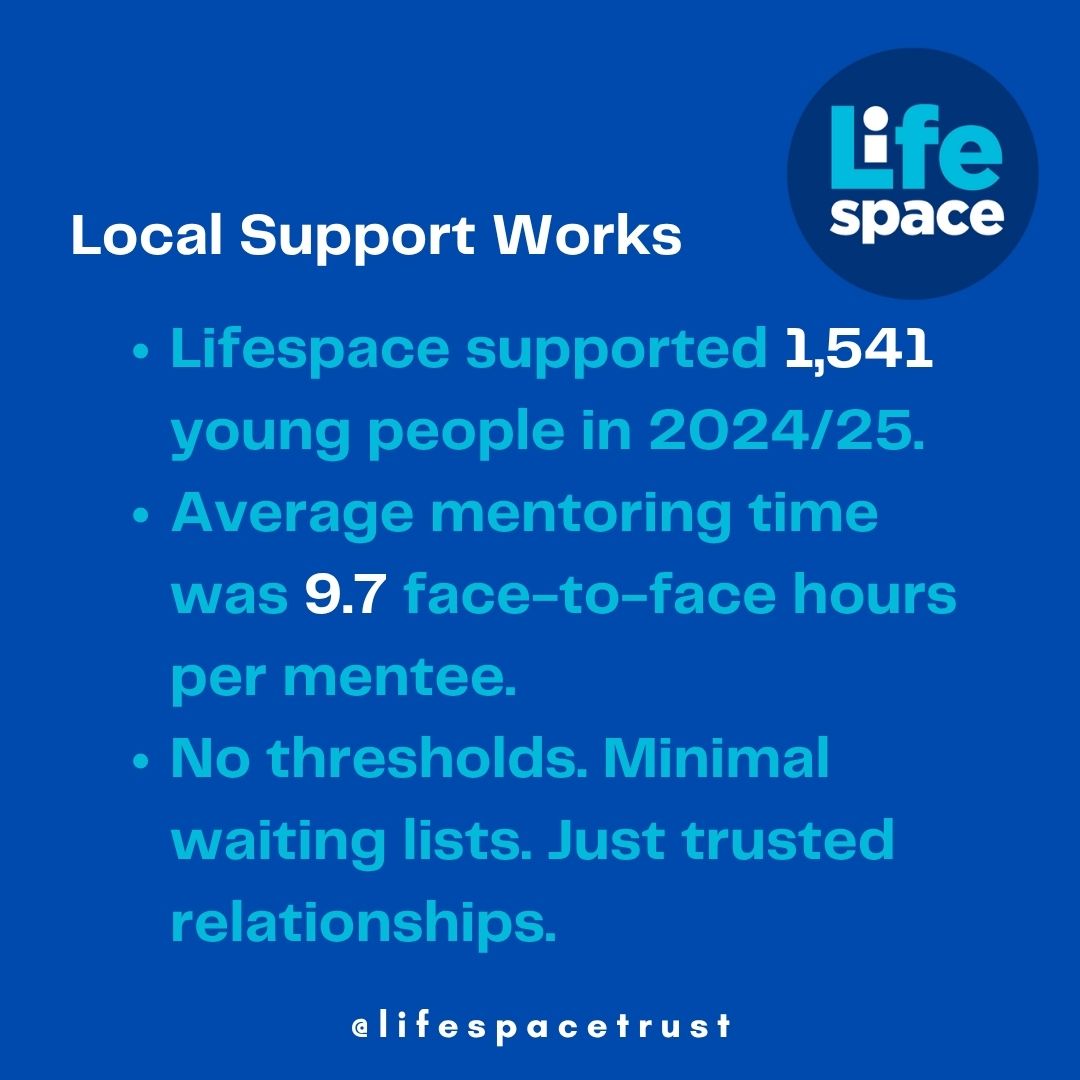
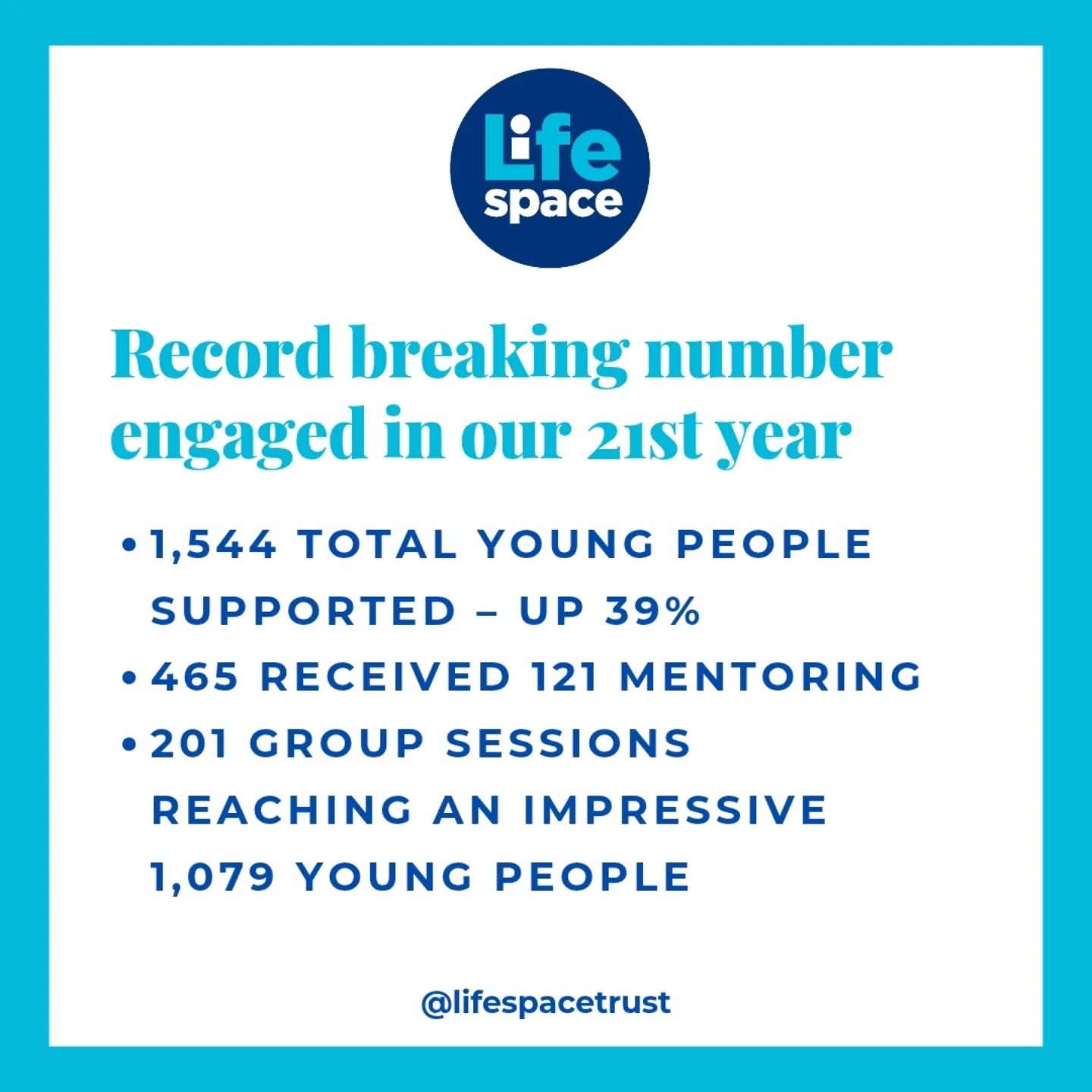
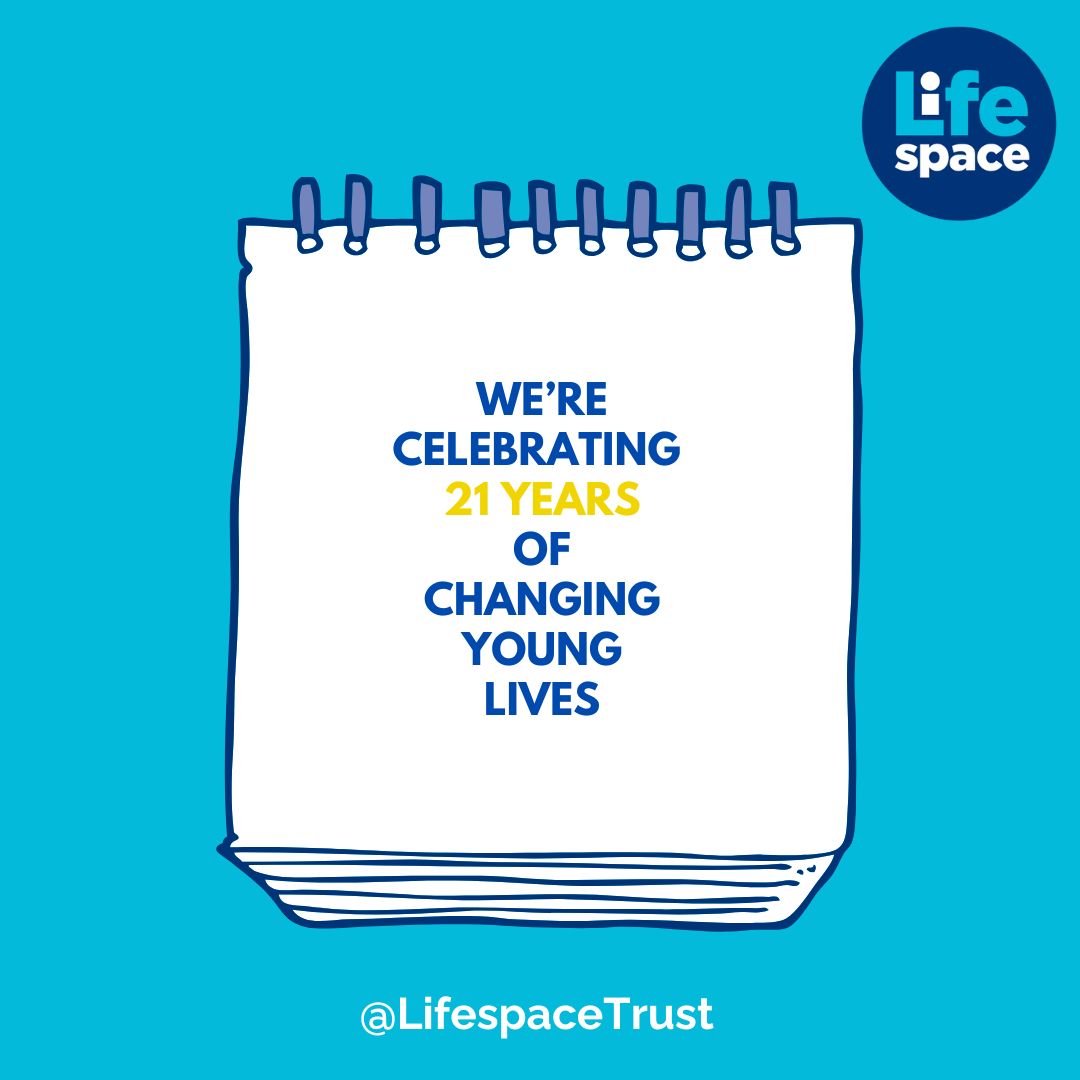
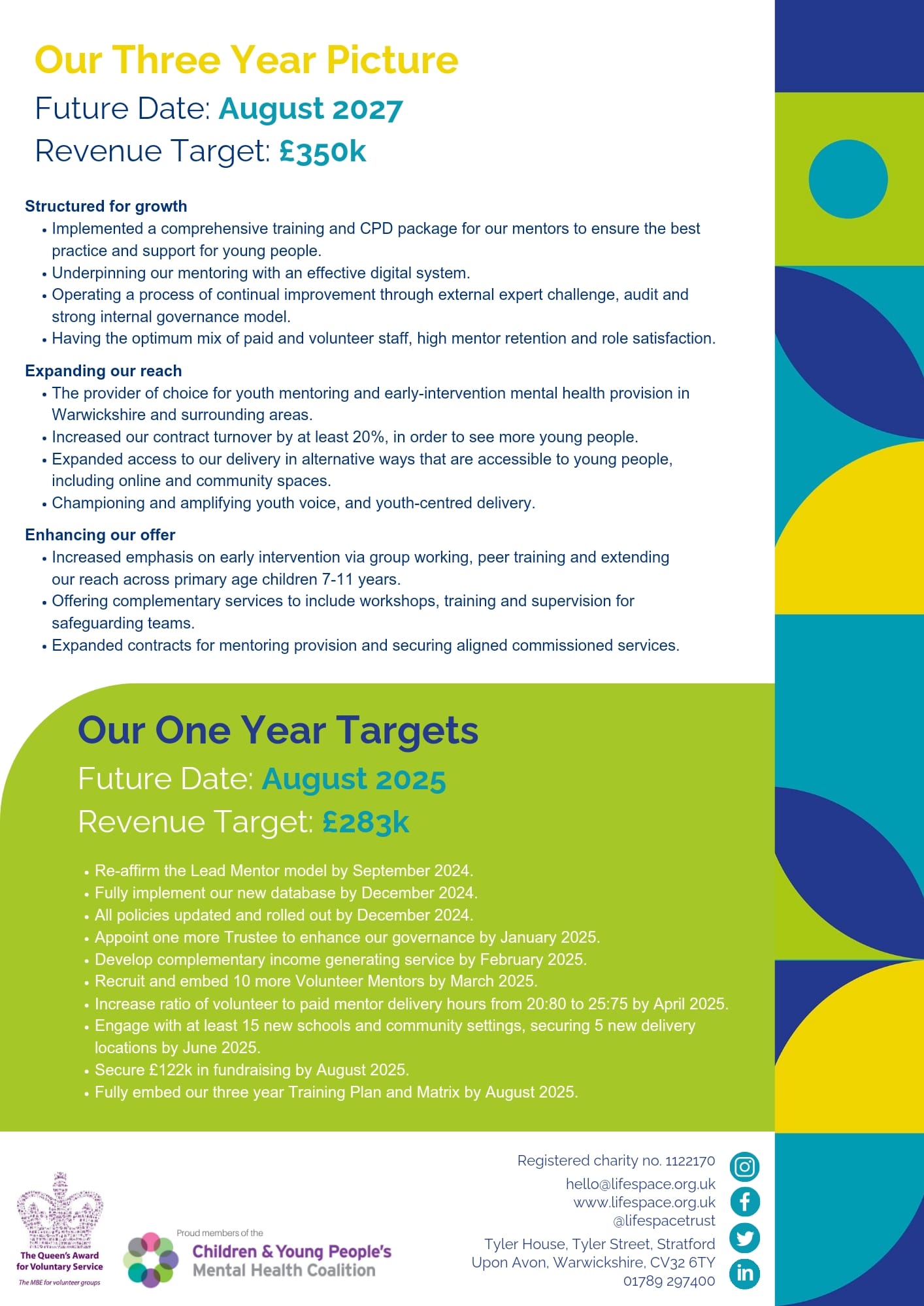
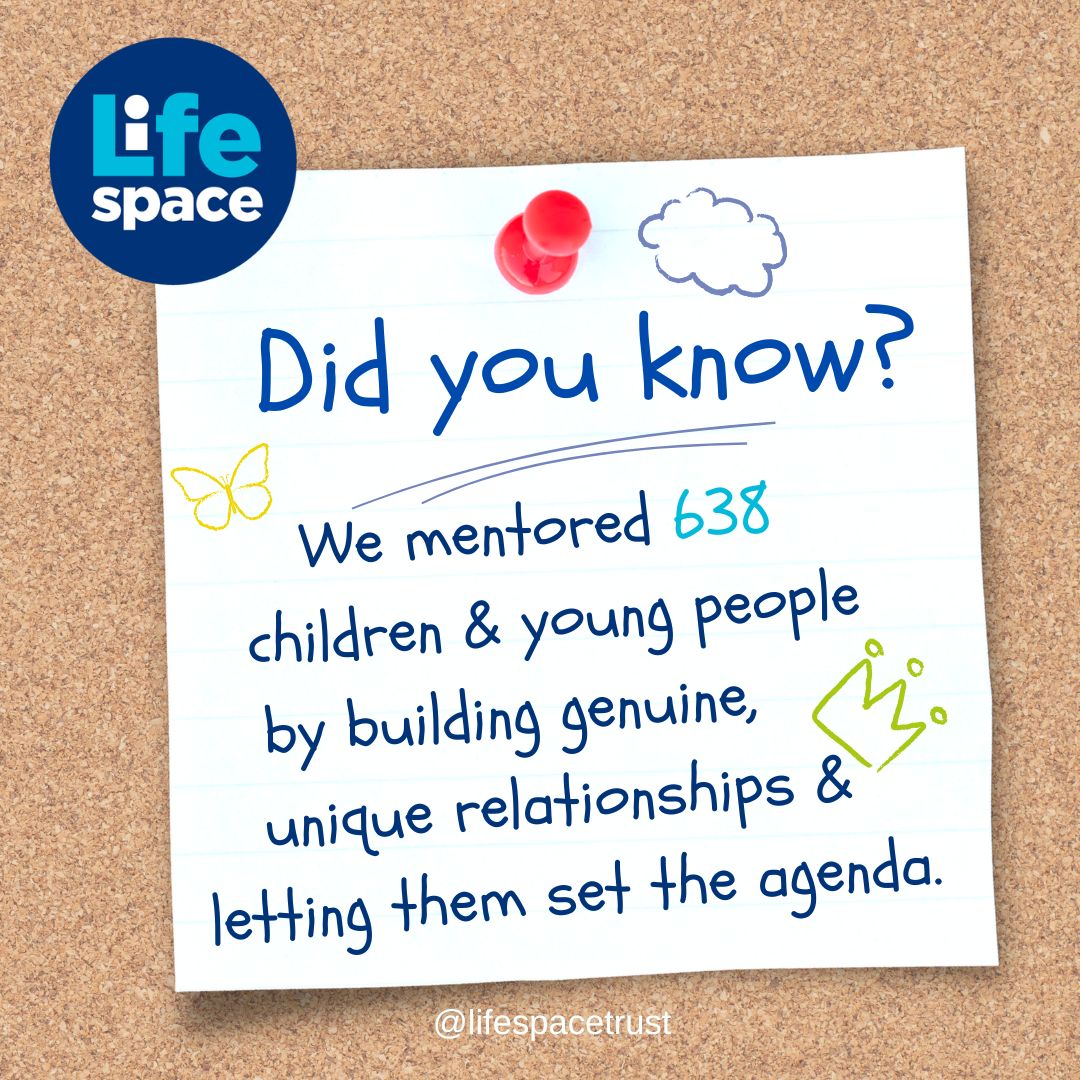
These three pillars drive our work and underpin our three-year strategy. Last year, we supported more than 650 young people through one-to-one, relational mentoring and hundreds more through group delivery. As we reach our own coming of age, Lifespace are committed to expanding our mentoring, increasing access to primary-age children, supporting overstretched DSL and Pastoral Teams, and strengthening partnerships with schools and communities.
Our Impact: Qualitative and Quantitative Insights
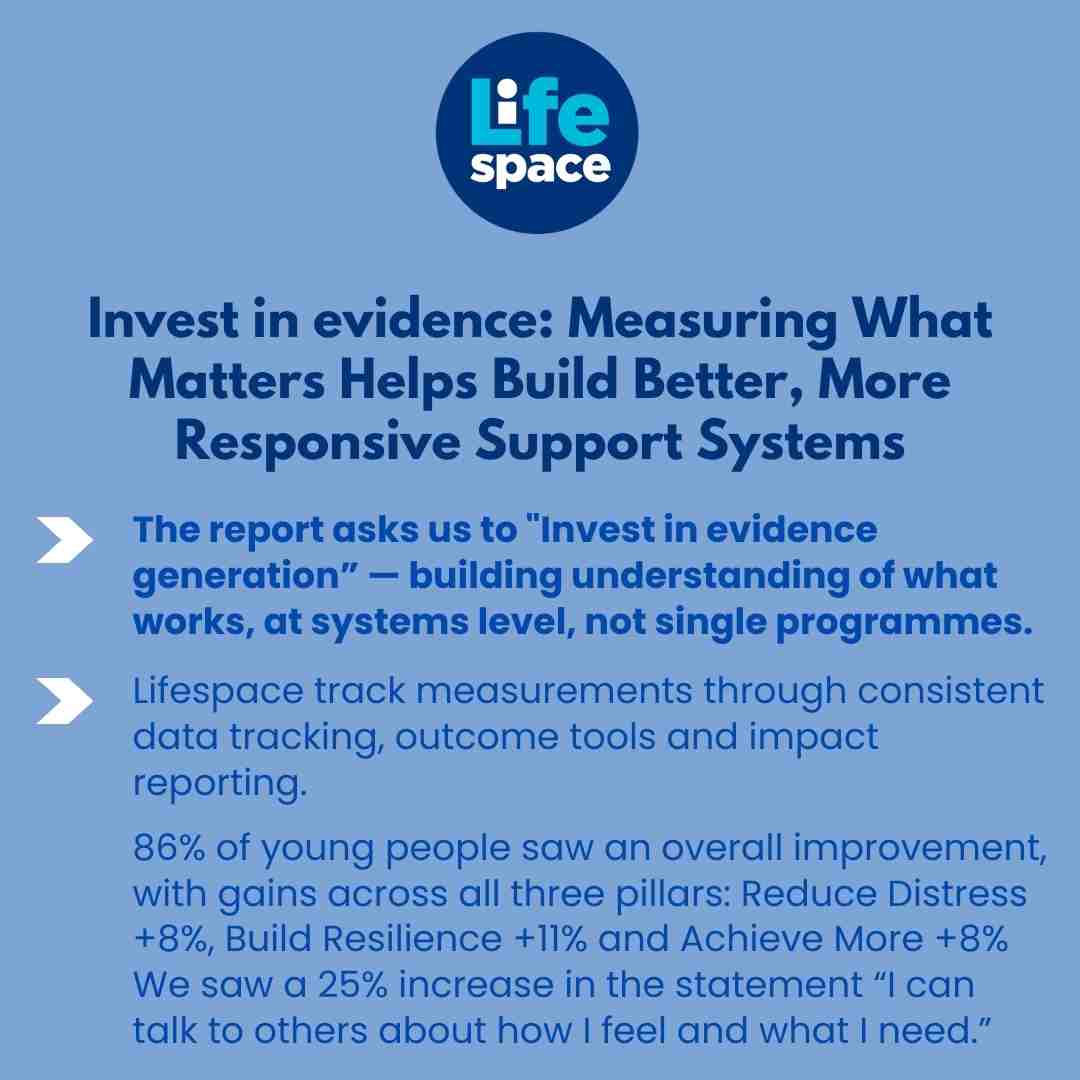
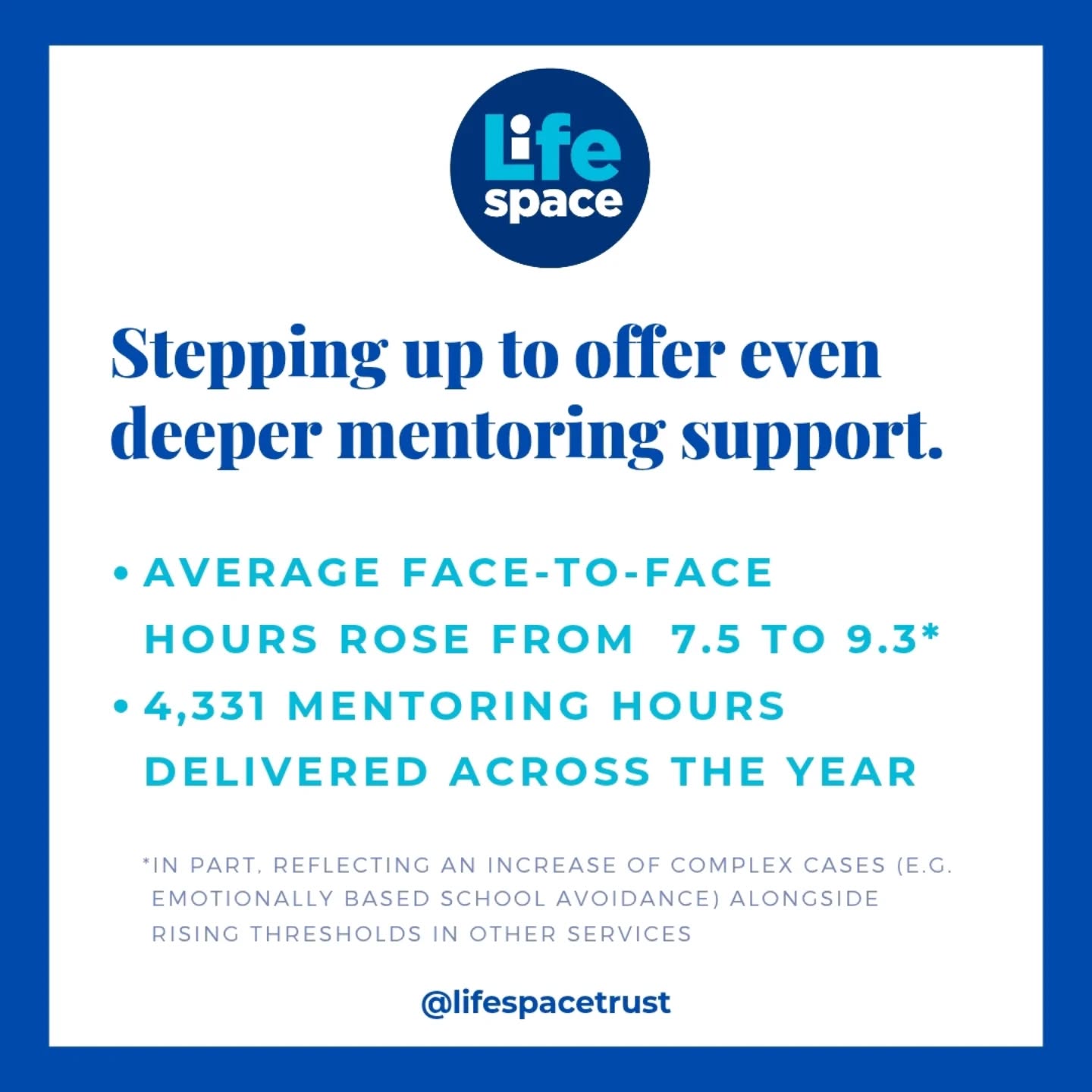
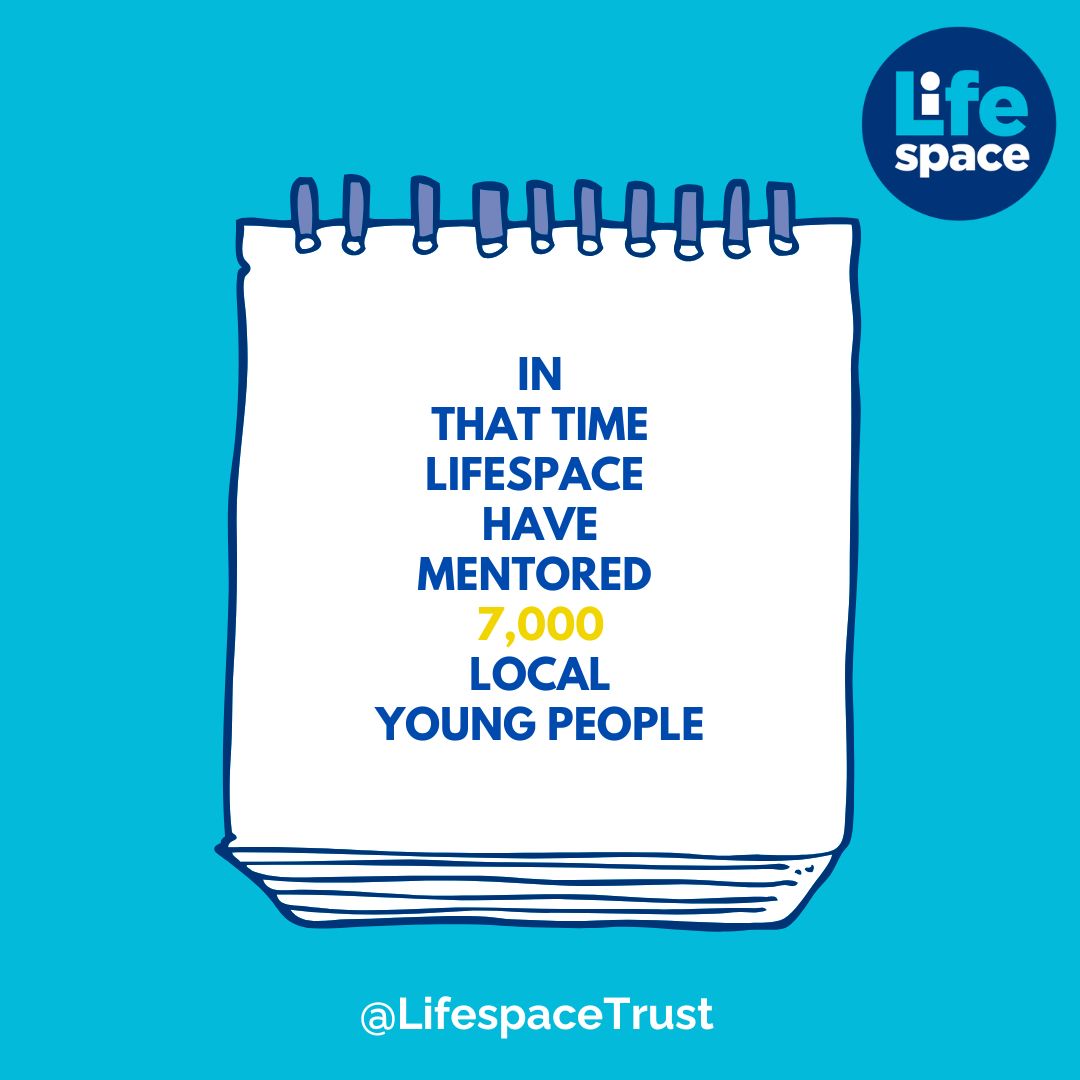
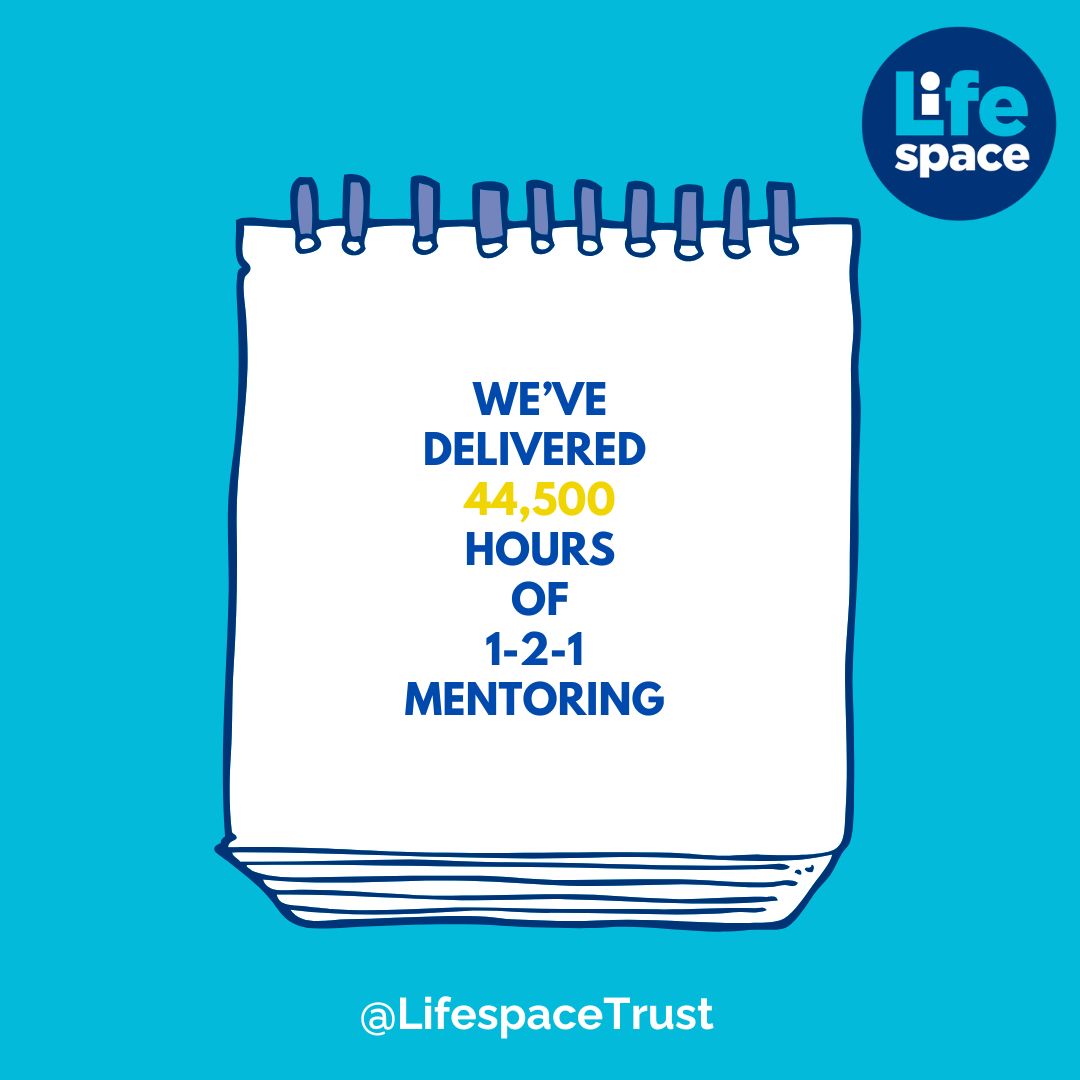
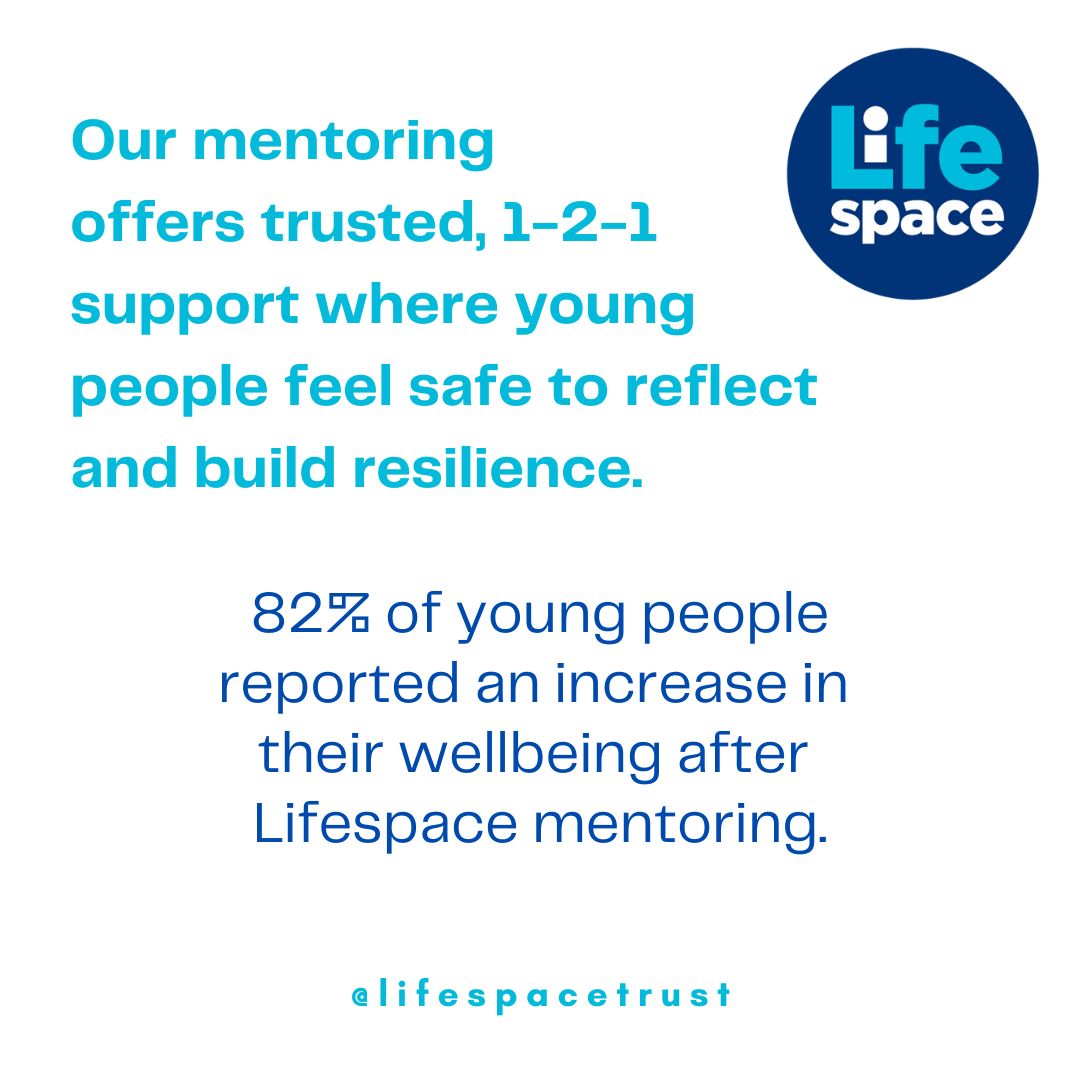
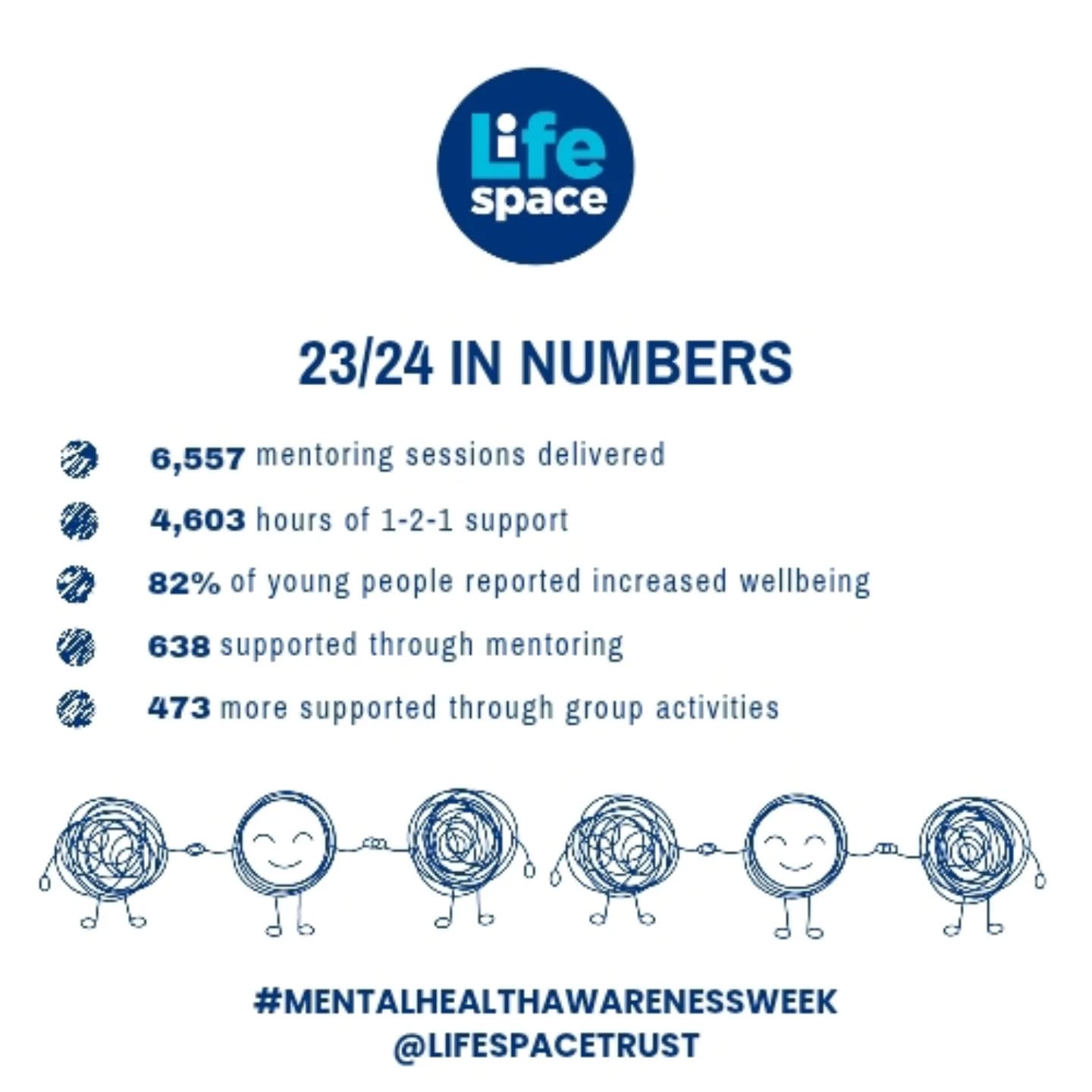
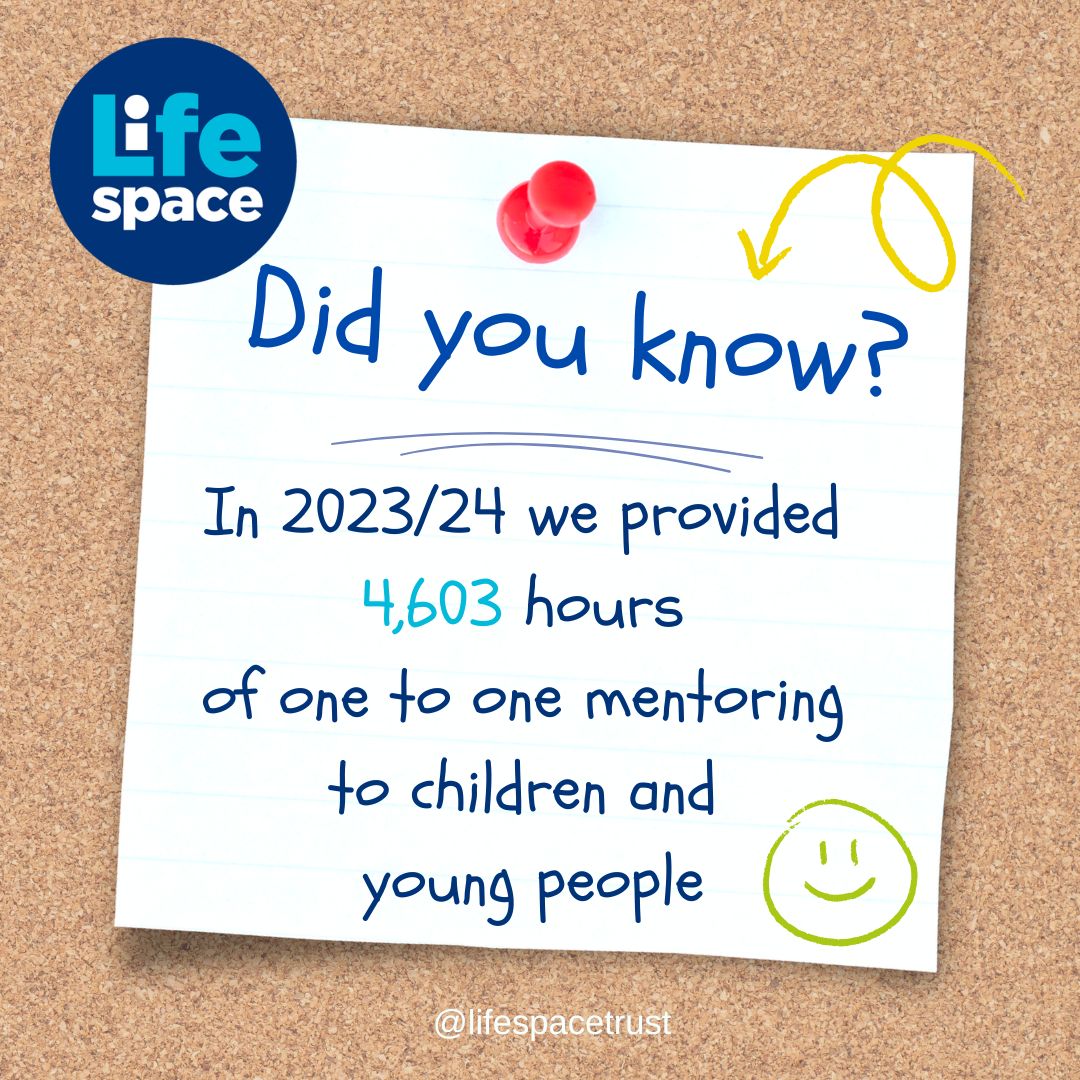
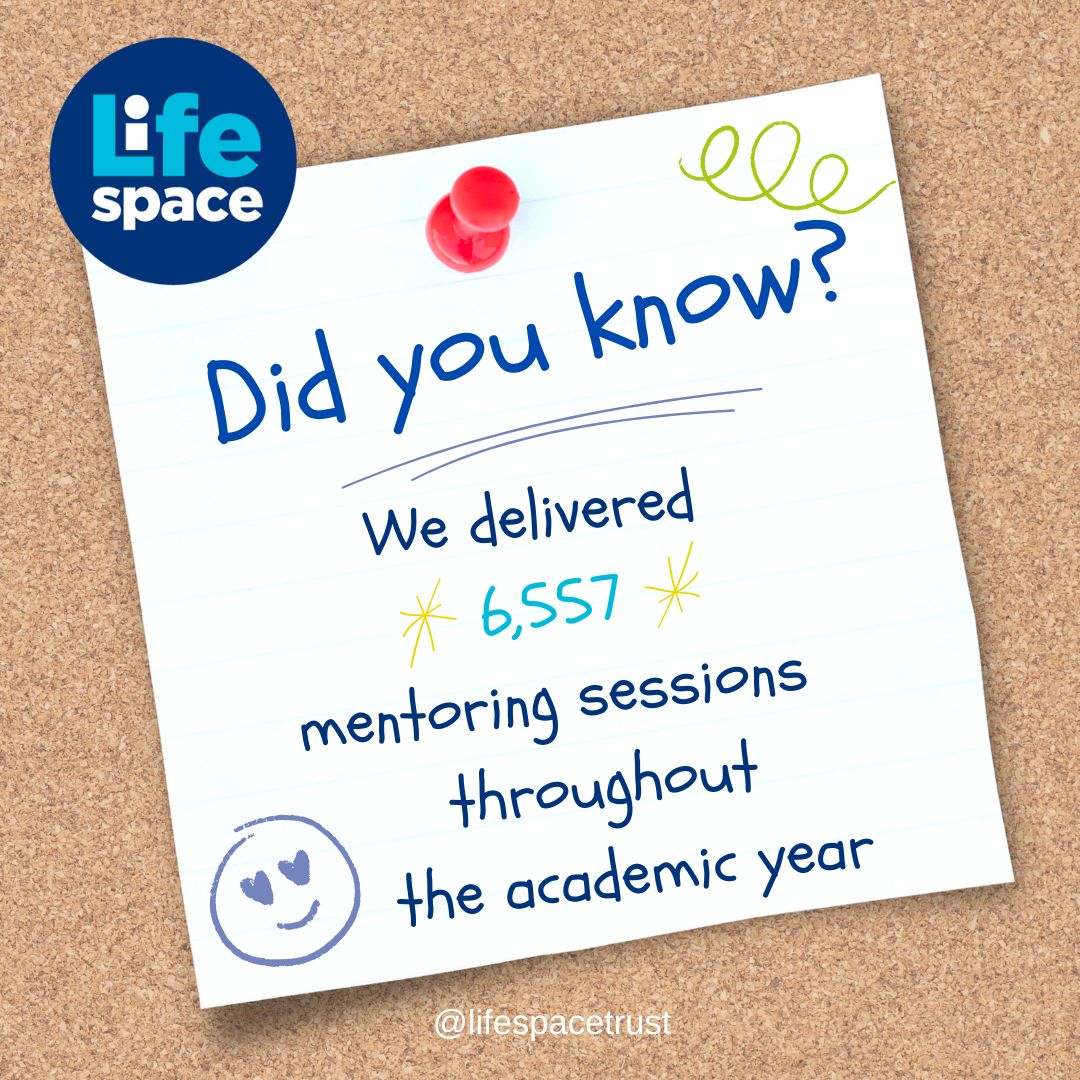
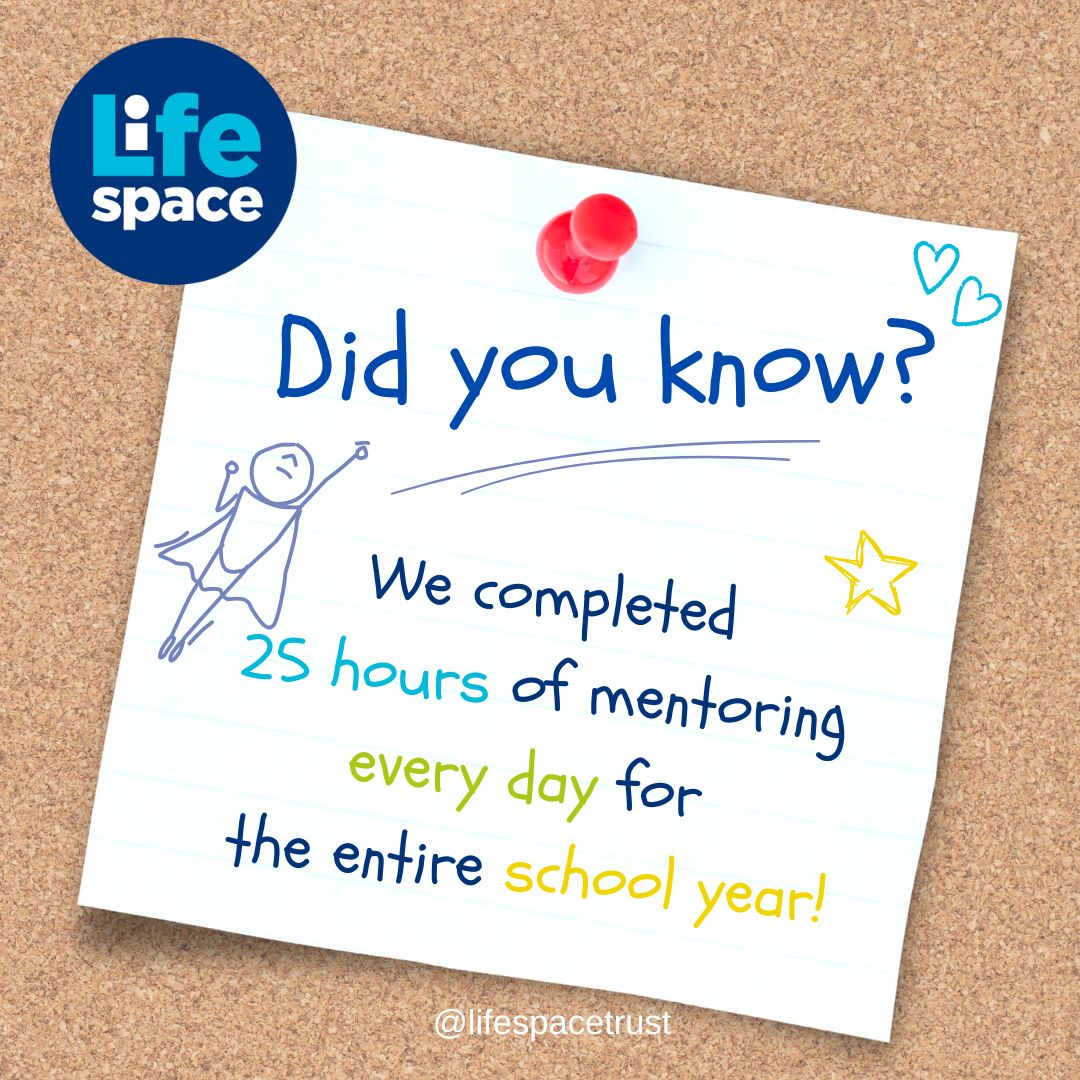
Last year Lifespace provided 6,557 mentoring sessions through 4,603 hours of face-to-face delivery. Our data shows that 82% of young people (7-19) receiving support from us report a noticeable increase in their wellbeing.
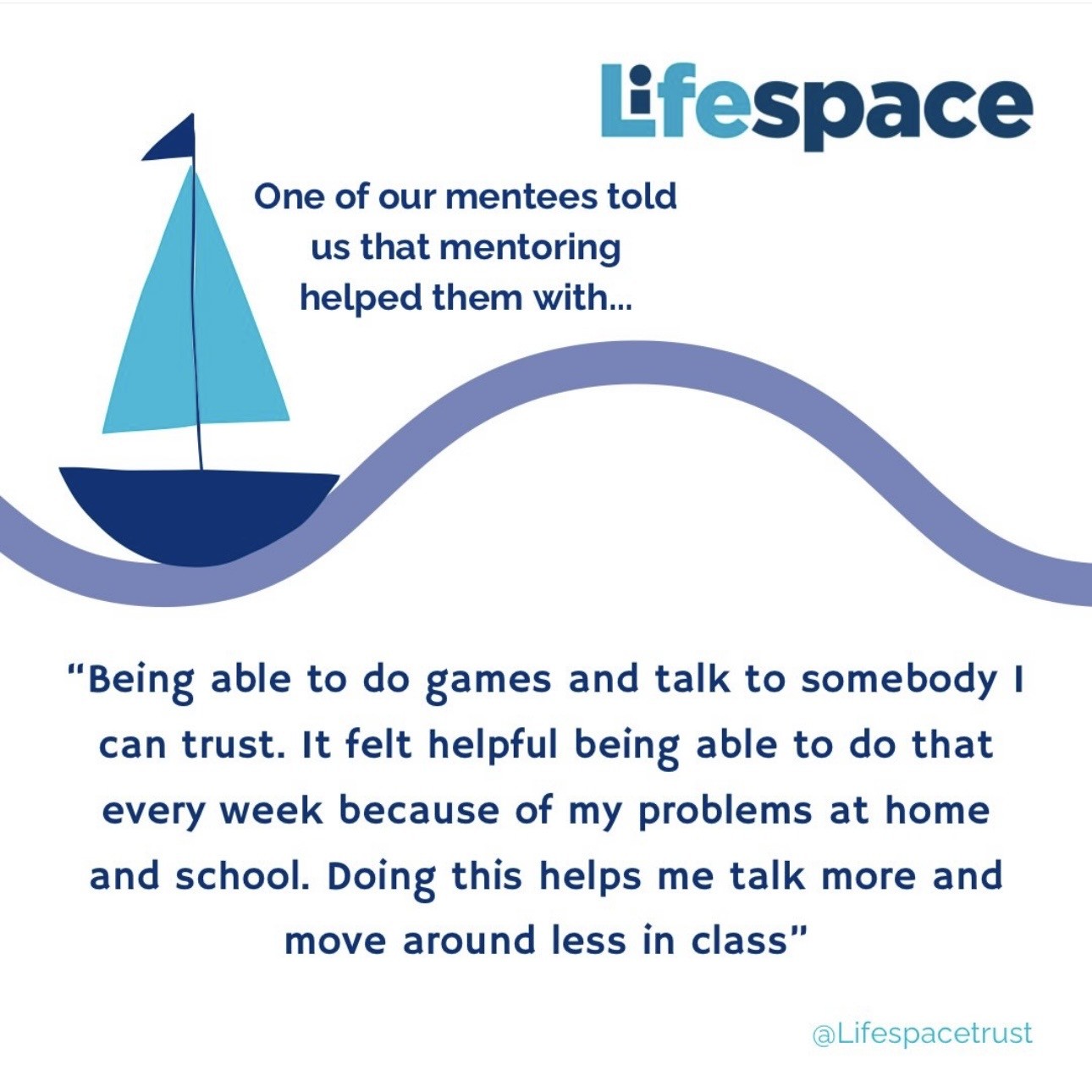
One mentee shared,
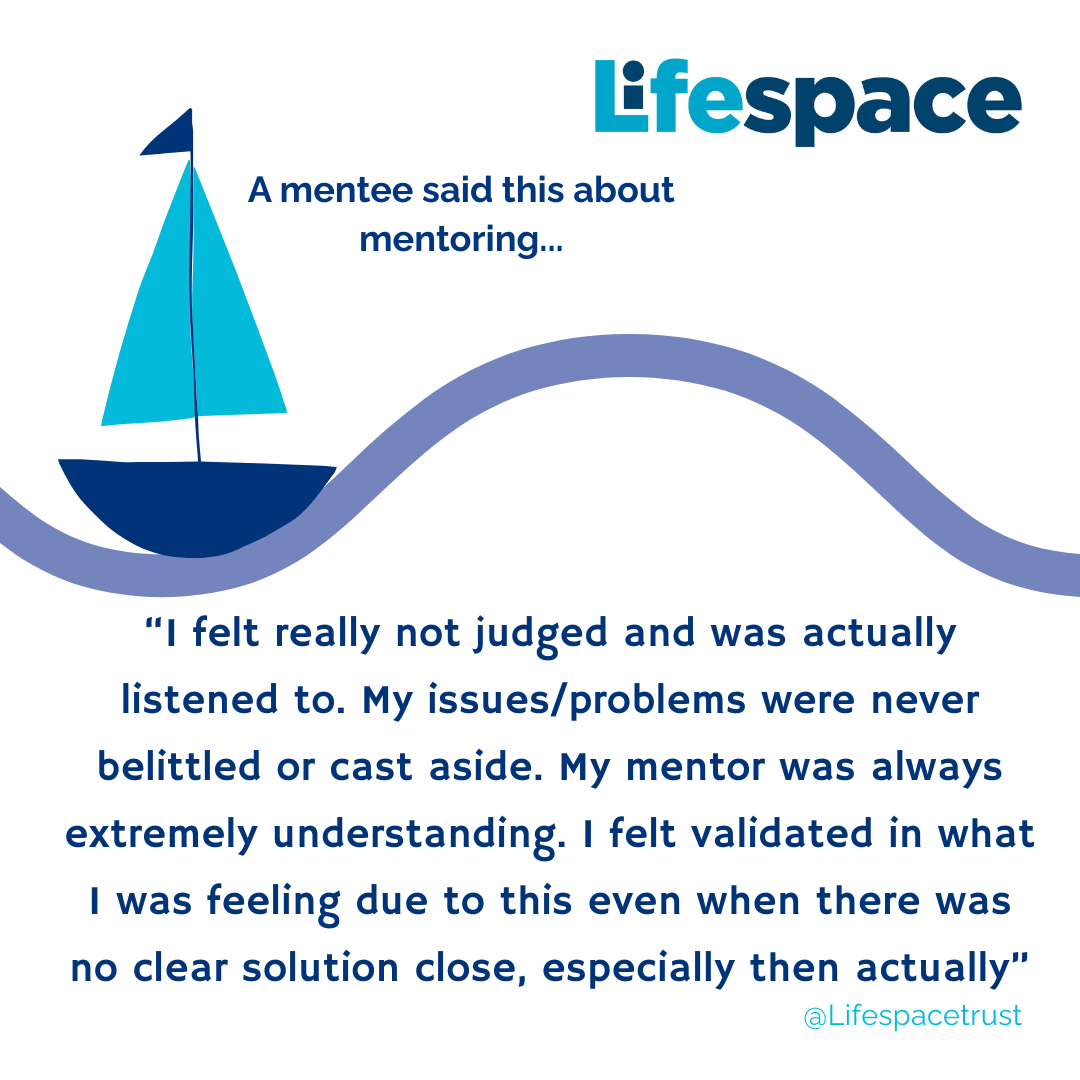
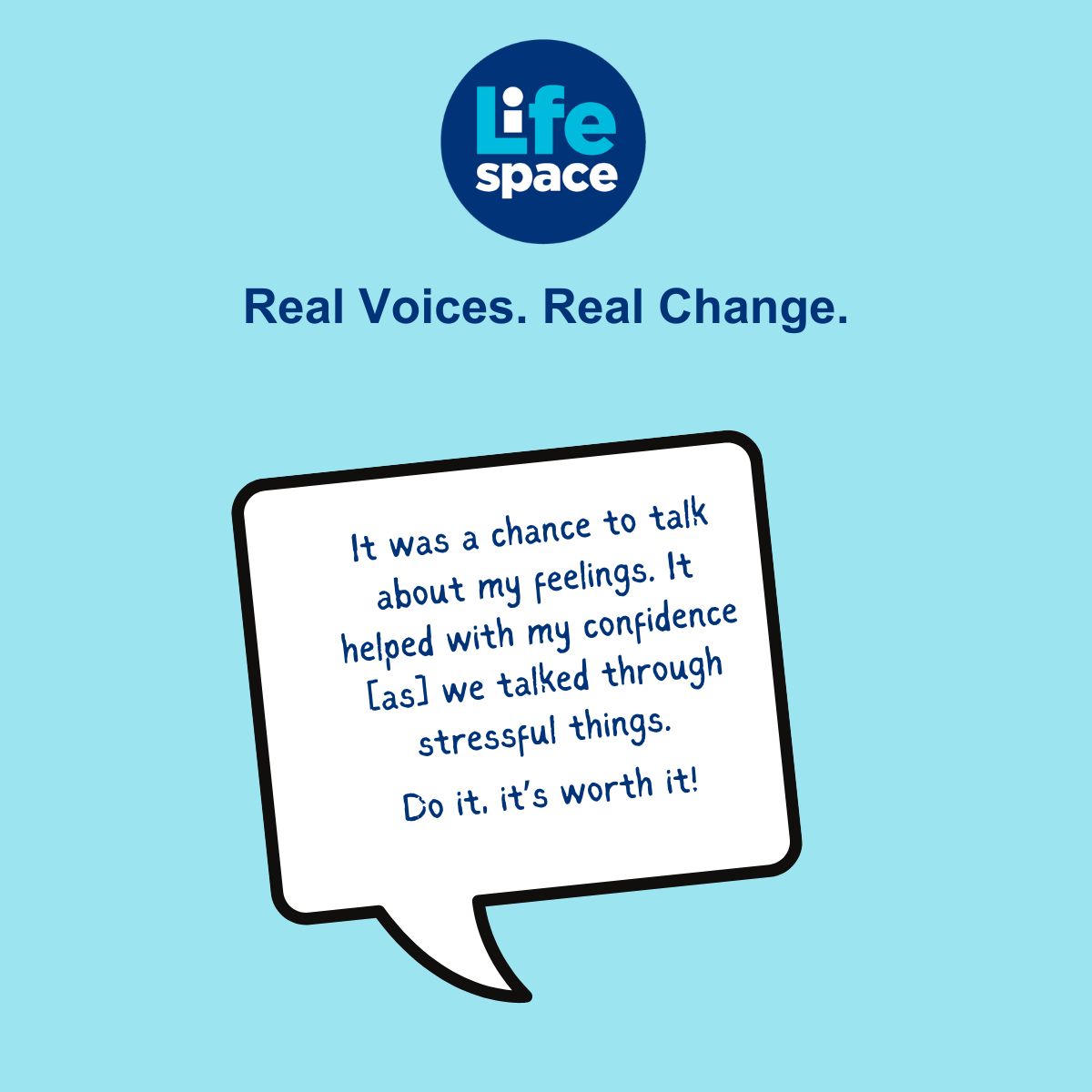
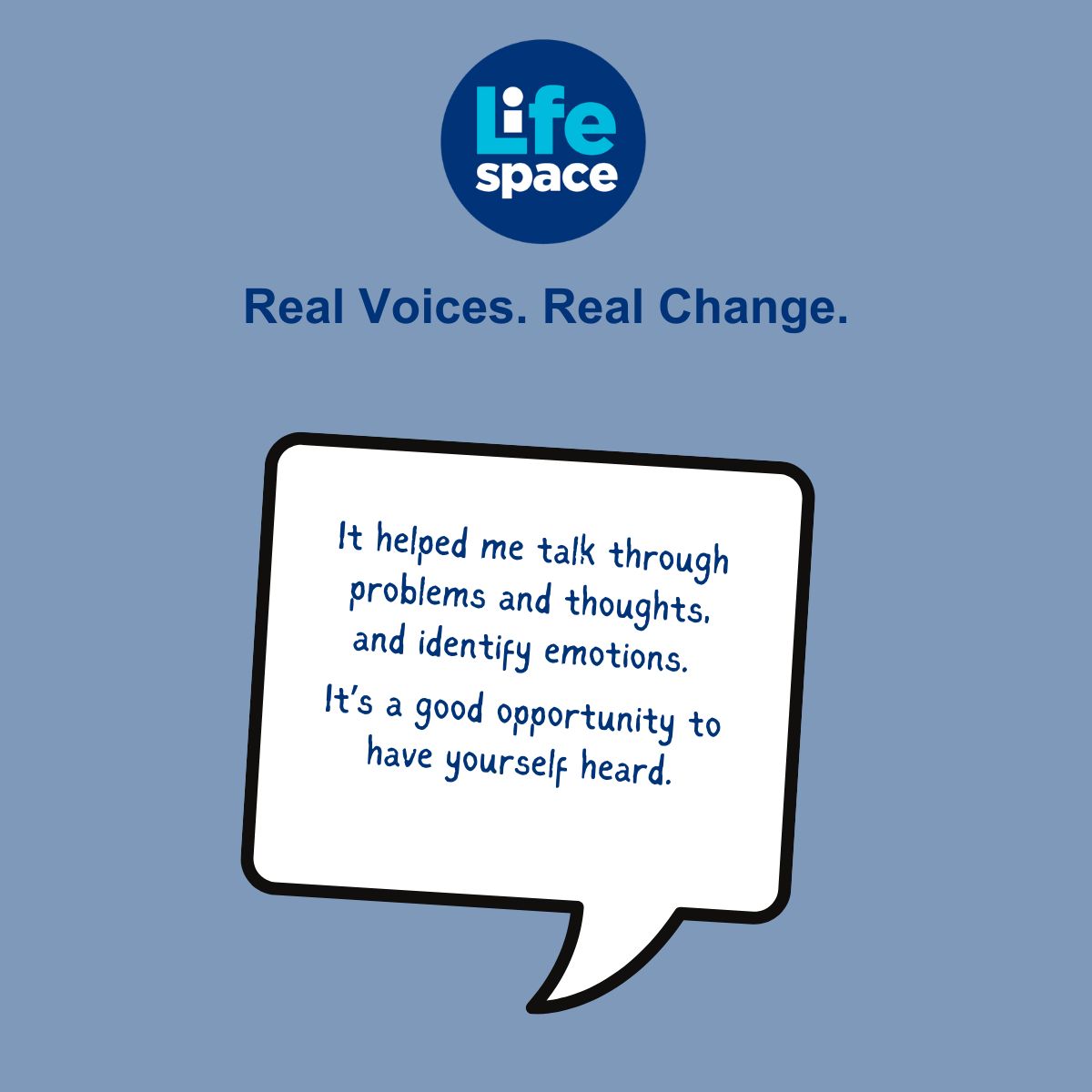
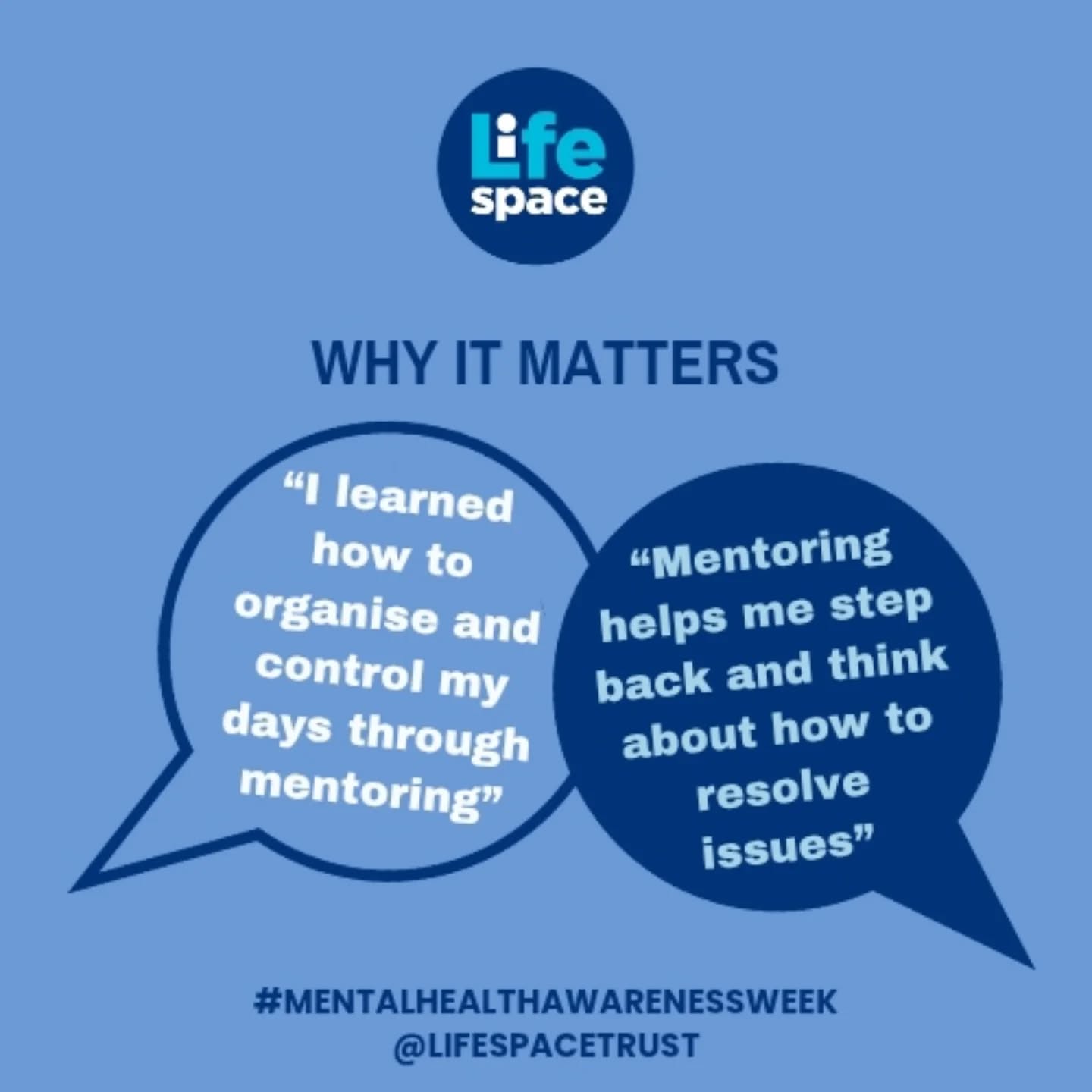
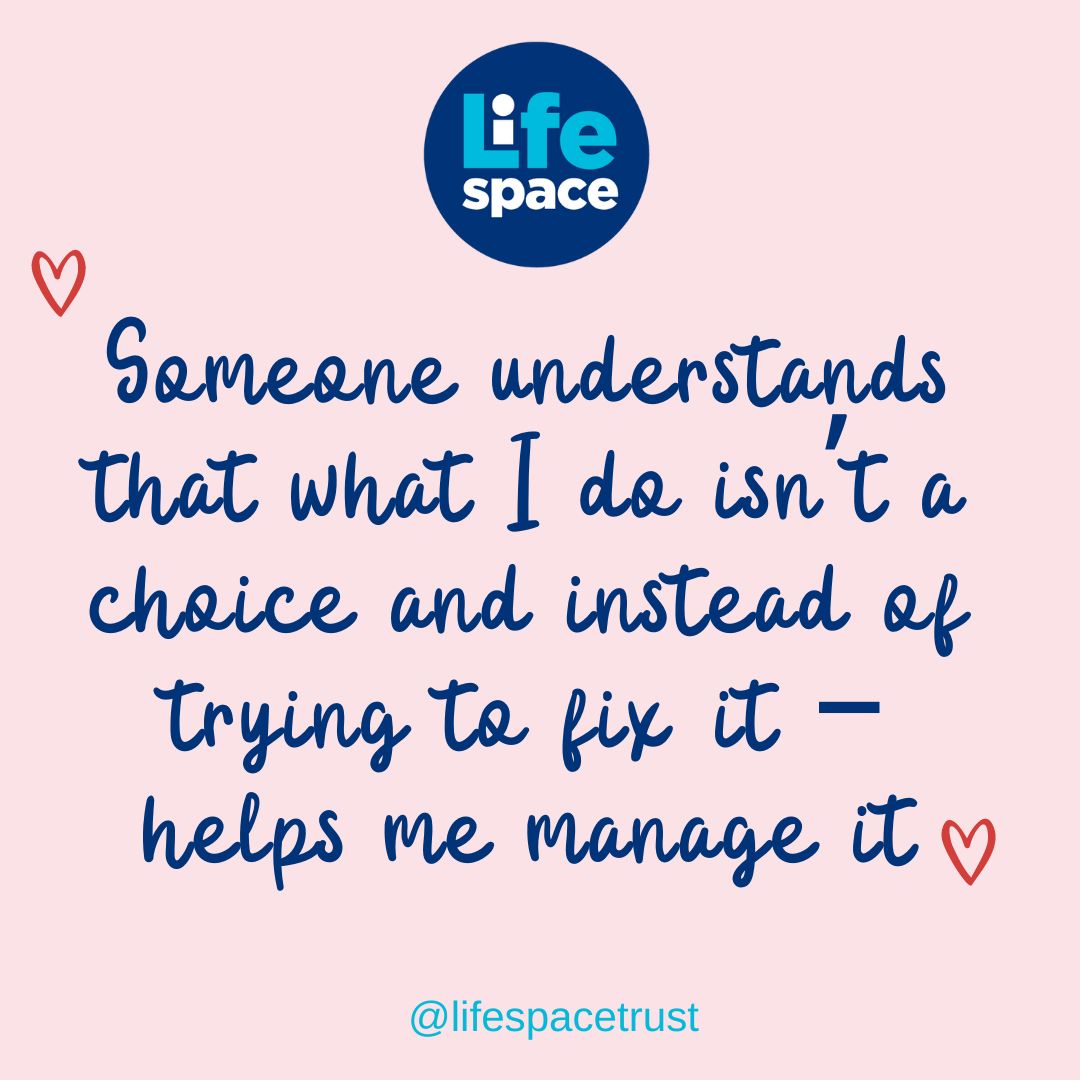
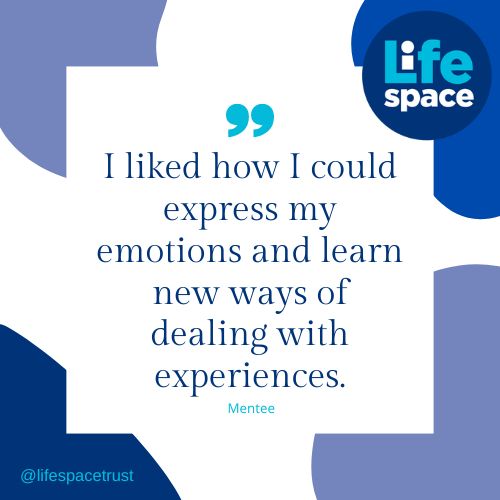
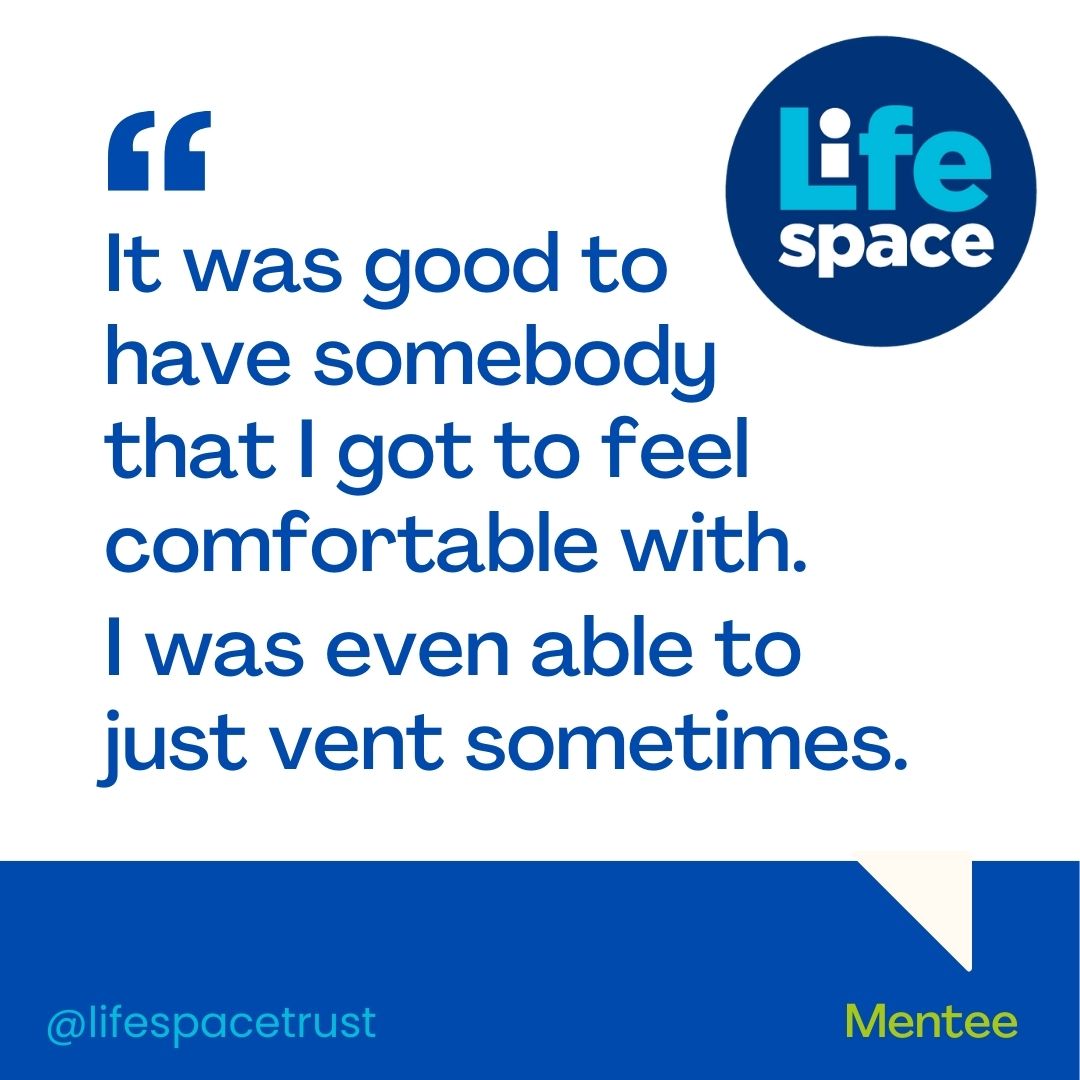
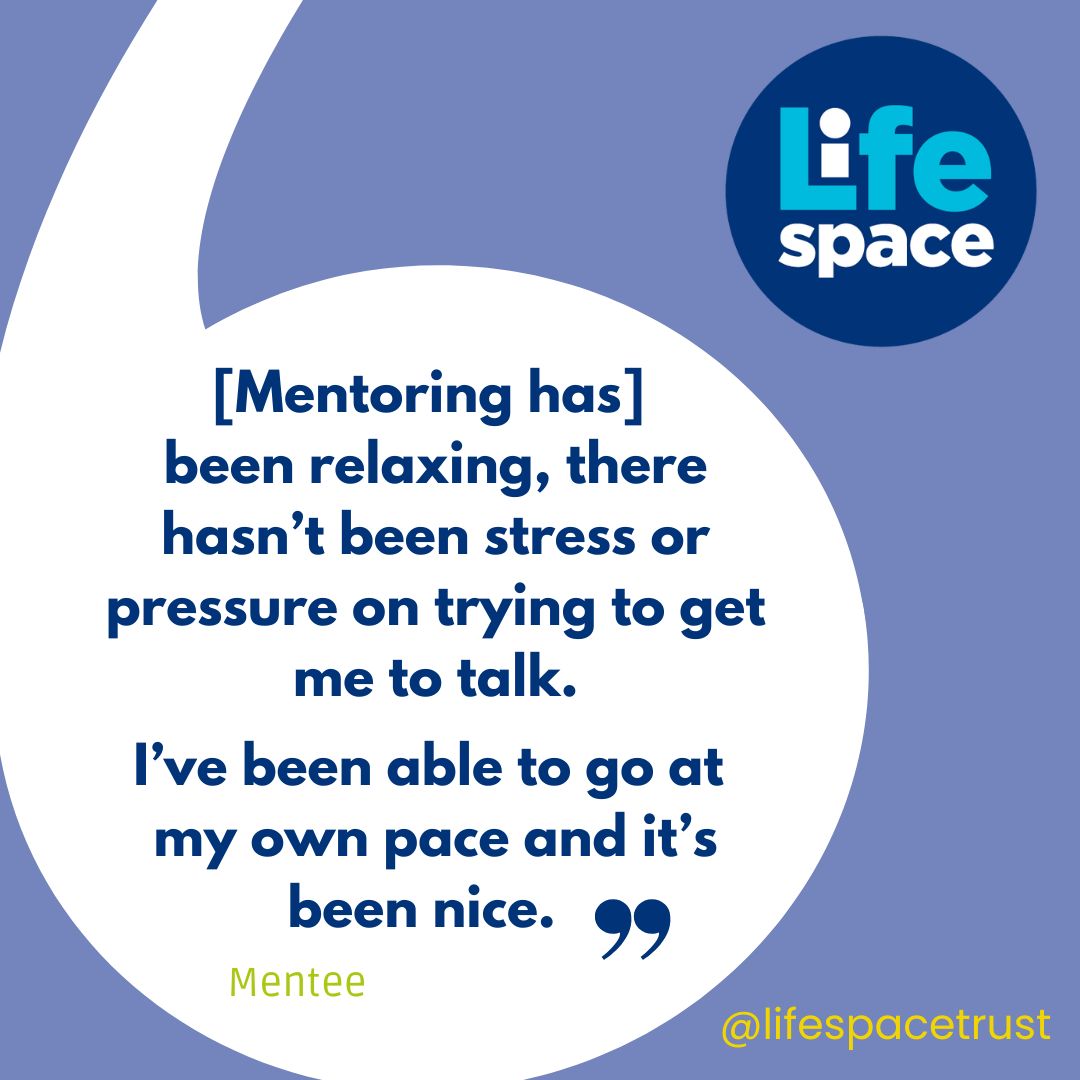
“Someone understands that what I do isn’t a choice and, instead of trying to fix it, helps me manage it.” Another mentee expressed, “
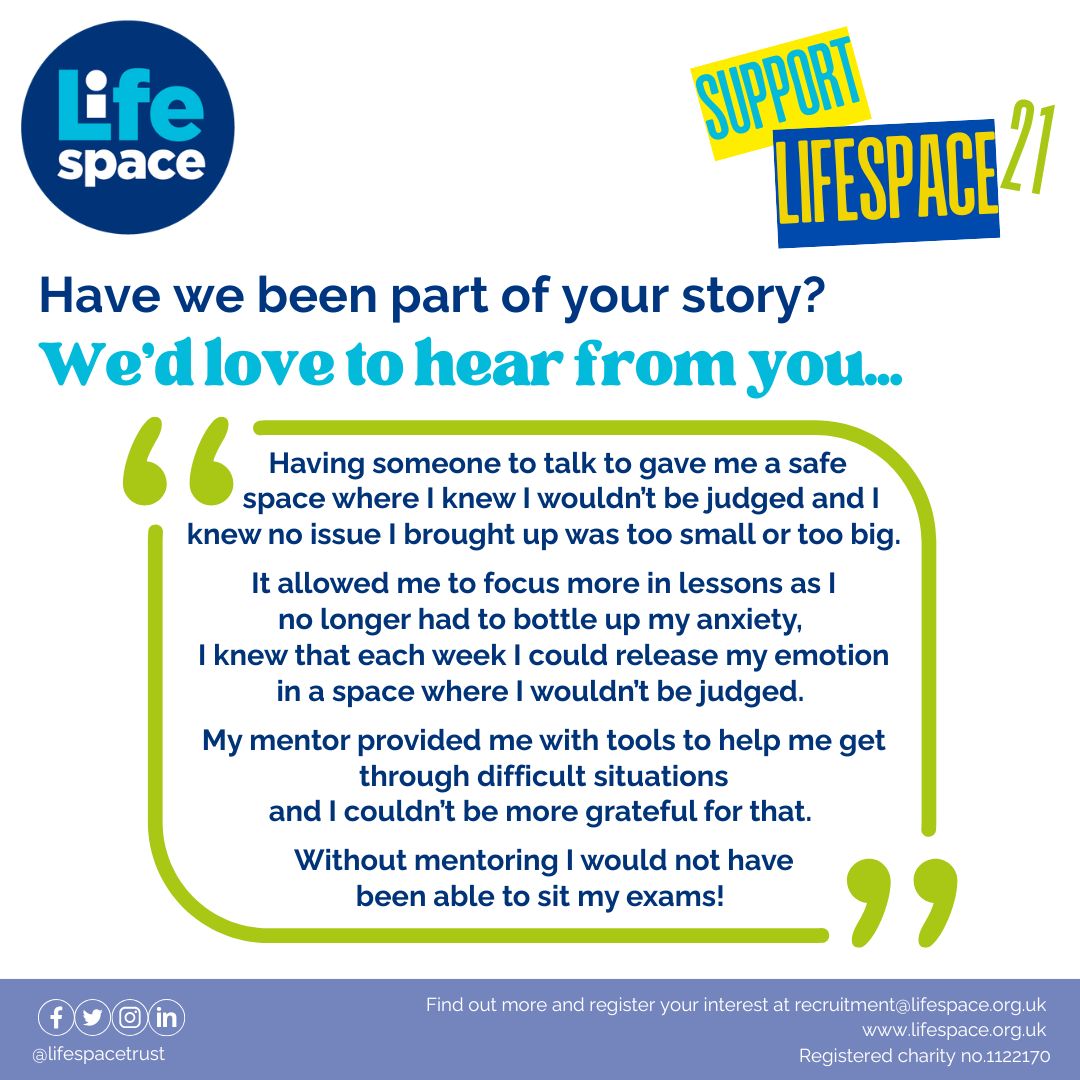
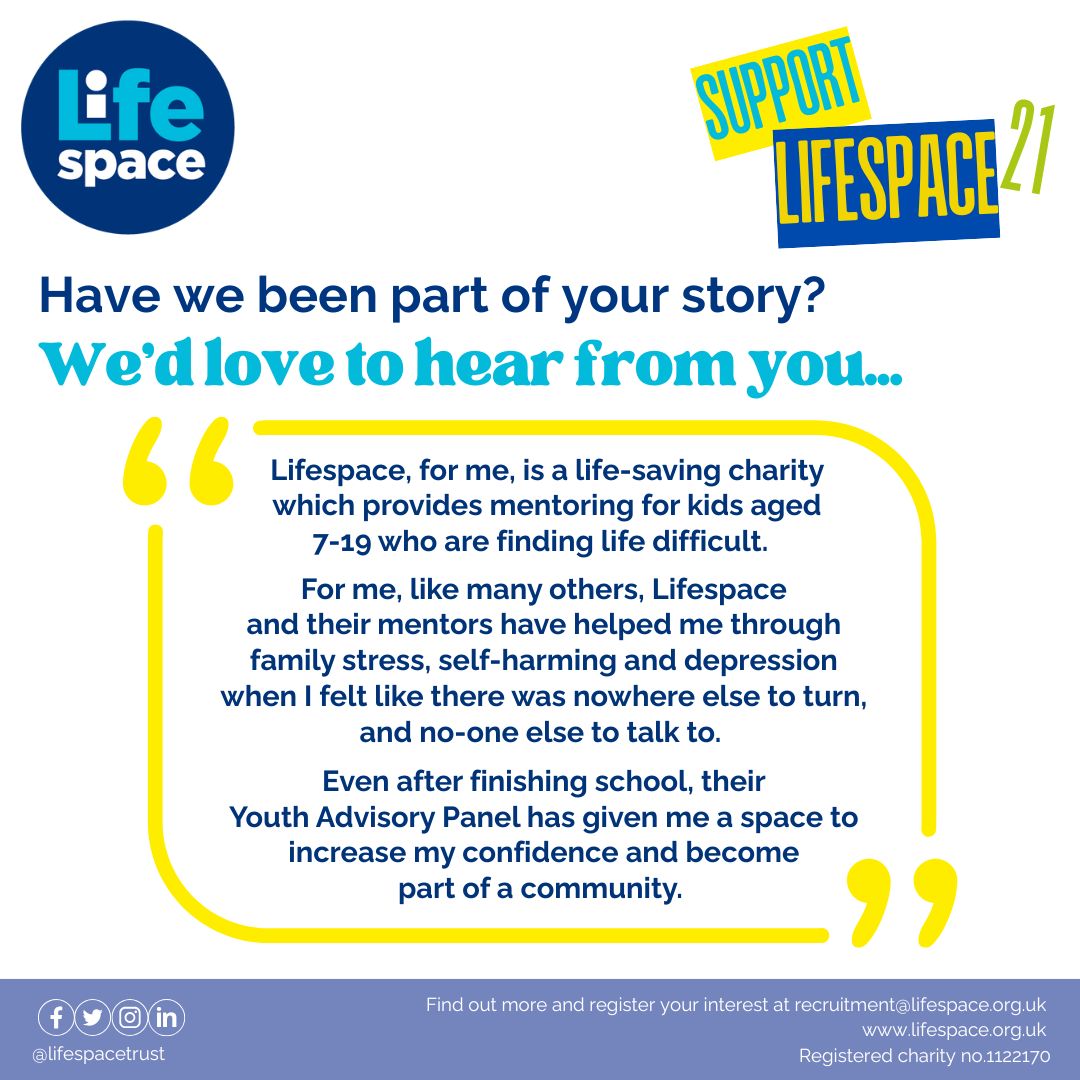
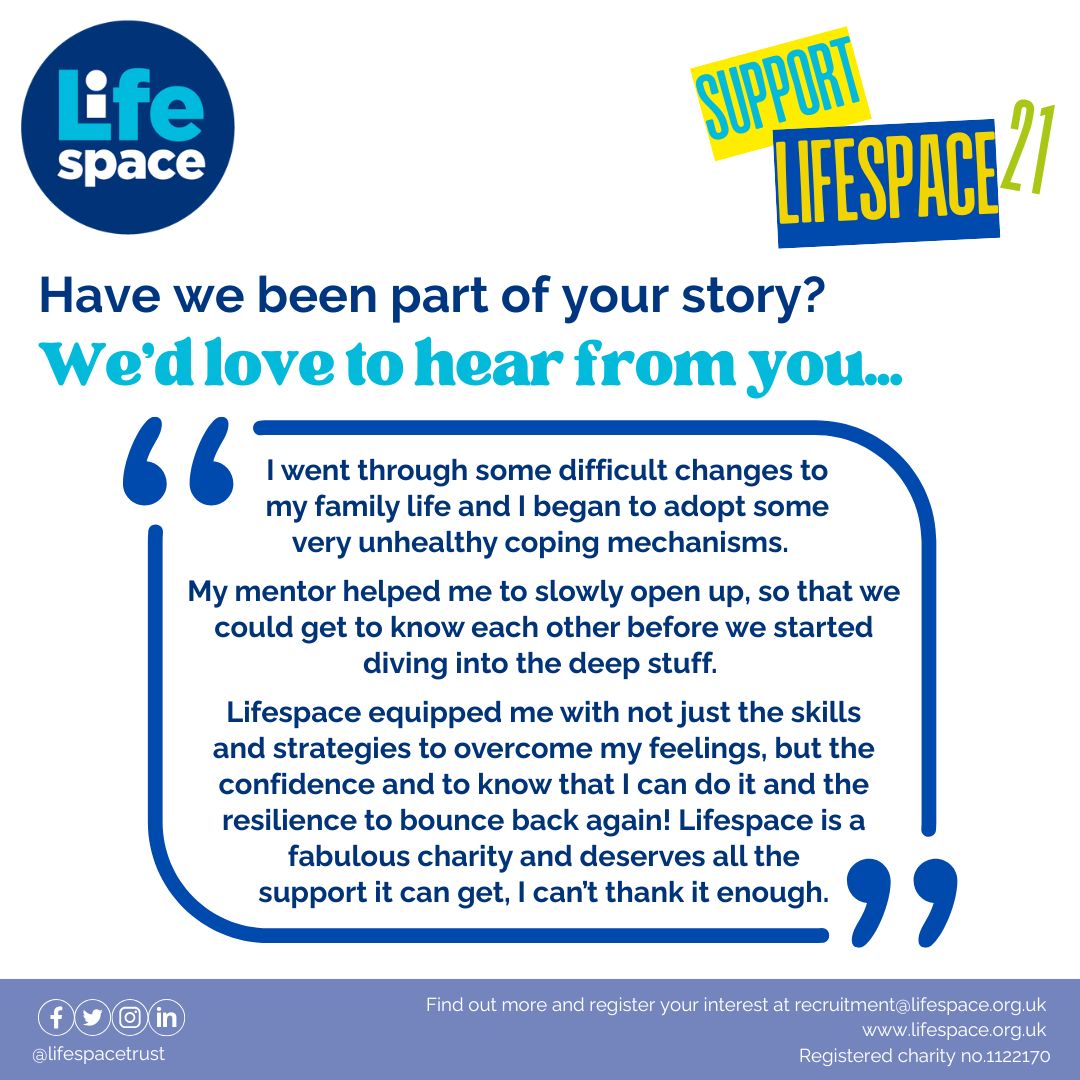
It helped being able to talk about difficult things that happen at home but not to teachers.” A parent reflected, “
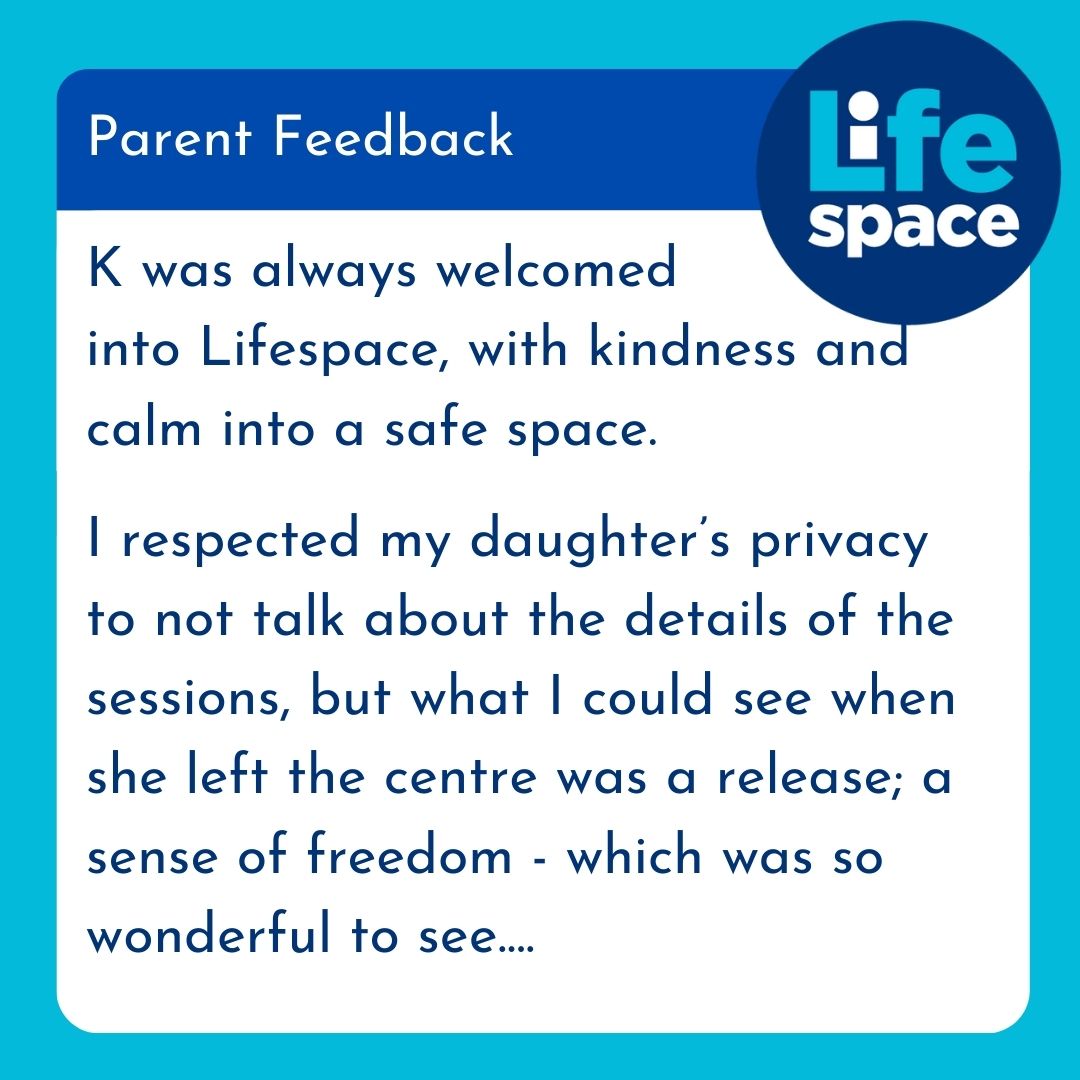
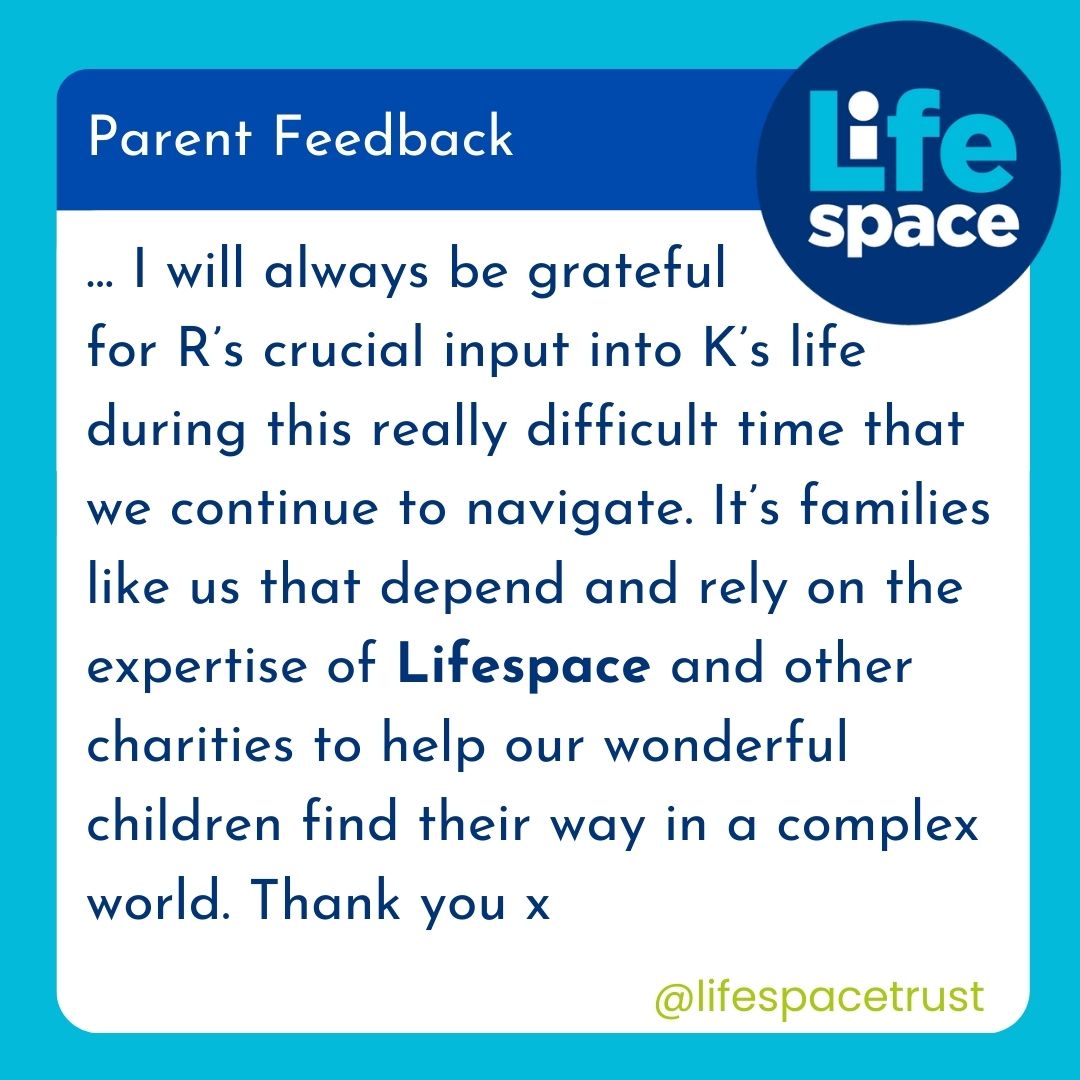
K was welcomed with kindness and calm into a safe space. I respected my daughter’s privacy… but what I could see when she left the centre was a release, a sense of freedom – which was so wonderful to see. I will always be grateful for your crucial input into K's life during this really difficult time that we continue to navigate. It’s families like us that depend and rely on the expertise of Lifespace…to help our wonderful children find their way in a complex world. Thank you.”
Working Together to Call for System Change
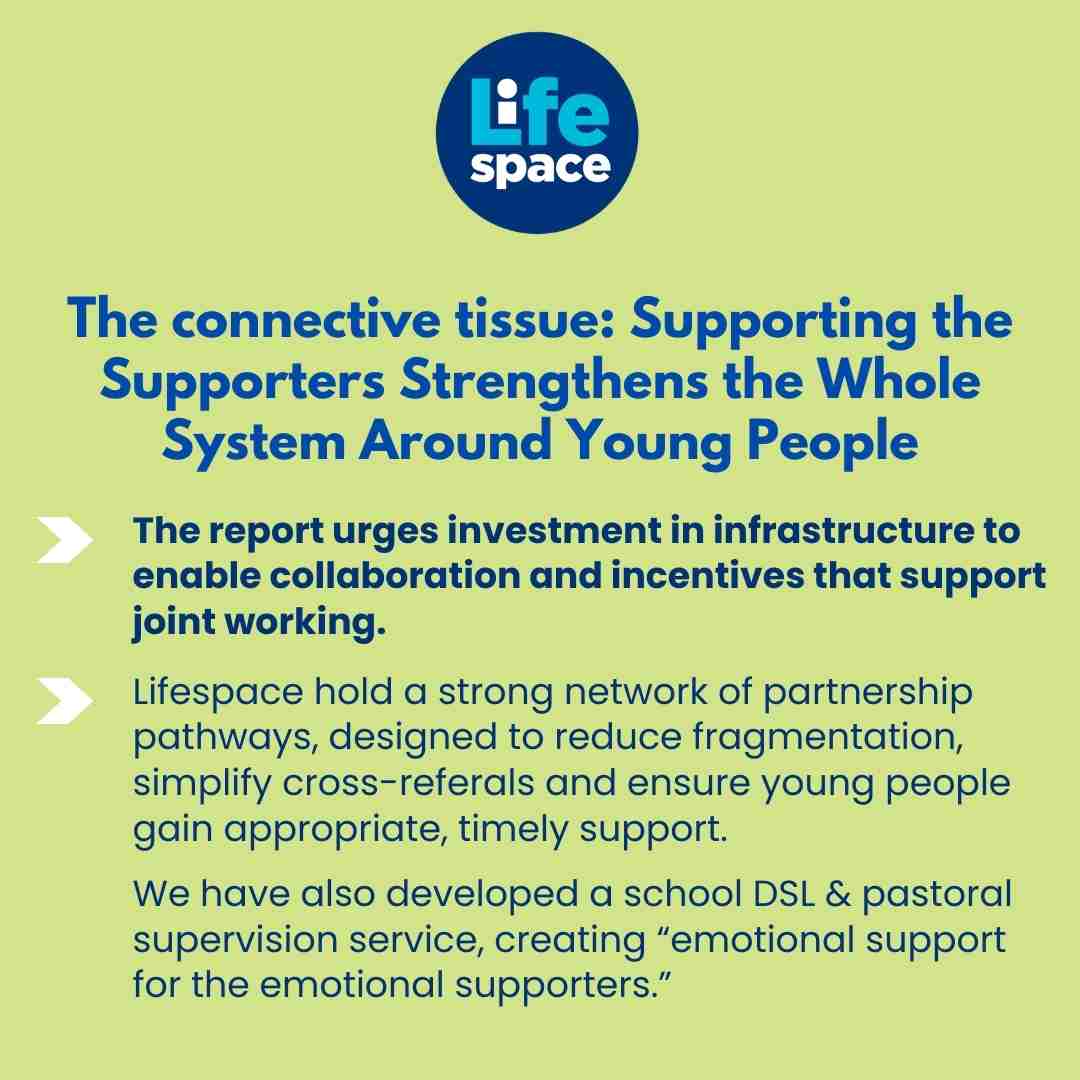
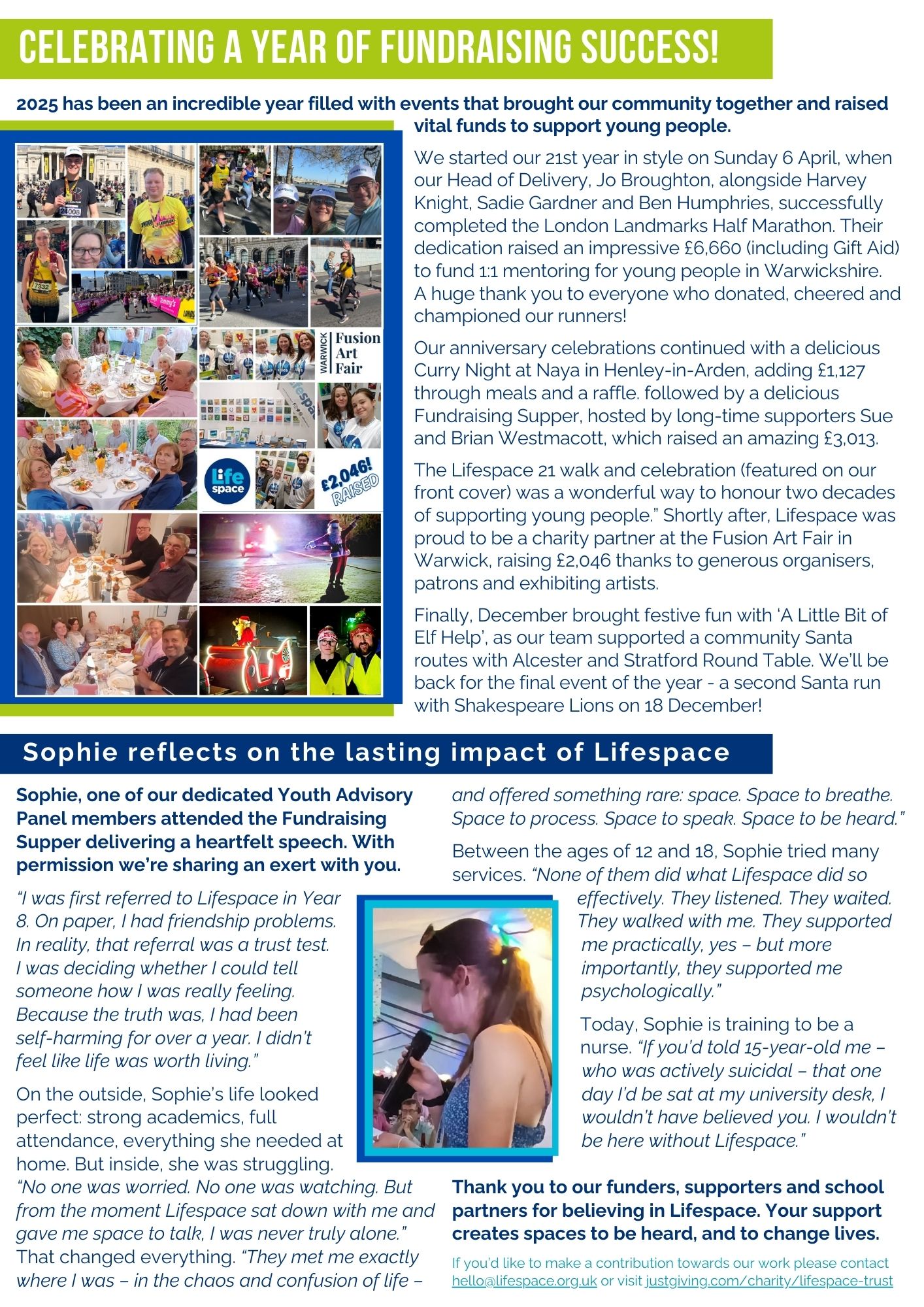
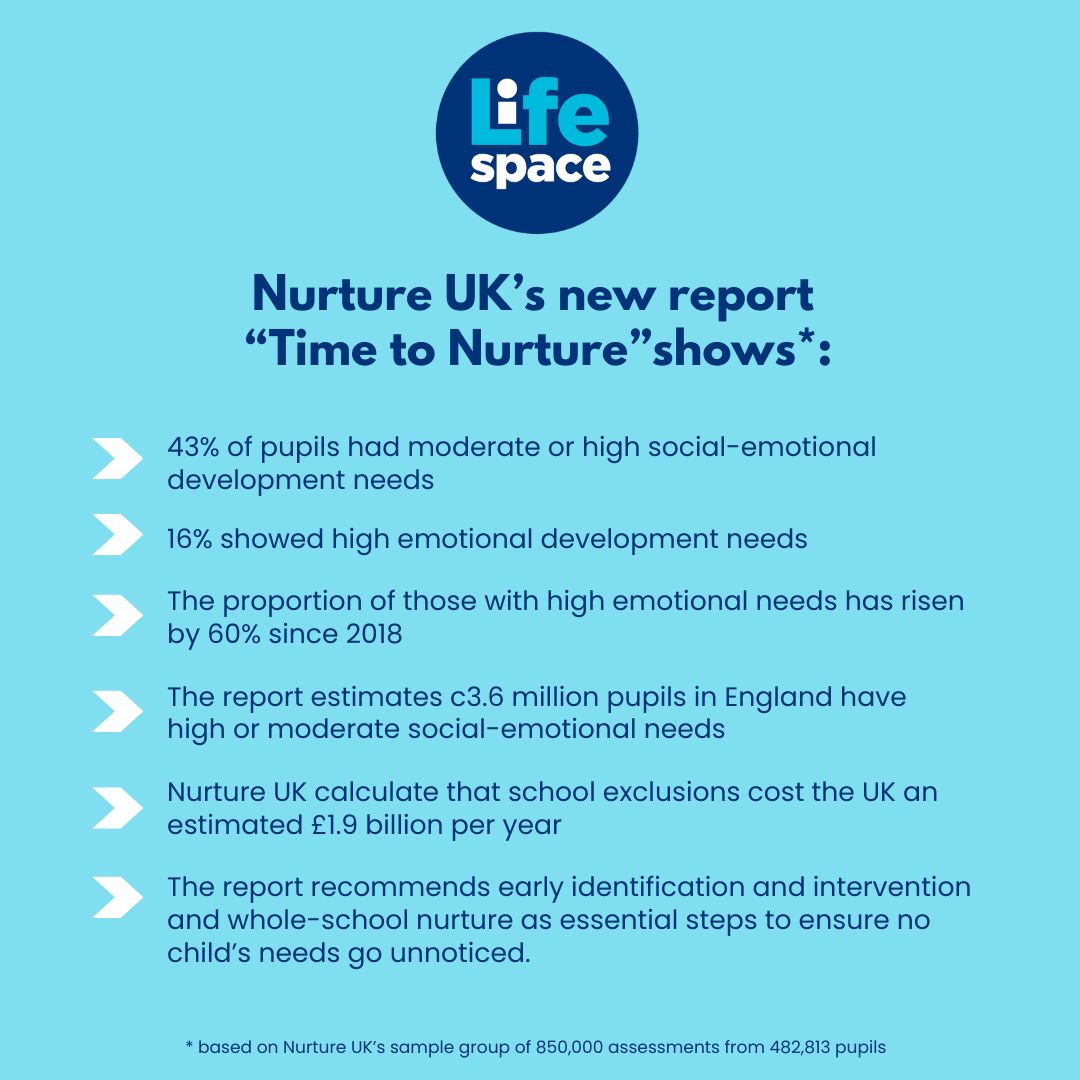
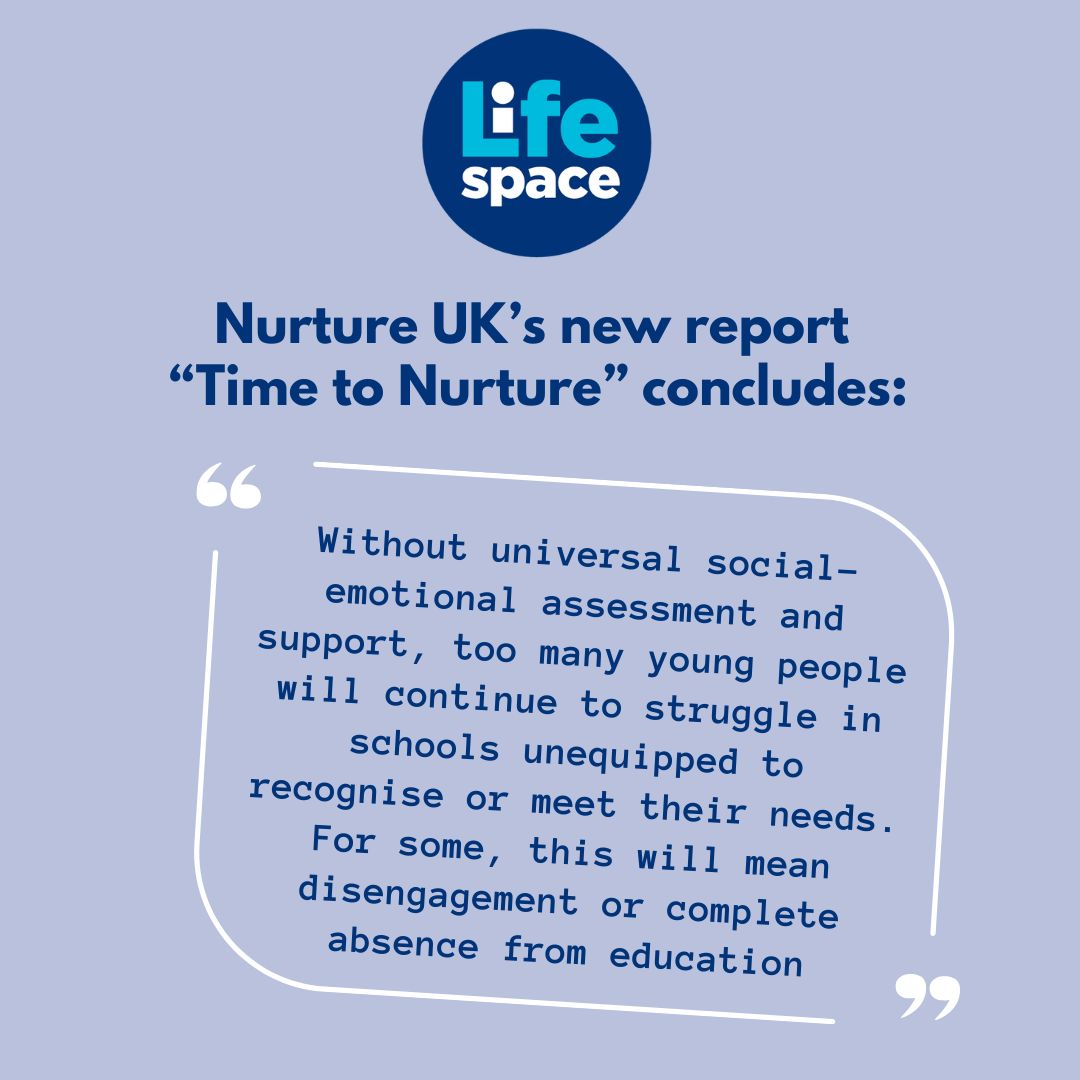
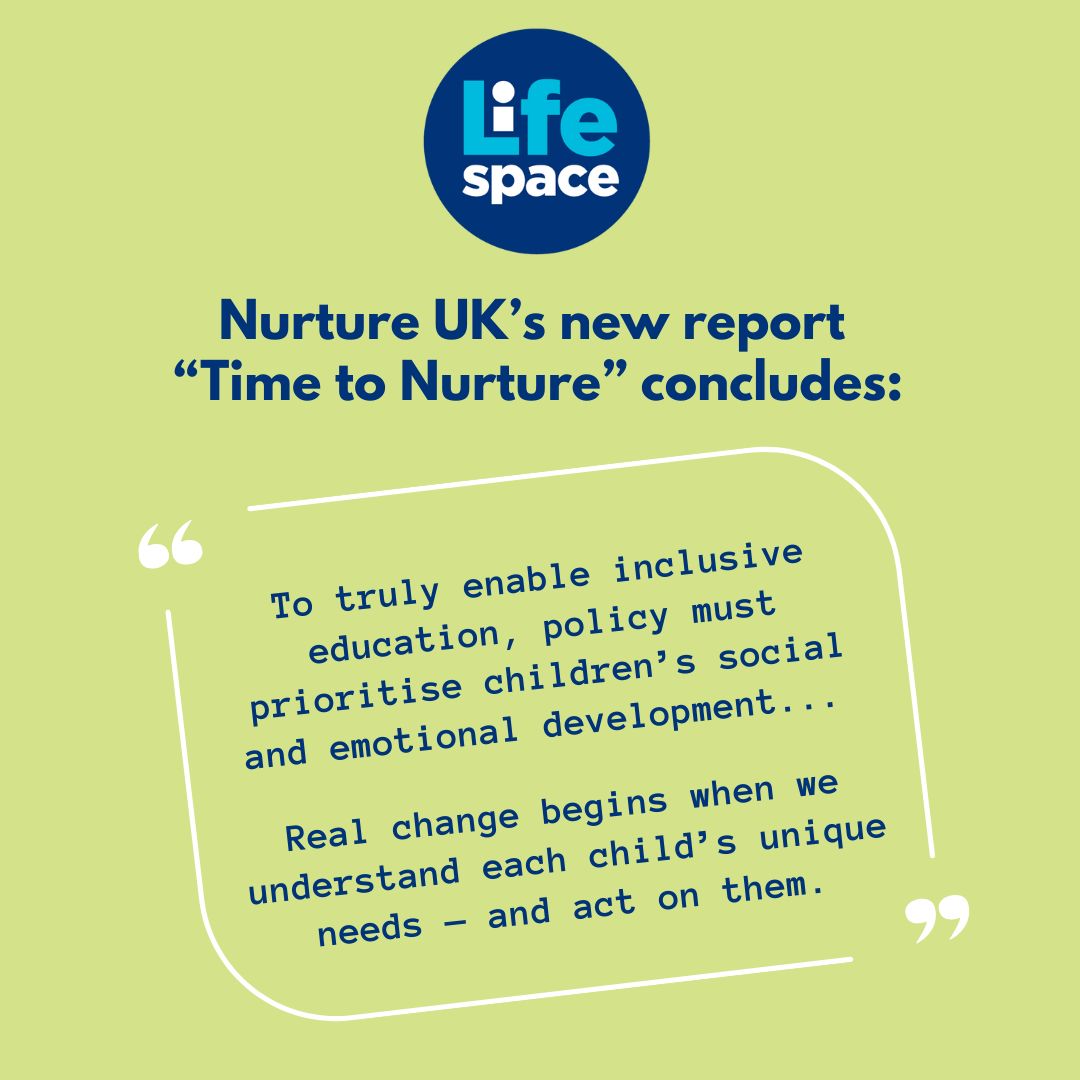
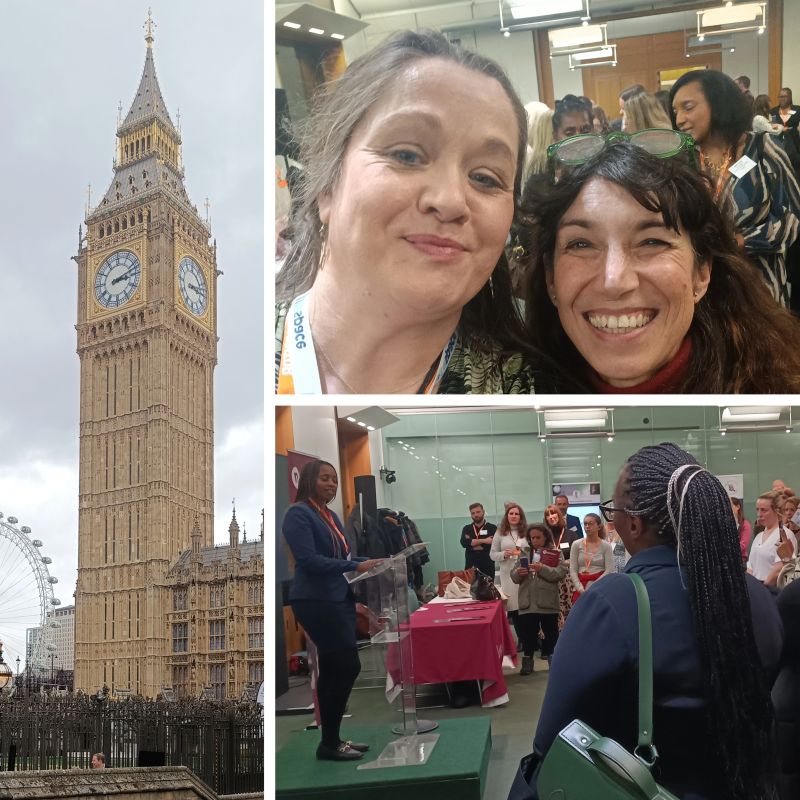
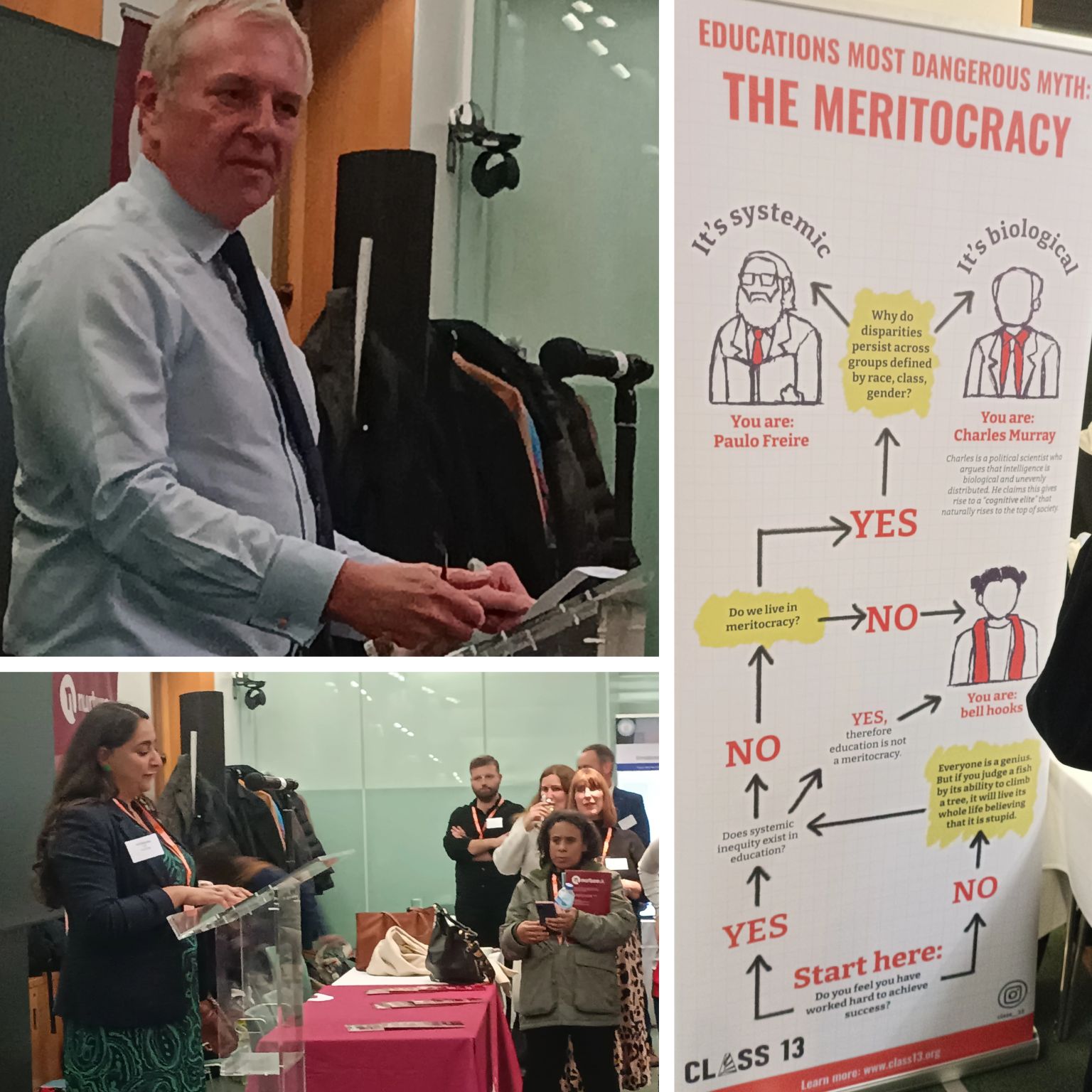
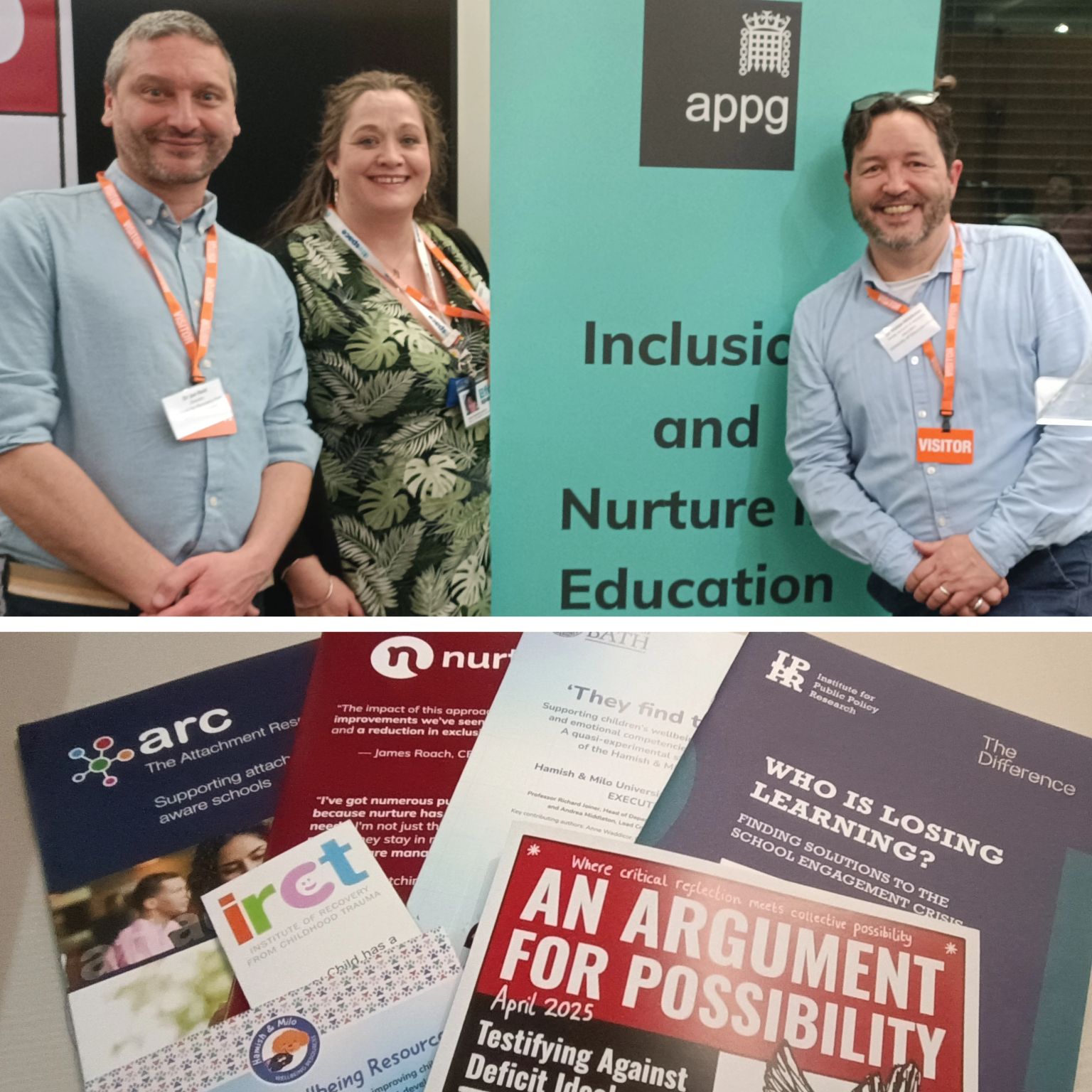
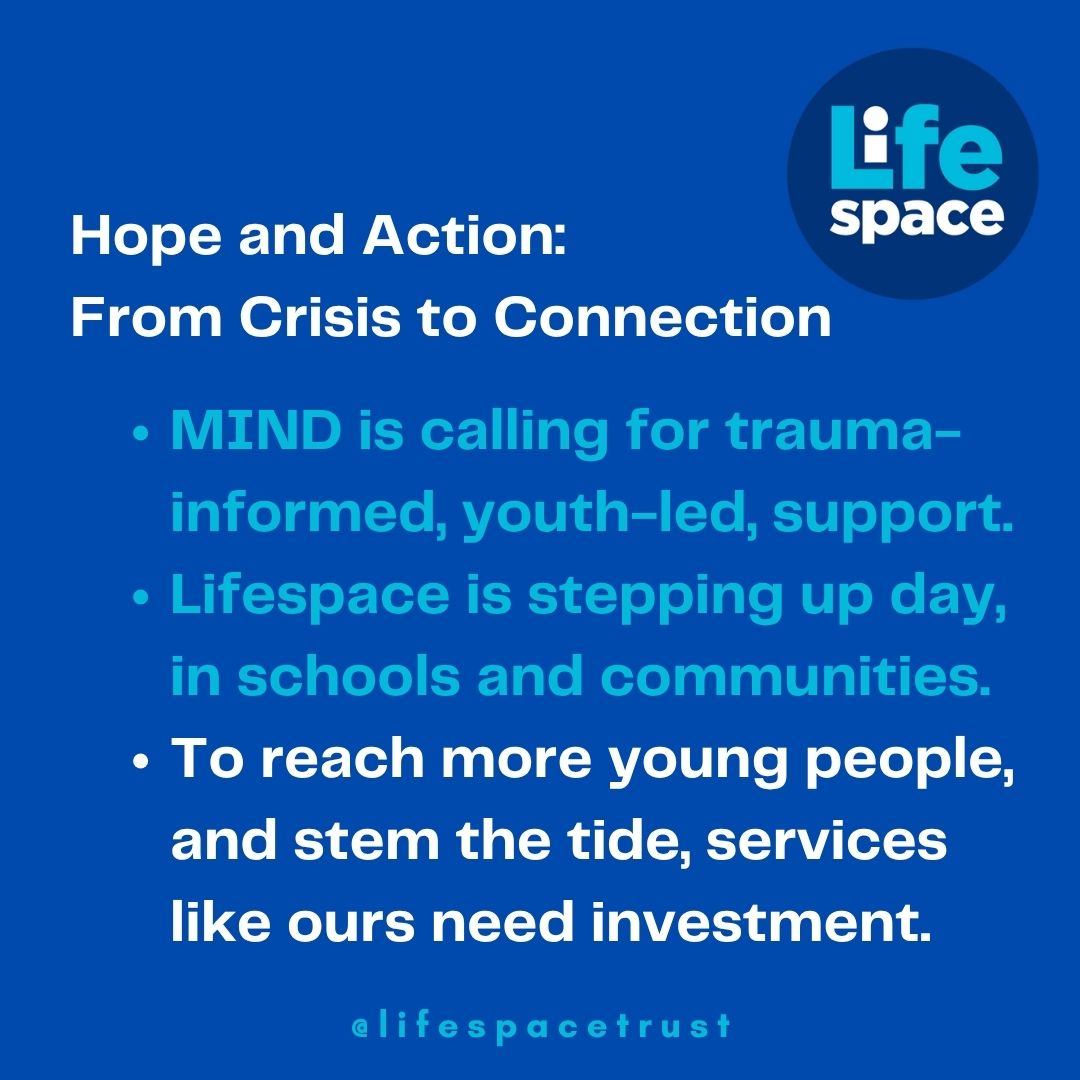
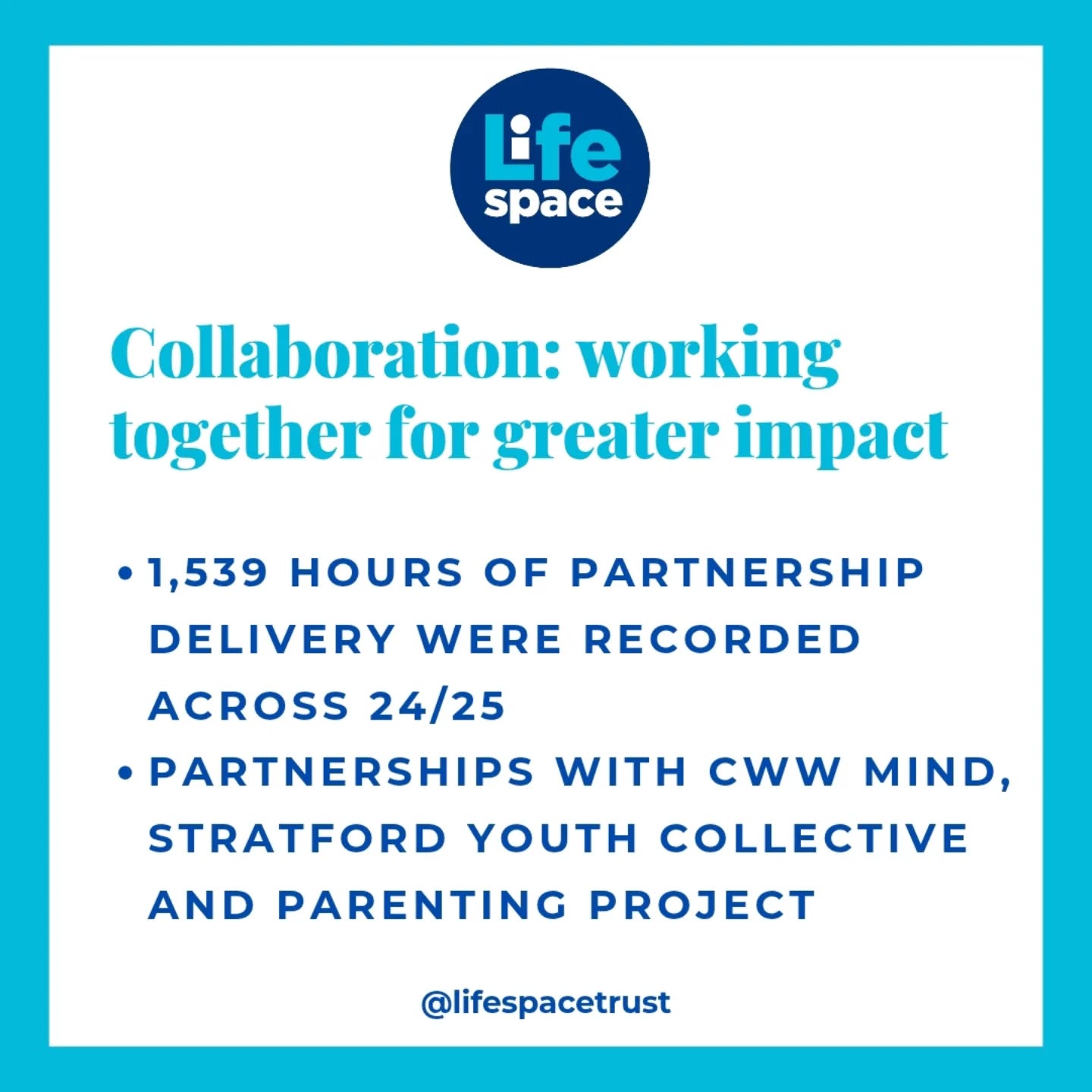
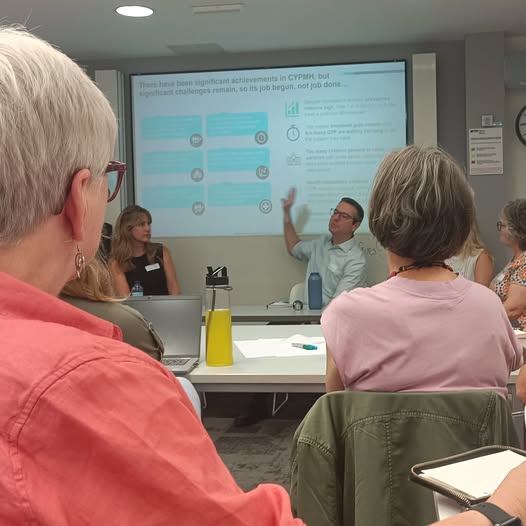
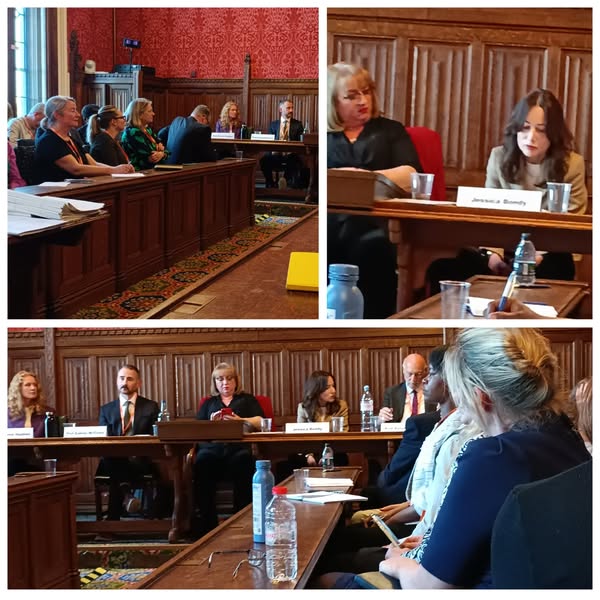
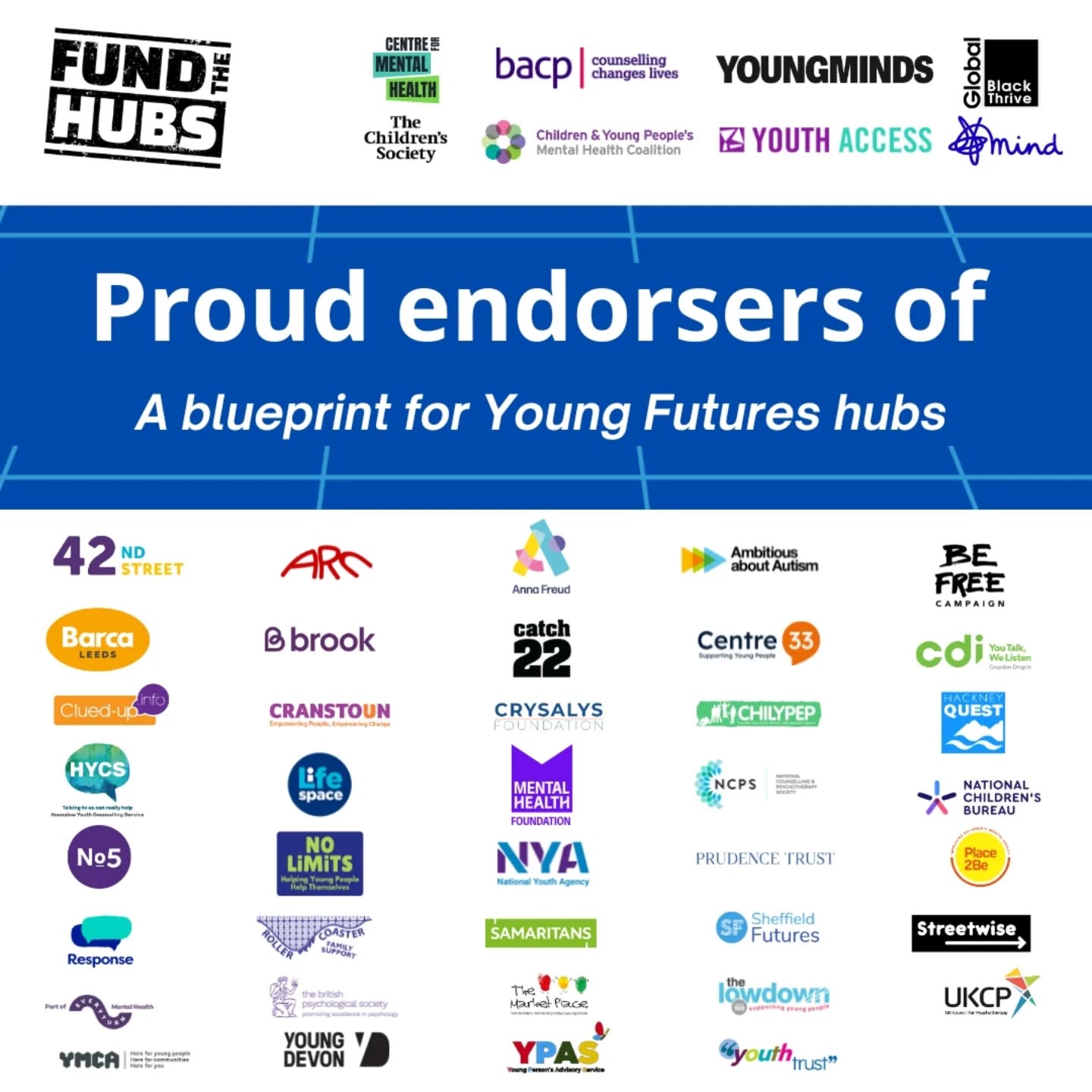
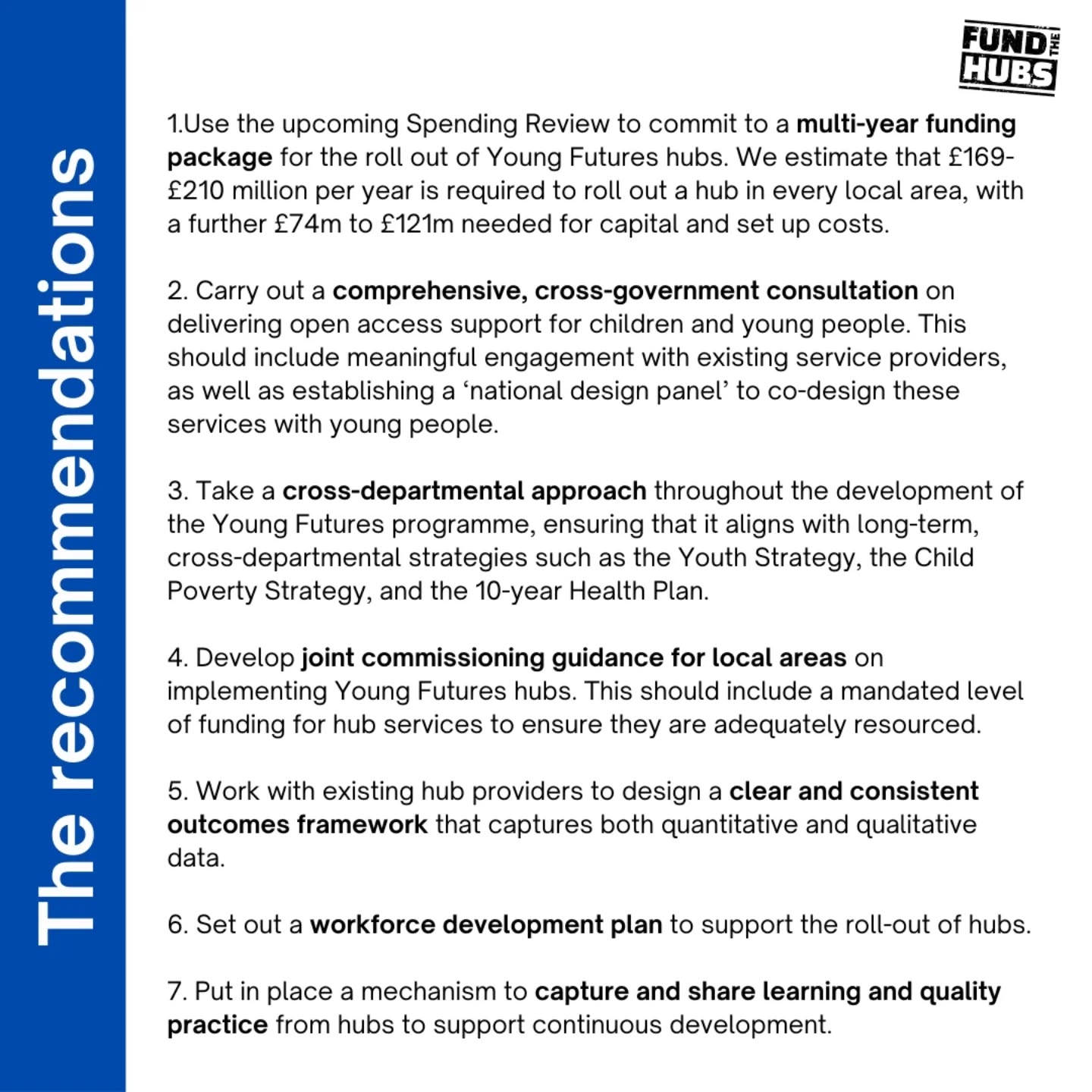
Lifespace is a proud member of the Children and Young People’s Mental Health Coalition (CYPMHC), Youth Access, and the Inclusive and Relational Approaches Working Group. Facilitated by Nurture UK and CYPMHC, this group brings together education and charity specialists to share best practices and embed a ‘Whole School Approach to Mental Health and Wellbeing.’ We feel strongly that Lifespace should add our voice, and that of our young people, to help influence national policy.
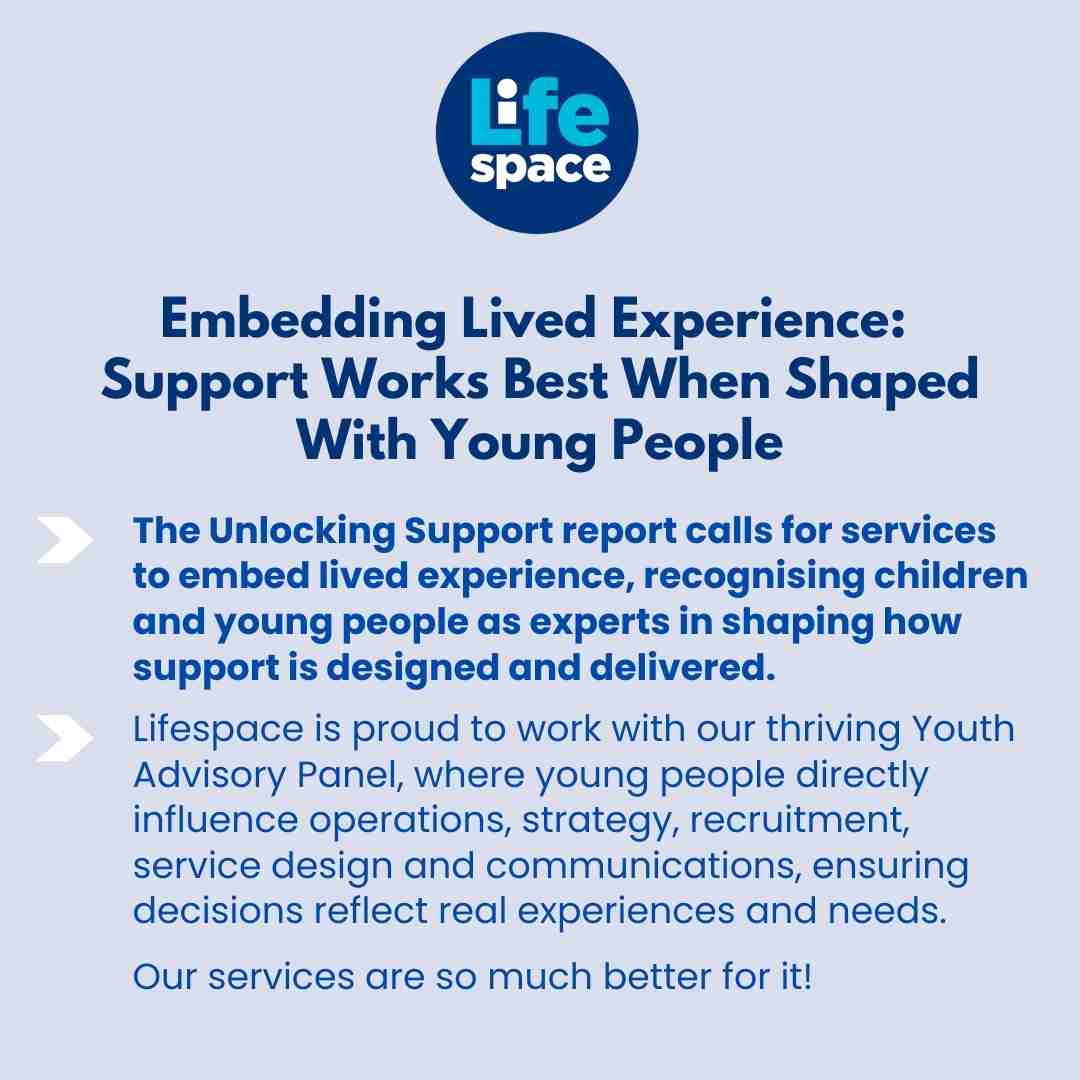
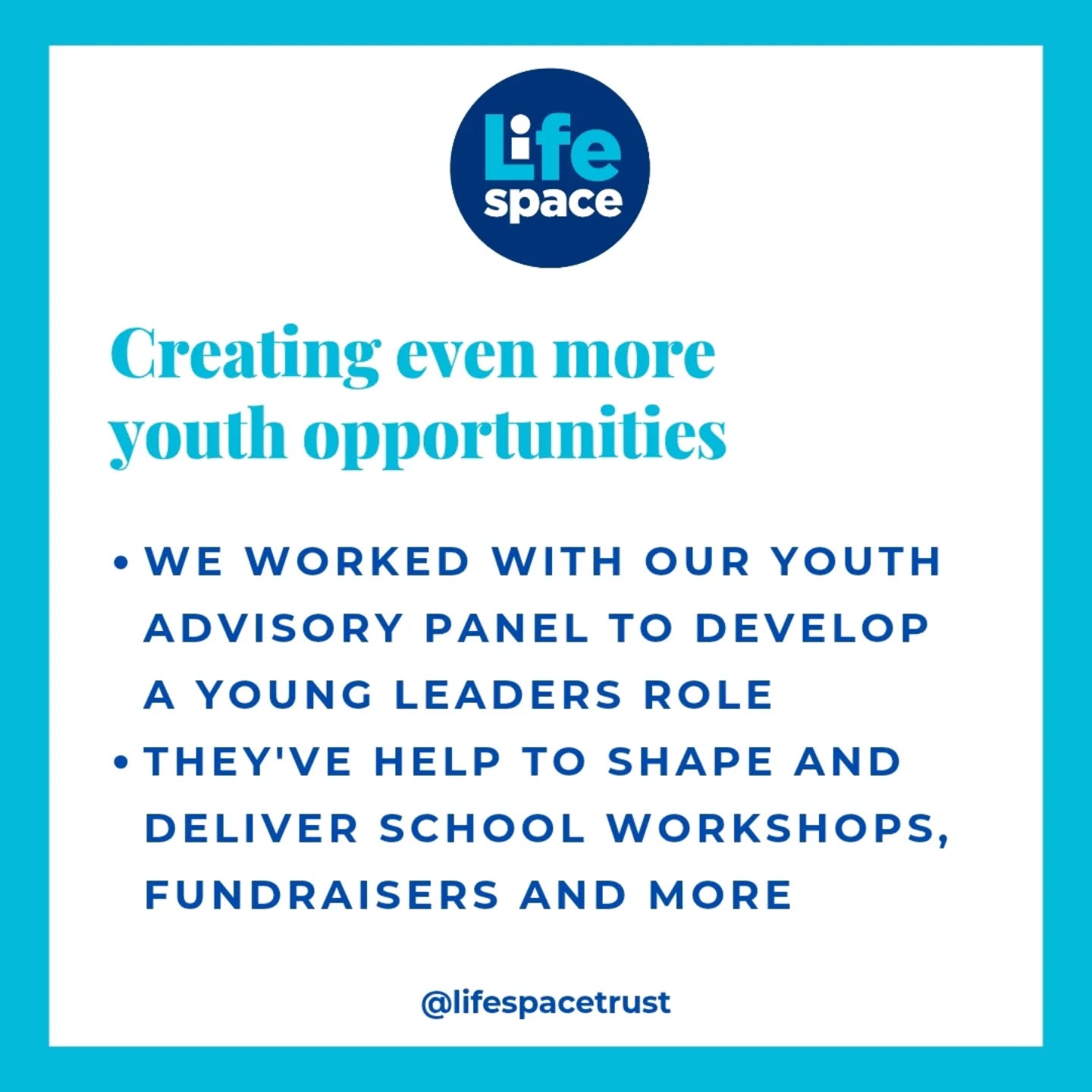
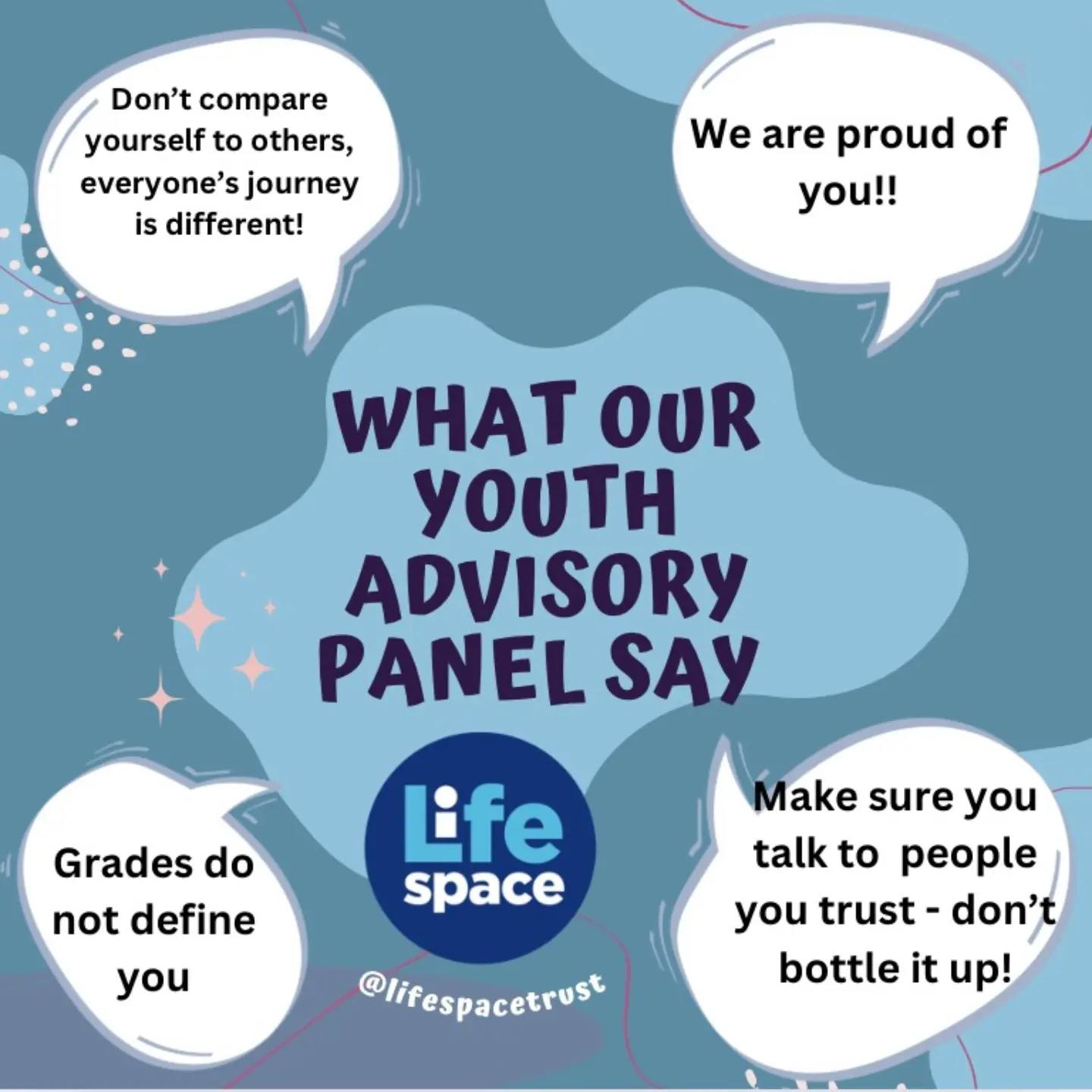
Our Youth Advisory Panel plays a crucial role in shaping our approach and ensuring that the voices of young people are heard. This panel provides regular input, helping us to stay responsive to the needs of those we support and to advocate effectively for systemic change.
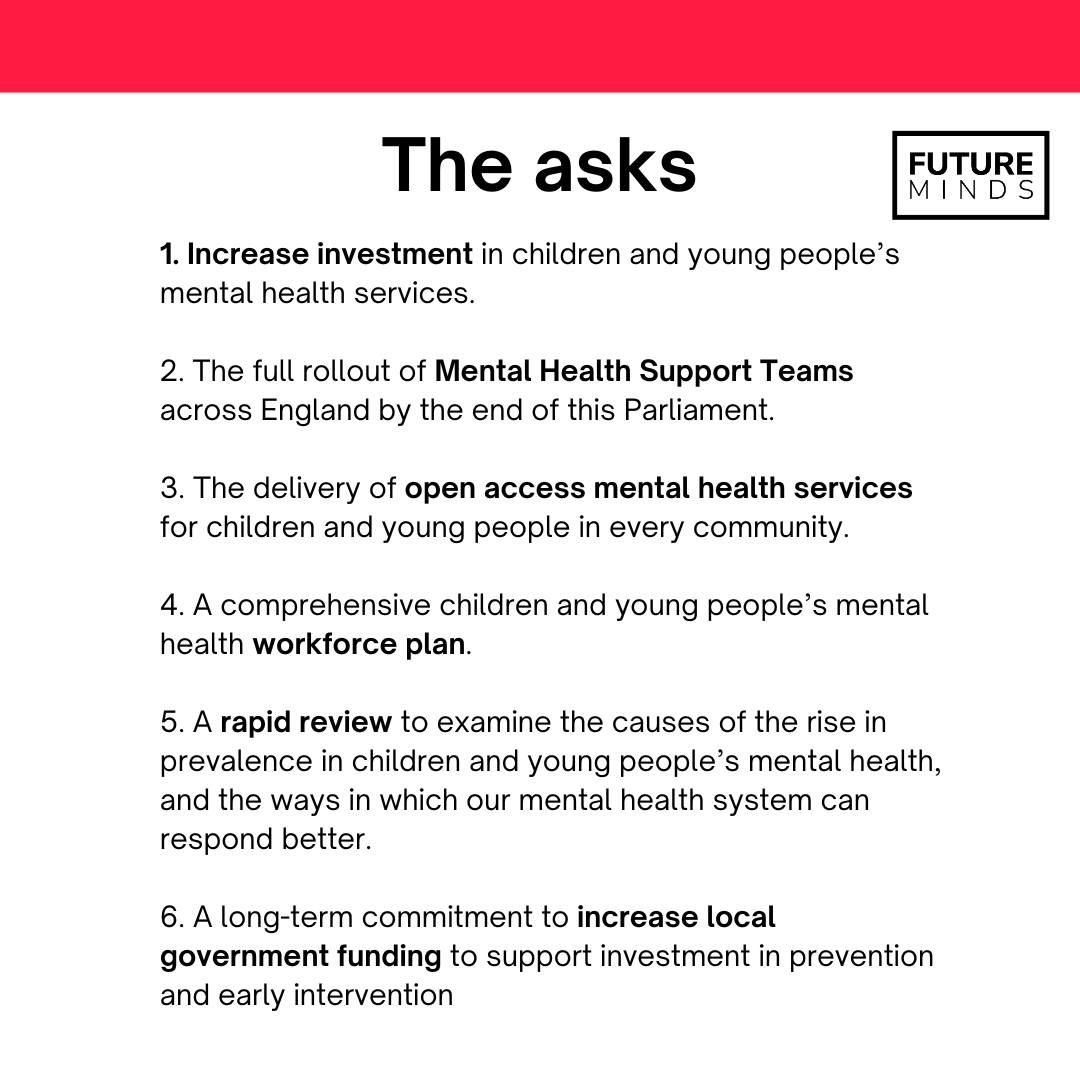
We call on others to join us in this effort. Together, we can make a difference in the lives of young people.
A Personal Reflection
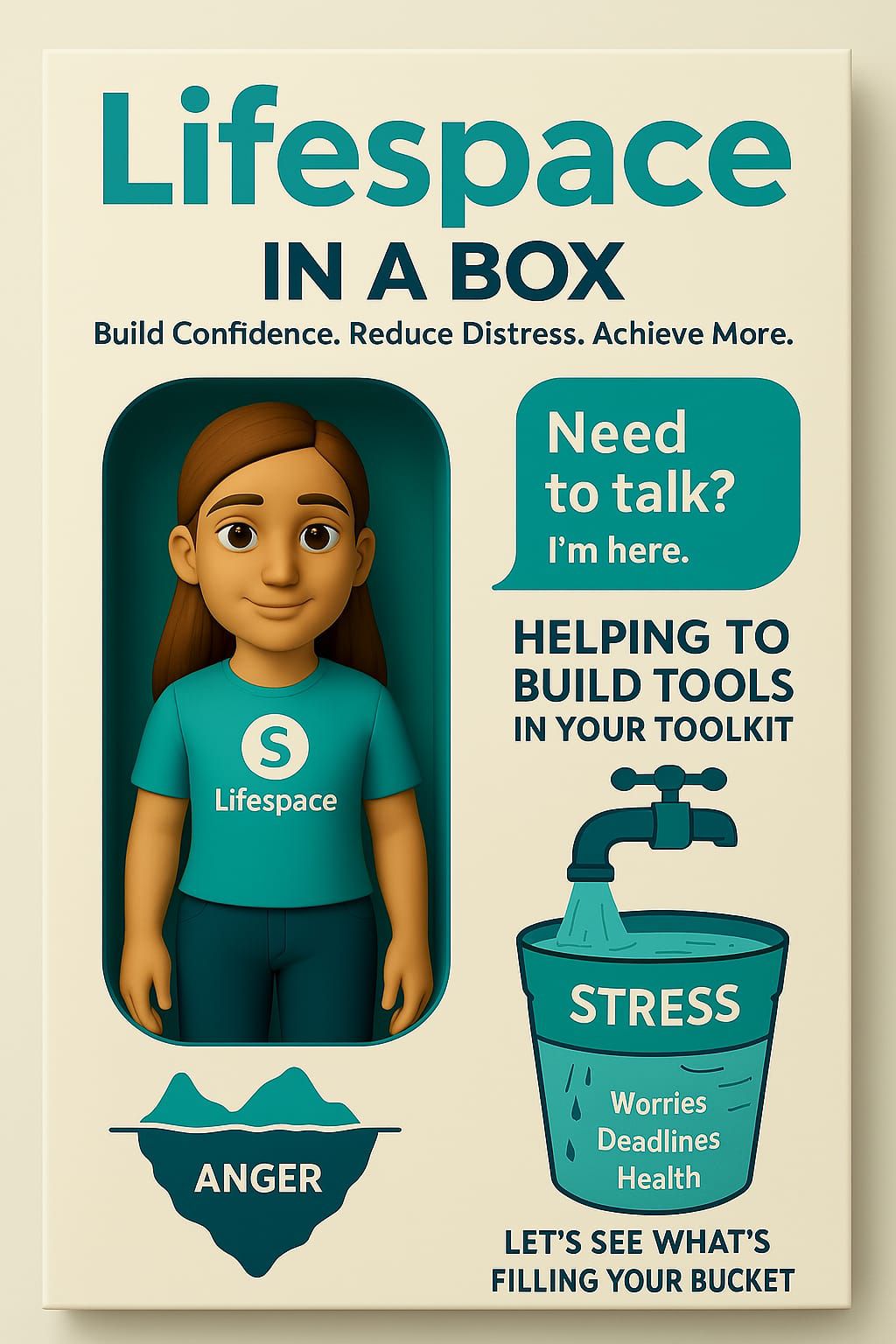
As CEO of Lifespace, and Mum to three school-age children, I see every day how deeply young people are affected by the legacy of COVID-19 - and how determined they are to find their voice, even in the most difficult circumstances. Our mentors walk beside them as they navigate grief, anxiety, isolation, and trauma - not with a quick fix, but with steady presence, compassion, and belief. Together we build "tools in the toolkit" to help in the present and for the future.
This work is not a luxury - it’s a necessity. Lifespace, and the many other organisations working systemically to support children and young people, have never been more needed. The future of this generation depends not just on academic outcomes, but on our collective willingness to create a world where every young person feels seen, safe, and supported.
We cannot afford to be passive observers. Join us - educators, policymakers, families, and allies - in building a future where every young person can thrive. Let’s act, together.
Note. We made ethical use of AI technology to enhance this post. We only used trusted information sources and fact checked references rigorously.

.png)


.png)
.png)

.png)
.png)
.png)


.png)











.jpg)

.jpg)
.jpg)
.jpg)
.jpg)
.jpg)








































.jpg)









.jpg)
.png)








.jpg)






.jpg)
.jpg)
.jpg)








 Partner Newsletter 1